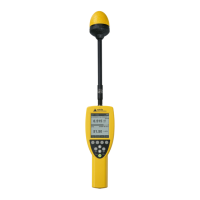
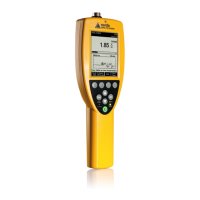
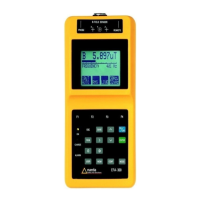
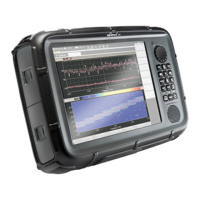
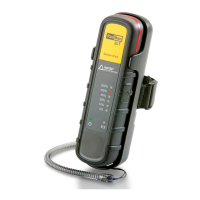
The IDA-3106 Interference and Direction Analyzer is a compact, portable system designed for measuring and evaluating electromagnetic fields. It operates in the frequency range of 9 kHz to 6 GHz.
Function Description:
The IDA-3106 offers a variety of operating modes for sophisticated signal analysis. Its primary function is interference and direction analysis, enabling the identification and localization of signal sources. This is achieved through manual bearing determination or automatic horizontal scans, with bearings directly superimposed on an electronic map in Direction Finding mode for triangulation. Beyond direction finding, the device supports Spectrum Analysis, Level Meter, Time Domain (Scope), and I/Q Analyzer modes.
Important Technical Specifications:
Frequency:
- Frequency Range: 9 kHz to 6 GHz
- Phase Noise (SSB):
- At 57.5 MHz: ≤ -121 dBc/Hz (df = 10 kHz), ≤ -126 dBc/Hz (df = 100 kHz)
- At 2.1405 GHz: ≤ -92 dBc/Hz (df = 10 kHz), ≤ -100 dBc/Hz (df = 100 kHz)
- At 4.5005 GHz: ≤ -97 dBc/Hz (df = 10 kHz), ≤ -100 dBc/Hz (df = 100 kHz)
- Reference Frequency:
- Initial deviation: < 1 ppm
- Aging: < 1 ppm/year, < 5 ppm over 15 years
- Thermal drift: < 1.5 ppm (-10 °C to +50 °C)
Amplitude:
- Display Range: From Displayed Average Noise Level (DANL) to +20 dBm
- Reference Level (RL): -30 dBm to +20 dBm in steps of 1 dB
- RF Input Attenuation: 0 to 50 dB in steps of 1 dB (coupled with reference level)
- Level Uncertainty: ≤ 1.2 dB (15 °C to 30 °C) for Spectrum Analysis and Multi-channel Power modes
- Displayed Average Noise Level (DANL) Basic Unit only:
- f ≤ 50 MHz: < -160 dBm/Hz (noise figure < 14 dB)
- f ≤ 2 GHz: < -156 dBm/Hz (noise figure < 18 dB)
- f ≤ 4 GHz: < -155 dBm/Hz (noise figure < 19 dB)
- f ≤ 6 GHz: < -150 dBm/Hz (noise figure < 24 dB)
- Displayed Average Noise Level (DANL) with Active Antenna Handle (preamp on, typ.):
- f ≤ 3 GHz: < -167 dBm/Hz (noise figure < 7 dB)
- f ≤ 4 GHz: < -166 dBm/Hz (noise figure < 8 dB)
- f ≤ 6 GHz: < -164 dBm/Hz (noise figure < 10 dB)
- 3rd Order Intermodulation:
- f ≤ 50 MHz: < -76 dBc (two tones, 6 dB below RL, 1 MHz spacing), IP3 ≥ +22 dBm (at RL = -10 dBm)
- f > 50 MHz: < -60 dBc (two tones, 6 dB below RL, 1 MHz spacing), IP3 ≥ +14 dBm (at RL = -10 dBm)
- Spurious Responses (input related): < -60 dBc or RL -60 dB (whichever is worse) and a carrier offset of 100 kHz or more
- Spurious Responses (residual): < -90 dBm (at RL = -30 dBm, input attenuation = 0 dB)
- Type: N-Connector, 50 Ω, female
- Maximum RF Power Level: +27 dBm (destruction limit)
- Maximum DC Voltage: ±50 V
- Return Loss: > 12 dB (typ.), f ≤ 4.5 GHz; > 10 dB (typ.), f > 4.5 GHz (at RL ≥ -28 dBm, input attenuation ≥ 2 dB)
General Specifications:
- Display: TFT color display with backlight, 7 inch (152 mm x 91 mm), 800 x 480 pixels
- Interface: Ethernet (100BaseT), USB mini B (USB 2.0), Optical RS232 (Baud rate 115 200), Earphone 3.5 mm TRS (≥ 16 ohms, mono), microSD card interface
- Antenna Detection: Narda Directional Antennas are automatically detected (type, polarization, antenna factors, preamp gain, frequency response). Parameters for other antennas can be defined manually.
- Cables and External Devices: Narda RF cables are automatically detected. Other cables and external devices (e.g. filters) can be defined manually.
- Units: dBm, dBV, dBmV, dBµV (anytime); V/m, A/m, W/m², mW/cm², dBV/m, dBmV/m, dBA/m, dBµV/m (with antenna)
- Display Functions: Y-scale reference (-130 dBm to 40 dBm), Y-scale range (20 dB, 40 dB, 60 dB, 80 dB, 100 dB, 120 dB), Y-scale auto
- Marker Functions: Single or Delta marker, Peak Marker (Highest, next, left, right, adjustable threshold and excursion), Peak tracking (selectable)
- Demodulation: AM, FM, LSB, USB, CW (Spectrum, Level Meter, Direction Finding modes), bandwidth 100 Hz to 200 kHz (max. 16 kHz for LSB, USB), instrument speaker or external earphone, Squelch (-120 dB to -40 dB nominal, Off), Audio recording (16 kHz / 16 bit WAV)
- Setups: Up to 200 complete device configurations can be saved, uploaded, and downloaded using IDA-3106 Tools software.
- Storing: Results can be stored as screenshots (PNG) or ASCII data sets (for MS-Excel). Auto Save function for up to 500 triggered events in Time Domain (Scope) and I/Q Analyzer modes. Timer controlled storage for long-term monitoring (Spectrum, Level Meter, Multi-Channel Power) with start date, time, and duration (max. 99 hours), storage rate settable (every 6s to 60 min).
- Memory Capacity: 128 MB internal memory (up to 8000 spectra, 4000 screenshots)
- Operating Temperature Range: -10 °C to +55 °C (with battery), 0 °C to +40 °C (with external power supply)
- Compliance:
- Climatic: Storage 1K3 (-10 °C to +50 °C), Transport 2K4 (-30 °C to +70 °C), Operating 7K2 (-10 °C to +50 °C)
- Mechanical: Storage 1M3, Transport 2M3, Operating 7M3
- Weight: 2.8 kg / 6.2 lbs (basic unit including rechargeable battery)
- Dimensions (H x W x D): 213 mm x 297 mm x 77 mm (8.4" x 11.7" x 3.0")
- Recommended Calibration Interval: 24 months
- Country of Origin: Germany
Operating Modes:
- Measurements vs. Frequency: Spectrum Analysis (including Spectrogram), Multi-Channel Power
- Measurements vs. Time: Level Meter, Time Domain (Scope), I/Q Analyzer
- Measurements vs. Orientation/Position: Direction Finding (including Horizontal Scan and Localization)
Antenna Handle and Antennas:
- Antenna Handle: Built-in 3-axis compass, 20 dB preamplifier, measurement start button. Snap fixing for 90° antenna adjustment. Automatic detection of antenna module and polarization plane. Power supplied from basic unit via data cable. Arm support included for long-term use.
- RF Connector to Basic Unit: N-connector, male, 50 Ω
- RF Connector to Narda Directional Antennas: BMA 50 Ω, (female on handle side)
- Antenna Connectivity: Narda antennas plug in with horizontal and vertical polarization. Type and polarization detected automatically.
- Power Supply: From basic unit
- Mounting: Connecting thread on underside of handle for tripod mounting.
- Preamplifier: Built-in, switchable (20 dB amplification, noise figure < 6 dB)
- Compass: Embedded electronic compass, Azimuth uncertainty < 1.5° RMS (typ.) for tilt < 15°, Pitch- and roll uncertainty < 3° RMS (typ.) in the range of ±30°
- Connection Cable to IDA Basic Unit: RF cable and control cable combined in a flexible tube, 1 meter length.
- Directional Antenna 1 (3100/11): 20 MHz to 250 MHz, Loop antenna, Antenna factor 21 dB (1/m) typical @ 200 MHz.
- Directional Antenna 2 (3100/12): 200 MHz to 500 MHz, Dipole antenna, Antenna factor 21 dB (1/m) typical @ 350 MHz.
- Directional Antenna 3 (3100/13): 400 MHz to 6 GHz, Log-periodic antenna, Antenna factor 18.5 dB (1/m) typical @ 500 MHz.
- Loop Antenna, H field (3100/14): 9 kHz to 30 MHz, Shielded loop antenna, Antenna factor 66.0 dB (1/m) typical @ 100 kHz, 47.5 dB (1/m) typical @ 1 MHz, 42.0 dB (1/m) typical @ f > 10 MHz.
Usage Features:
- Robust Design: Suitable for outdoor use in difficult environmental conditions.
- Glove-Friendly Controls: Designed for operation even when wearing gloves.
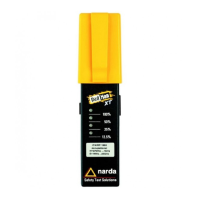
- Hot-Swappable Batteries: Rechargeable Lithium-ion battery with an internal NiMH buffer battery for continuous operation during battery replacement.
- PC Software (IDA Tools): Free software for downloading measurement data, screenshots, demodulation recordings, creating configurations (antennas, cables, tables, measurement routines), transferring instrument configurations, activating options, and updating device software.
- Remote Control: Via optical interface, USB port, or Ethernet network.
- Mapping Option: Display of electronic maps with superimposed bearing results for outdoor localization. Supports OpenStreetMap bitmap files.
- Indoor Localization: Define room ground area with four corners and azimuth for localizing signal sources in closed rooms.
- Tone Search: Audible assistance for manual direction finding, with pitch corresponding to signal strength.
- Magnifier Function: Split screen display for magnified view of the area around the marker position, with up to 50x magnification in frequency domain or 500x in time domain.
- Multi-Channel Tables: Define up to 500 channels with individual RBW and names for quick overview of frequency bands.
- Trigger Function: Event-controlled measurement for capturing specific signal characteristics (Free Run, Single, Multiple, Time Controlled).
- Demodulation Recorder: Record and save demodulated signals.
- Digital Audio Streaming: Stream demodulated signals over Ethernet.
Maintenance Features:
- Cleaning: Use lukewarm water with a drop of liquid detergent and a lightly moistened cloth. Avoid solvents and direct water ingress.
- AC Adapter / Charger: Only use supplied accessories. Do not open or attempt to repair damaged units.
- Software Updates: Device software and options are updated/activated via PC software (IDA Tools).
- Battery Disposal: Rechargeable batteries must be disposed of separately through recognized recycling/return systems, not in normal trash. Discharge batteries before disposal.
- Internal NiMH Buffer Battery: Powers the device for 10 seconds during hot-swap. Replaced by Narda Service Center every four years as part of normal maintenance.
- Data Deletion: Delete any stored private data before passing on or disposing of the device.
- Device Diagnosis: Menu to test LCD monitor function and display instrument data.
- Compass Calibration: Internal compass can be calibrated for accurate orientation, especially outdoors and away from metallic objects. Newer IDA versions with compass in antenna handle do not require calibration of the basic unit.

 Need help?
 General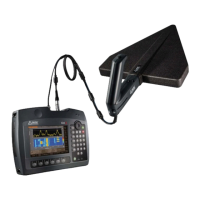

 To Next Page