7 Direction Finding Mode
128 IDA-3106 Narda
7.1 About Direction Finding mode
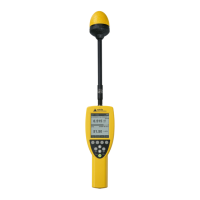
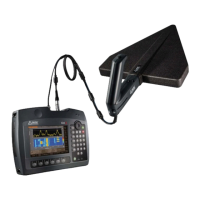
Direction Finding mode is used to determine the direction (bearing) and
location of a signal source. As this mode requires compass information, you
must use the Narda antenna handle for measurements. This supplies the
measuring instrument with information about the actual position of the
antenna in addition to the measurement signal.
The individual functions are:
These menus are described in the sections below. You can find information
about the basic settings such as center frequency, resolution bandwidth or
reference level under Common Functions on page 89.
Manual Bearing Manual determination of the signal source bearing by
measuring the largest signal level.
Horizontal Scan Automatic determination of the bearing of a signal
source by means of a 360° scan and display on a polar
diagram.
Localization Collecting one or more bearings and automatically
determining the location of the signal source(s) by
triangulation. Localization can be performed for
outdoor or indoor locations. Reception of a GPS signal
is required for outdoor localization, but defined
reference points within the room are used for indoor
localization.
Switching between outdoor and indoor localization is
done using the Loc. Mode softkey.
• Loc. Mode: Indoor = Indoor localization
• Loc. Mode: Outdoor = Outdoor localization
The information bar in the measurement menu shows
the localization mode that you have selected:
Direction Finding (Outdoor) or Direction Finding
(Indoor)
Map Allows you to display the graphical position of bearing
results (indoor and outdoor). Switching between indoor
and outdoor measurement is also done in the Map
menu. Outdoor bearing results can be superimposed
on an electronic map if the Mapping option is activated.


 To Next Page