2 Important Safety Instructions
18 IDA-3106 Narda
2.8.6 Disposal
Under normal circumstances the battery will not cause any environmental
damage. However, because they contain dangerous chemicals, they must
be disposed of separately when they reach the end of their useful life.
The batteries are classed as dangerous waste.
It is therefore considered hazardous waste, and must be disposed of via a
recognized recycling / return system. They must never be thrown away in
the normal trash. See Proper disposal on page 18
2.9 Faults and unusual stresses
Take the device out of service and secure it against unauthorized use if it
can no longer be used safely, for example as in the following situations:
• The device is visibly damaged.
• The device does not work any more.
• The permitted limits have been exceeded due to excessive stresses in
any form.
Contact your local Sales Partner for assistance in such cases.
2.10 Proper disposal
2.10.1 Disposal of used equipment
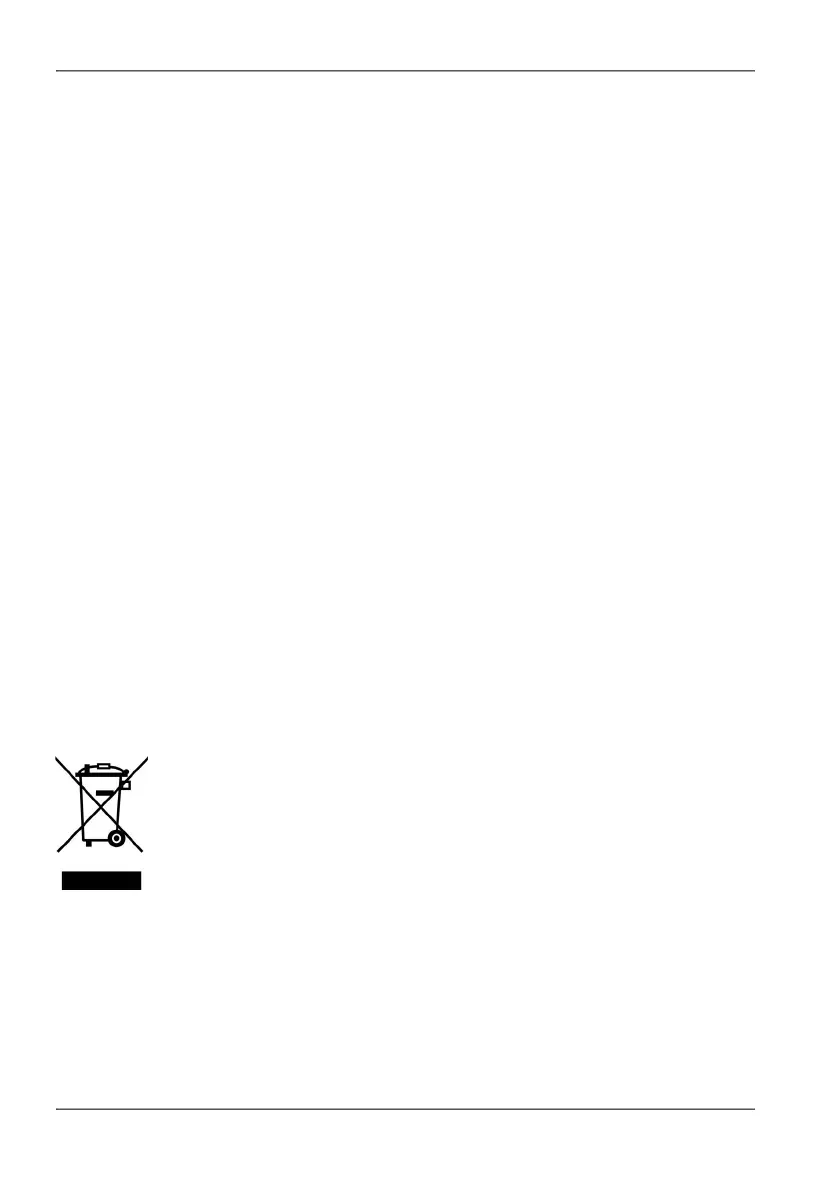
The crossed-out wheeled garbage can symbol indicates that this product is
subject to the European WEEE Directive 2012/19/EU on the disposal of
waste electrical and electronic equipment and must be disposed of
separately from household waste in accordance with your national
regulations.
In the European Union, all electronic measuring systems purchased from
Narda after August 13, 2005 can be returned at the end of their useful life.
For more information, please contact your Narda distributor.


 To Next Page