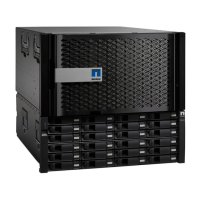
Drives
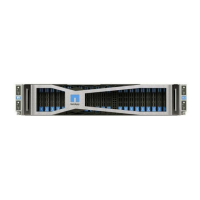
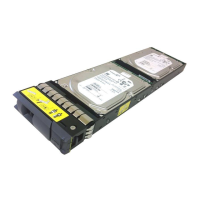
A drive is a device that provides the physical storage media for data.
Overview and requirements
Before you replace a drive, you need to be aware of certain requirements and considerations.
Requirements for replacing drives
The drives in your storage array are fragile. Improper drive handling is a leading cause of drive
failure.
Follow these rules to avoid damaging the drives in your storage array:
• Prevent electrostatic discharge (ESD):
◦ Keep the drive in the ESD bag until you are ready to install it.
◦ Open the ESD bag by hand or cut the top off with a pair of scissors. Do not insert a metal
tool or knife into the ESD bag.
◦ Keep the ESD bag and any packing materials in case you must return a drive later.
◦ Always wear an ESD wrist strap grounded to an unpainted surface on your storage
enclosure chassis. If a wrist strap is unavailable, touch an unpainted surface on your storage
enclosure chassis before handling the drive.
• Handle drives carefully:
◦ Always use two hands when removing, installing, or carrying a drive.
◦ Never force a drive into a shelf, and use gentle, firm pressure to completely engage the
drive latch.
◦ Place drives on cushioned surfaces, and never stack drives on top of each other.
◦ Do not bump drives against other surfaces.
◦ Before removing a drive from a shelf, unlatch the handle and wait 30 seconds for the drive
to spin down.
◦ Always use approved packaging when shipping drives.
• Avoid magnetic fields:
◦ Keep drives away from magnetic devices.
Magnetic fields can destroy all data on the drive and cause irreparable damage to the drive
circuitry.
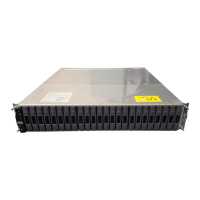
24-drive shelves
Drive numbering in an EF300 or EF600 controller shelf
The following figure shows how the drives are numbered in each shelf (the shelf's front bezel has
been removed).
Drive staggering in an EF300 or EF600 controller shelf
Maintaining EF300 and EF600 Hardware
39
Drives



 To Next Page
 Loading...