EasyManua.ls Logo

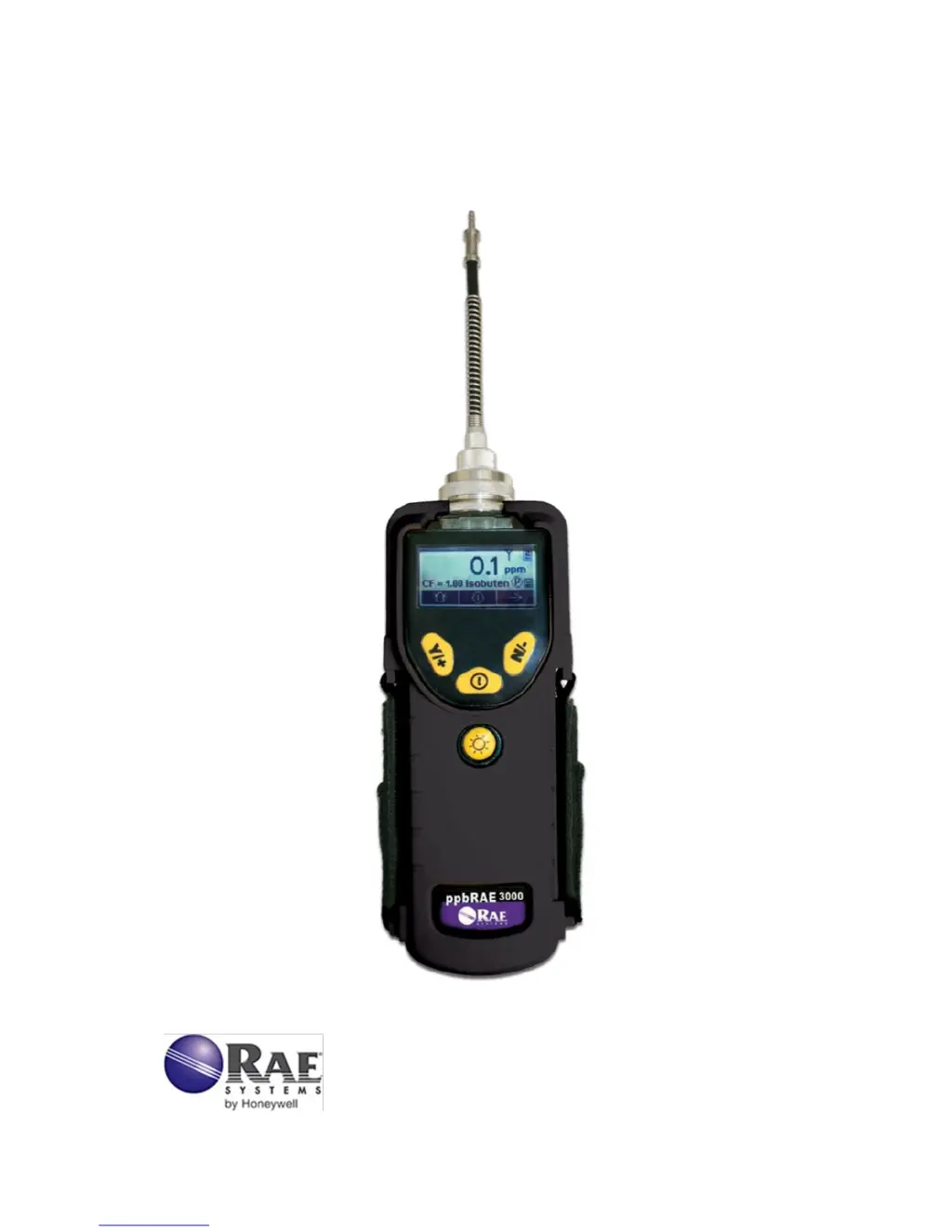
Rae ppbRAE 3000 - User Manual

Rae ppbRAE 3000
120 pages
Print Icon
To Next Page IconTo Next Page
Loading...
ppbRAE 3000
User’s Guide
Rev. E
February 2016
P/N 059-4021-000

Table of Contents

Questions and Answers

  • V
    Victoria AdamsAug 2, 2025
    What to do if Rae Measuring Instruments reading abnormally high?
    • R
      Roberto MorrisAug 2, 2025
      If your Rae Measuring Instruments readings are abnormally high, there might be several reasons. First, the filter could be dirty, in which case you should replace it. Second, the sensor module might be dirty, so try blow-drying it. Excessive moisture or water condensation, or incorrect calibration, can also cause this issue, so calibrate the unit.
  • J
    Jeffrey WoodAug 7, 2025
    What to do if Rae Measuring Instruments reading abnormally low?
    • M
      Michael GomezAug 7, 2025
      If the Rae Measuring Instruments readings are abnormally low, consider these potential causes. A dirty filter could be the problem, so replace it. Alternatively, the sensor module might be dirty; in this case, remove the Calibration Adapter. If the lamp is weak or dirty, or the unit is incorrectly calibrated, calibrate the unit. Also, check for air leakage.
  • A
    Angela RogersAug 11, 2025
    Why can't I turn on my Rae ppbRAE 3000 after charging the battery?
    • J
      John SmithAug 11, 2025
      If you cannot turn on your Rae Measuring Instruments after charging, the battery might be discharged or defective. Try charging or replacing the battery.
  • A
    Ana WilliamsAug 16, 2025
    What to do if the Rae Measuring Instruments displays a 'Lamp' message during operation?
    • D
      Donna ThomasAug 17, 2025
      If your Rae Measuring Instruments shows a 'Lamp' message during operation, it could be due to the lamp drive circuit or a weak/defective PID lamp. First, try turning the unit off and back on. If the issue persists, replace the UV lamp.
  • L
    Lance MartinAug 22, 2025
    What to do if the inlet flow is too low in Rae Measuring Instruments?
    • B
      bacevedoAug 22, 2025
      If the inlet flow is too low in your Rae Measuring Instruments, it could be due to a damaged pump diaphragm or debris, or flow path leaks. Check the flow path for leaks, including the sensor module O-ring, tube connectors, and Teflon tube compression fitting.
  • B
    brendaevansAug 27, 2025
    What to do if the buzzer is inoperative in Rae ppbRAE 3000?
    • J
      Jeffrey Garcia DDSAug 27, 2025
      If the buzzer in your Rae Measuring Instruments is inoperative, it might be a bad buzzer. Check that the buzzer is not turned off.

Summary

Read Before Operating

WARNINGS

Instrument Overview and Specifications

General Information

Overview of the instrument's design, features, and capabilities.

Specifications

Technical details including size, weight, detector, battery, and operating hours.

Instrument Setup and Operation

Charging The Battery

Step-by-step guide for charging the instrument's battery.

User Interface

Explanation of the instrument's display, keys, and controls.

Basic Operation Procedures

Procedures for turning the instrument on/off and using basic functions.

Calibration and Testing

Standard Two-Point Calibration (Zero & Span)

Detailed procedure for performing zero and span calibrations.

Bump Test

Procedure and importance of performing daily bump tests.

Configuration and Data Management

Programming Mode

Accessing and navigating the instrument's configuration menus.

Transferring Data To & From A Computer

Guide to transferring logged data and updating firmware.

Maintenance and Troubleshooting

Maintenance

Guidance on instrument maintenance, including battery and sensor care.

Troubleshooting

Common problems and their solutions for the instrument.

Support and Contacts

Technical Support

Contact information for technical support services.

Rae ppbRAE 3000 Specifications

General IconGeneral
Sensor TypePhotoionization Detector (PID)
Gas DetectedVolatile Organic Compounds (VOCs)
Resolution1 ppm
BatteryRechargeable Lithium-ion battery
Data LoggingYes
Pump Flow RateApproximately 450 cc/min
Operating Temperature-4°F to 122°F (-20°C to 50°C)
Operating Humidity0 to 95% RH (non-condensing)
DisplayLCD with backlight
Wireless CommunicationBluetooth
AlarmsVisual and audible alarms
CommunicationUSB, Bluetooth
Accuracy±5% of reading or ±1 ppm for PID, ±3% of reading for LEL, ±0.7% vol for O2, etc.

Related product manuals