Reference Manual
00809-0100-4360, Rev BA
August 2008
Rosemount 1151
5-6
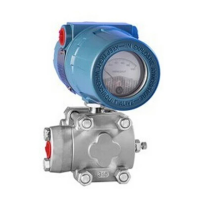
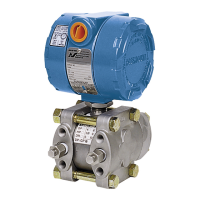
Process Sensor Body
Be aware of the following:
• The transmitter should be removed from service before disassembling
the sensor body.
• Process flanges can be detached by removing the four large bolts.
• Isolating diaphragms may be cleaned with a soft rag, mild cleaning
solution, and clear water rinse.
• Flange adapters and process flanges may be rotated or reversed for
mounting convenience.
Electrical Housing
Electrical connections are located in a compartment identified as TERMINAL
SIDE on the nameplate. The signal and test terminals are accessible by
unscrewing the cover on the terminal side. The terminals are permanently
attached to the housing and must not be removed, or the housing seal
between compartments will be broken.
To remove the smart electronics, refer to Appendix 6: Retrofitting the
Rosemount 1151 Transmitter, and reverse the installation sequence
described in steps 10 through 15.
Removing the Sensor from the Electrical Housing
1. Unscrew the cover on the field terminal side of the transmitter.
2. Disconnect the power source from the transmitter.
3. Remove the smart electronics and header board.
4. Loosen the lock nut.
5. The threaded connection has a sealing compound on it and will initially
be tight. Unscrew the sensing module from the electronics housing,
being careful not to damage the sensor leads. Carefully pull the header
assembly board through the hole.
The sensing module is a welded assembly and cannot be
further disassembled.
Do not scratch, puncture, or depress the isolating diaphragms. Damaging the isolating
diaphragms can inhibit transmitter performance.
Do not use chlorine or acid solutions to clean the diaphragms. Damaging the isolating
diaphragms can inhibit transmitter performance.
Do not damage the isolating diaphragms when unscrewing the sensor module.
Damaging the isolating diaphragms can inhibit transmitter performance.





 To Next Page