Section 2 Installation H85A Manual
www.rottlermfg.com
2-13
Installation Procedure
Location
The productivity of this machine will depend to a great extent on its proper initial installation, particularly
the means by which cylinder blocks are lifted into the machine as well as the material handling to and
from other operations in your shop.
The proper loading arrangement and location for your H85A machine is extremely important.
A slow travel (6’ to 10’ per min.) power hoist, operated from either a bridge crane or a jib crane
arrangement works very well. A 1000-lb. hoist is generally adequate for lifting the engine block. An air
hoist with speed control makes an ideal method for fast, convenient loading.
If some production honing with this machine is anticipated, and the cylinder blocks are not directly loaded
and unloaded from a conveyor, we would recommend considerable attention be given to the crane so that
it covers an adequate area to allow the operator to back up and remove cylinder blocks without cluttering
up his own area. If two machines are to be operated by one operator, we recommend that the open faces
be placed at right angles to each other, with the machines approximately three feet apart.
Unpacking
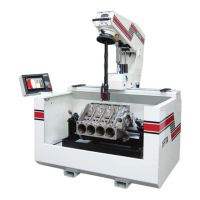
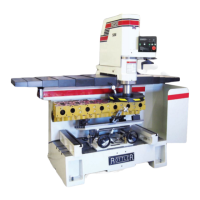
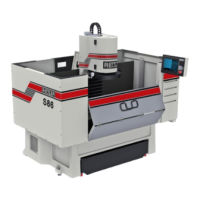
Carefully uncrate the H85A Machine. Remove all equipment in splash tank.
Completely clean the machine exposed metal surfaces with solvent. Rust inhibitor is applied to the
machine at the time of shipment and must be removed before operating the machine.
Leveling
Four cap screws and jam nuts are provided with the machine for leveling. Insert the screws from the
bottom of the base. Place the jam nuts on top of the threaded hole in the base.
Using a precision level, level the upper table within .002” per foot in both directions (Except favor the high
setting to the front for best coolant return).
Coolant
Refer to the Coolant section in Chapter 5 of this manual for proper coolant types
and mixes. Be sure to read the MSDS section of this manual and exercise due
caution concerning coolant hazard.


 To Next Page