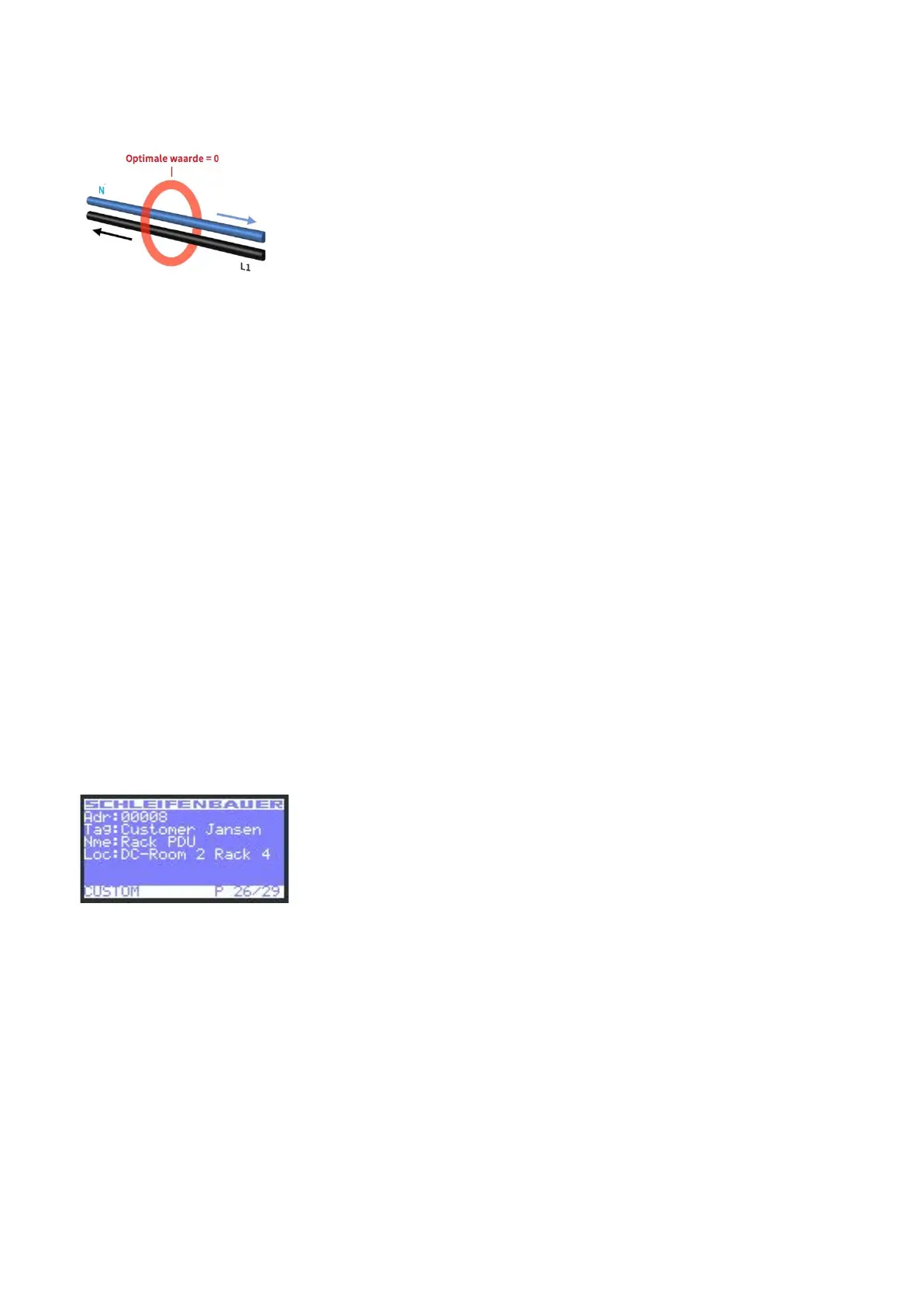
L1 + L2 + L3 + N > 0 mA …. THERE MIGHT BE FAULT IN YOUR SYSTEM !
When the PDU is equipped with a Residual Current Sensor (RCS), measurements of
the residual current are shown in the sensors pages.
(See “Example: sensor pages x of 2” in the previous chapter “Option 2: sensor pages”
).
In parts of Europe, electrical installations must incorporate devices designed to protect people and prevent fires: the
residual current device, or RCD. A RCD disconnects the circuit if the total for the incoming and outgoing currents in the
monitored phases and their neutral conductor exceed a threshold, for example : L1 + L2 + L3 + N > 30 mA
Data center practice: Residual Current Monitoring in relation to Residual Current Devices
Many devices inside a datacenter operate a switching power supply. These power supplies usually leak a bit of energy to
the protective earth, so even without failing hardware some residual current will occur.
In order to discriminate a single dangerous fault from a sum of harmless smaller faults, one needs to set up a network of
RC-sensors and monitor permanently. RC-monitoring can take place in many forms. The Schleifenbauer RC-sensor offers
Class B metering, thus enabling our customers to set-up an RC-monitoring system that prevents dangerous situations
inside the datacenter.
Where to measure residual current?
When monitoring residual current at a single location it is not possible to determine whether the measured value is a sum
of many small currents or a single larger (dangerous) one. For that reason it contributes to the safety of the personnel
inside a data center when residual currents are metered at several points.
How to find the PDUs unit address, tag, name or location?
You will find all customer specific information about the PDU in the “Custom”
display.
● Adr = address of this unit on the databus
● Tag = vanity tag
● Nme = device name
● Loc = location of the device



 To Next Page