Preparations for Initial Start-up
MCS100FT · Operating Instructions · 8011893 V2-1 · © SICK AG 21
Subject to change without notice
3.3 Transport and installation
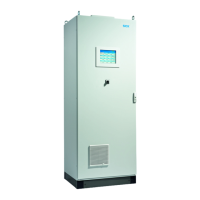
Position the MCS100FT with suitable hoisting equipment (for example a crane) (weight
of the MCS100FT approx. 260 kg).
Use the lugs on the top cover.
Secure the MCS100FT immediately against falling over.
3.4 Preparing the gas connections
The MCS100FT may only be transported and installed by skilled persons who,
based on their training and knowledge as well as knowledge of the relevant
regulations, can assess the tasks given and recognize the dangers involved.
WARNING: Hazards by leaky gas path
● Health risk when noxious sample gas leaks out.
● Risk of damage to the MCS100FT and adjacent equipment if the sample
gas is corrosive or could generate corrosive liquids in combination with
water (e.g. humidity).
● The measured values could possibly be incorrect if the gas path is leaky.
The gas lines to the MCS100FT may only be laid by skilled persons who,
based on their training and knowledge as well as knowledge of the relevant
regulations, can assess the tasks given and recognize the dangers
involved.
The connection of the gas lines to the MCS100FT may only be performed by
SICK Customer Service.
CAUTION: Risk of explosion when explosive sample gas is used
Do not use the MCS100FT for measuring explosive or combustible gases
Moist instrument air damages the interferometer.
Always follow the instrument air specification (
p. 101).
For MCS100FT with FID-100FT:
Fit a pressure controller to the fuel gas pressure cylinder.
Signal output, for example, at 10 bar residual pressure (option).
Provide an external stopcock on the system cabinet inlet for H
2
supply.
Use a leak detector to check the H
2
supply leak tightness.


 To Next Page