Process interfacing via an automation system (PLC, PC)
9.3 Control with Ident profile
SIMATIC MV500
156 Operating Instructions, 03/2021, C79000-G8976-C494-05
Initialization
During initialization (INIT), the Ident profile automatically executes the "WRITE-CONFIG"
command. The parameter values of the "WRITE-CONFIG" command depend on whether the
Ident profile is used with or without a communications module.
WRITE-CONFIG
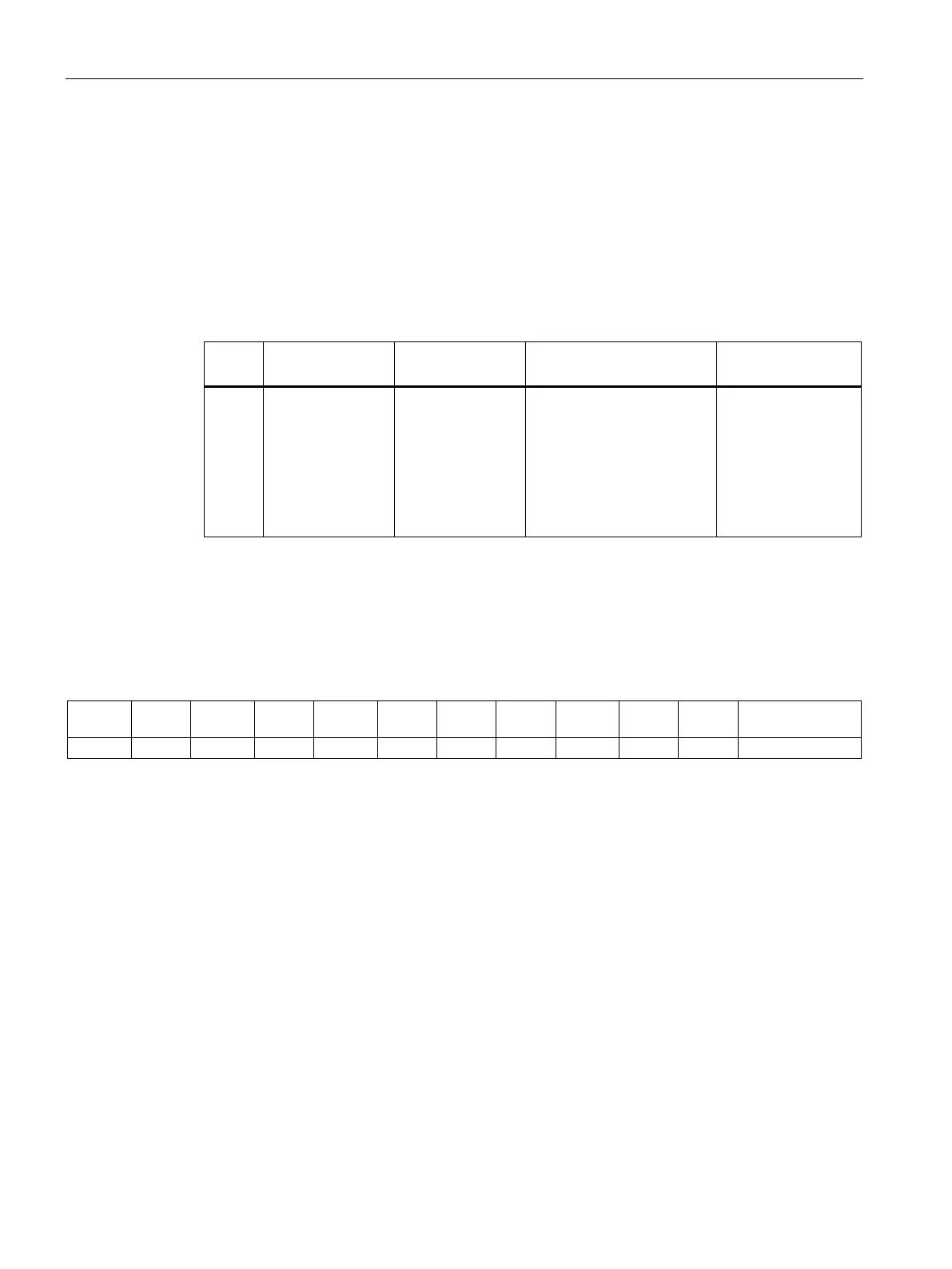
Table 9- 5 WRITE-CONFIG
CMD OFFSET
LEN_DATA CONFIG TXREF
buffer "TXREF"
parameter data
• 0x01 ≙ communication
reset without configura-
tion data (LEN_DATA =
0)
• 0x03 ≙ communication
reset with configuration
to be sent
Note that the communication reset without configuration data (CONFIG = 0x01) can only be
used if you operate the reader without communication module via PROFINET IO. Reset
without configuration data corresponds to the "INIT" command without program selection.
Structure of the configuration data attachment of WRITE-CONFIG
Table 9- 6 MV400 with CONFIG = 0x03; LEN_DATA = 0x10
1)
0x00: "INIT" without program selection
0x01 ... 0x0F: Number of the program to be started ("INIT" with program selection)
9.3.2 Control with MV commands via Ident profile
The optical reader is controlled by the "PHYSICAL WRITE" and "PHYSICAL READ" commands.
Chaining of commands is not supported.
An RFID system typically has a linear memory area for each transponder from which data can
be read or to which data can be written. The address space (in this case purely virtual) is used
in an optical reader to map certain MV commands (machine vision commands). In addition,
the data that is "written" to a specific address, for example, has a defined semantic meaning.
This section explains which address space must be written to or which address must be read
from in order to cause specific behavior of the optical reader. The semantic meaning of the
read data or data to be written is also explained.


 To Next Page