1
1-34
Before performing this test, ensure the control linkages
are not binding and the hydraulic control valve spools are
centering in the neutral position. Check the hydraulic
circuit for external leaks. These conditions will give the
same symptoms as a worn piston seal. If the cylinders
under pressure are sluggish or stop functioning, these
would indicate that oil is leaking by the cylinder piston
seal. The following test can be performed to check the
cylinder piston seal.
1. Remove any attachment and block the loader
securely with all 4 wheels off the ground using
appropriate jack and stands.
2. Retract the cylinder(s) to be tested. Shut off the
engine and cycle the controls to release the hydraulic
pressure. Have a container can ready to catch any waste
oil to prevent environmental contamination.
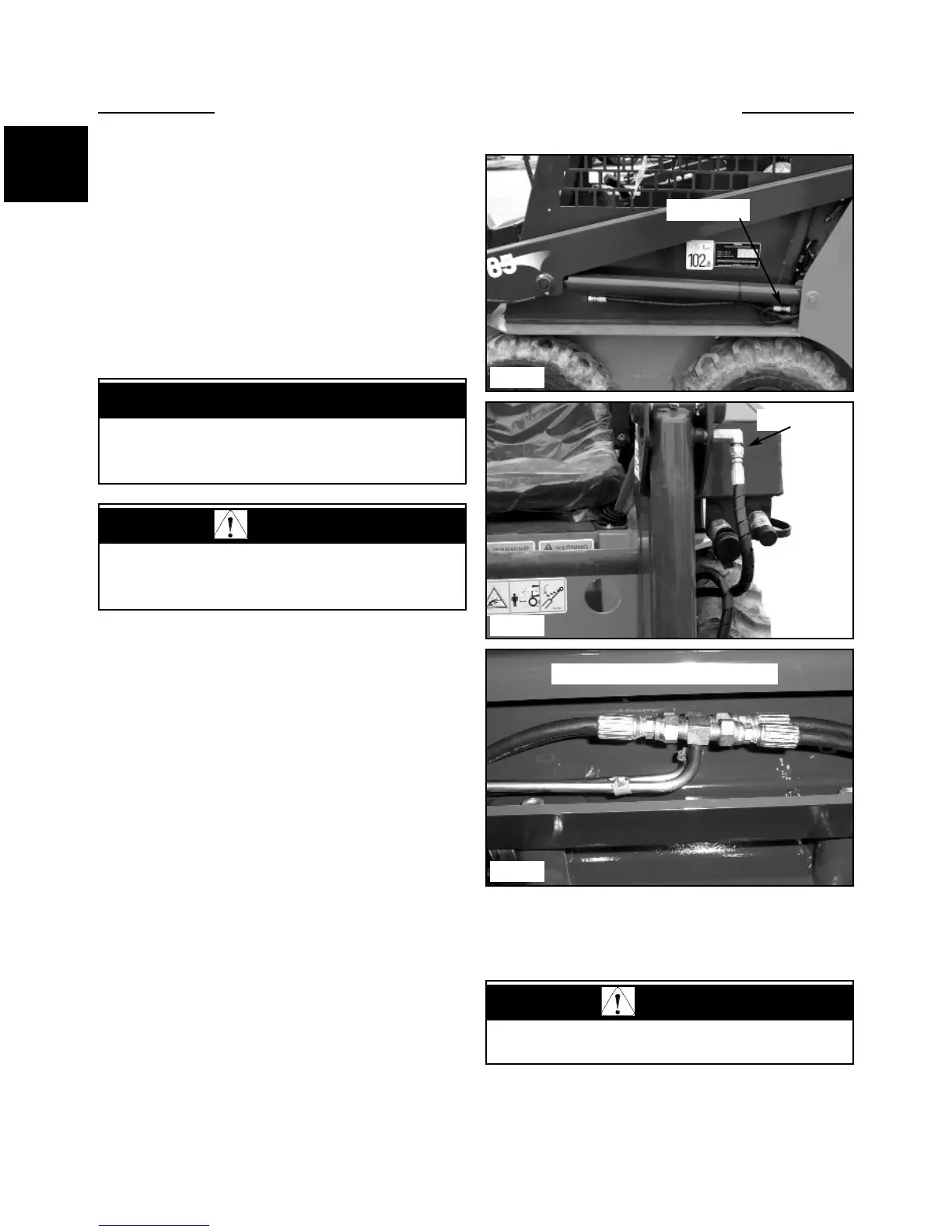
3. Disconnect the fixed end hose from the cylinder to be
tested. Cap the hose with a plug to prevent contamination.
4. Start the engine and cycle the control(s) as to retract
the cylinder. Do not over activate the controls as to place
in the detent position. Have a container can ready to catch
any waste oil to prevent environmental contamination.
5. Repeat for both cyclinders.
6. If oil leaks from the cyclinder port the seals are bad
and need replacement. If no oil leaks you may need to
check the load check valves or spool wear in the
hydraulic control valve.
7. Connect the hydraulic hose to the cyclinder ports if
no further servicing is required.
Testing the Piston Seals
HYDRAULIC CYLINDERS 1.4
WARNING
Use extreme caution when checking the hydraulic
system for leaks. Fluid under pressure can penetrate
the skin and cause serious injury.
Allowable boom or bucket cylinder drop: 1.5” in 3
minutes, @ loaded rating and operating
temperature.
IMPORTANT
C5008
C5004
Fixed end
Fixed end
C5067
Hydraulics under liftarm step
WARNING
Never repair or tighten hydraulic lines while engine
is operating or the system is under pressure


 To Next Page