Advanced 600E Pump Testing 103
9. For an improperly seated check valve, loosen and retighten the check valve housing.
Tighten the check valves 1/4-turn beyond finger-tight (15 to 20 inch-pounds torque).
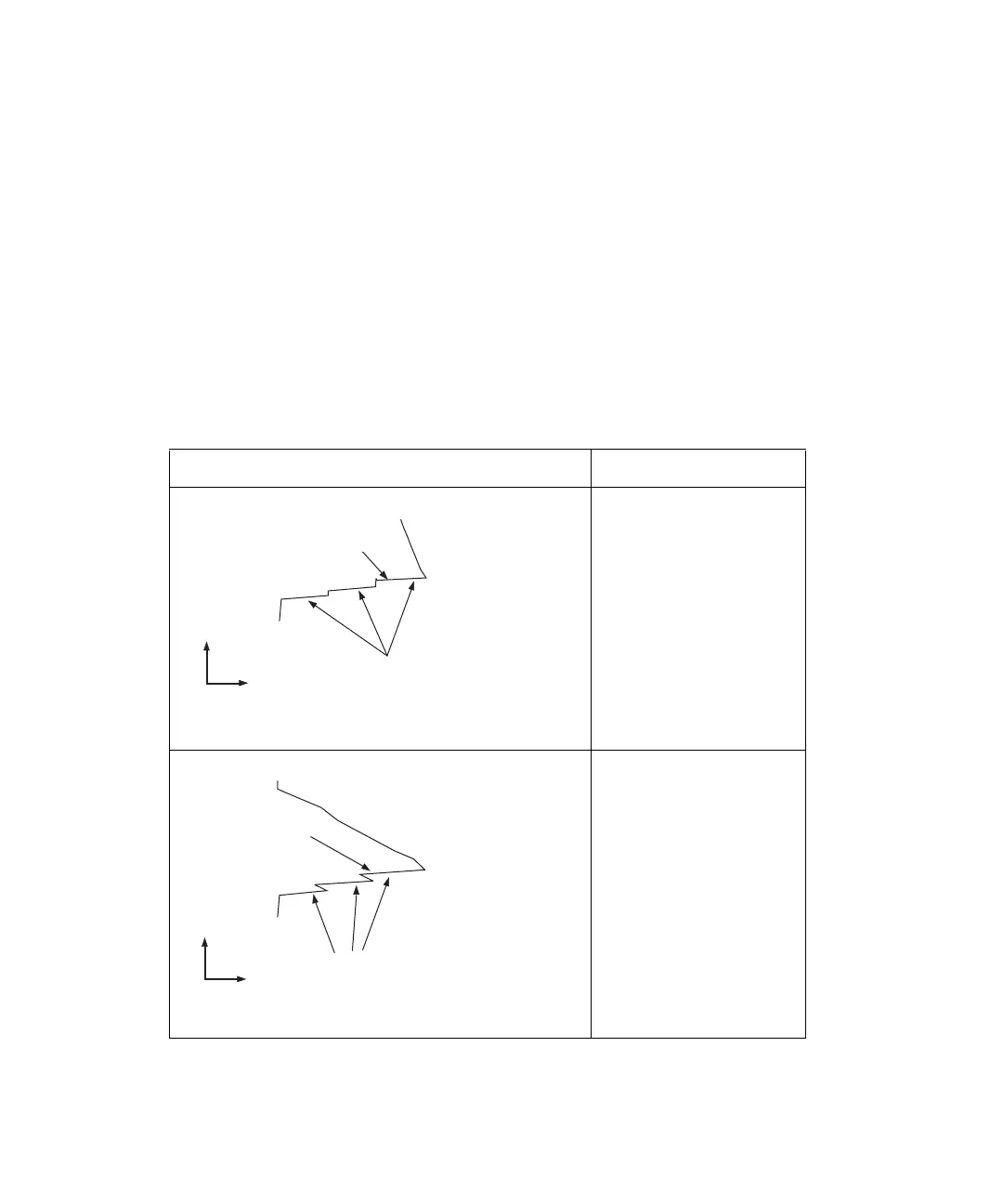
10. When the pump head operates properly, the pressure should rise with each plunger
stroke, then hold as the plunger recedes. This produces a staircase pattern as shown
in Table 5-4.
If the inlet check valve is defective, pump pressure may stop rising at a certain
point, or may not rise.
If the outlet check valve is defective, pump pressure may increase, then immediately
decrease when the plunger starts to recede.
Table 5-4 shows chart recordings of pump pressure during normal and
malfunctioning check valve operations.
Table 5-4 Pressure Trace Recording
Pressure Recording Example Condition
Normal pump operation
Failing outlet check
valve
Forward
right
plunger
stroke
Check
valve
holding
92% of fu
scale
T
P
T
P
Forward
right
plunger
stroke
Check
valve
leaking
92% of fu
scale



 To Next Page