FUNCTIONAL DESCRIPTION OF THE MODEL 415 CIRCUITS
3.0 MODEL 415 SWEEP/MARKER GENERATOR
BLOCK DIAGRAM
A circuit introduction and functional descrip-
tion of the Model 415 will be outlined with ref-
ference to the block diagram of Figure 3.1. In
the block diagram the stage numbers of the
various blocks are included
if you wish to
refer to the schematic. Also, all control refer-
ences on the block diagram and in the text are
in capital letters and are written as they ap-
pear on the Model 415 front panel. To simplify
the diagram, only the signal paths are indi-
cated. All required d-c switching functions as
well as the required signal switching are per-
formed by FUNCTION switch S521. All output
signals are routed through attenuator stage
Q306 to the RF-IF-VIDEO OUT jack. Q306 is
an electronic attenuator using a dual-gate
field effect transistor. Gain and output level of
the attenuator are controlled by adjustment
of RF-IF-VIDEO ATTENUATOR control R515.
3.1 SWEEP CIRCUITS
The required internal and external sweep volt-
ages are developed by the waveform genera-
tor {Q12
& Ql3). A sawtooth output is fed
through HORIZ SWEEP switch S514 and
CHROMA switch S522 to the SCOPE HORIZ
INPUT jack J505. The HORIZ SWEEP switch
enables the operator to reverse the sweep
direction of the oscilloscope as desired.
An-
other output of the waveform generator is cou-
pled through SWEEP WIDTH control R512 and
shaping circuits to the 44 MHz and 10.7 MHz
sweep oscillators. The sweep voltage is avail-
able at J505 for all positions of the
FUNCTION
switch.
3.2 44 MHz SWEEP OSCILLATOR AND 1-F
MARKER SYSTEM
3.2.1 44 MHz SWEEP OSCILLATOR
The 44 MHz sweep oscillator employs a volt-
age variable capacitor {varactor diode) D201
in an otherwise conventional oscillator. The
sweep voltage from the waveform generator
is applied across the varactor and causes the
capacitance of the varactor to vary. This in
turn causes the oscillator frequency to vary at
the sweep rate. The shaping circuits previ-
ously mentioned modify the applied sweep
voltages so that the oscillator frequency
change is linear. Maximum sweep width is
greater than 10 MHz. The center frequency of
the sweep oscillator can be adjusted over a
range of
± 5 MHz by use of the CENTER FRE-
QUENCY control. The waveform generator
sweep rate is 60 times per second and is syn-
chronized to the power-line frequency. Sweep
duration is approximately 90 per cent of each
cycle with retrace occurring during the
re-
maining 10 per cent of the sweep interval.
A portion of the sweep oscillator output is cou-
pled to 44 MHz Detector QIS. The output is
also fed through Buffer Amplifier Q202 to the
FUNCTION switch.
3.2.2 1-F MARKER OSCILLATORS
Marker oscillators Ql through Qll furnish
marker frequencies in the television i-f fre-
quency range. They can be turned on or off
individually with the associated switches. Any
number of markers can be used as desired. As
seen by the frequency identifications, these
frequencies include bandpass as well as trap
frequencies. Each oscillator is crystal con-
trolled. Standard trap and reference frequen-
cies are furnished. Spare marker oscillator Ql
is provided in the event that an additional
fixed marker frequency is required by the
user. The circuit can be tuned to accept any
third-overtone crystal in the 35 MHz to 50 MHz
range. Operation of the spare marker oscil-
lator and the required adjustments are cov-
ered in the OPERATING PROCEDURES sec-
tion of this manual.
One output of the marker oscillator section is
coupled to the FUNCTION switch.
A second
output is fed to
44 MHz Detector QlS. Notice
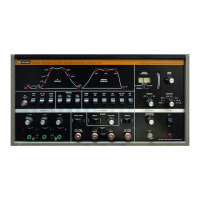
also that the lights on the representative curve,
shown on the front panel, correspond to cer-
tain marker frequencies. When one of the
marker frequencies is selected by placing the
marker switch in the on position the corre-
sponding light is illuminated on the curve.
Any or all of the markers and the correspond-
ing lights can be selected as desired. These
lights serve two purposes. First, they are a
reminder to the operator that certain marker
frequencies are being used. Secondly, they
serve as a reference to indicate the approx-
imate i-f response desired at certain frequen-
cies in the response curve.
3.2.3 EXTERNAL MARKER INPUT
EXT MARKER jack J501 is also provided for
use of external fixed or variable marker fre-
quencies. This input can be used simulta-
neously with the internal markers. The in-
ternal markers, being crystal controlled, can
be used as calibration points for an external
variable frequency generator.
3.2.4 100 KHz MARKERS
The 100 KHz marker switch is used to provide
a string of markers having 100 KHz frequency
separation. This string of markers can be
superimposed on any of the desired crystal
controlled markers. 100 KHz Marker Oscillator
Q305 is energized by the 100 KHz switch. The
output of this oscillator is coupled to the 10.7
MHz detector and is used to provide the 100
KHz markers on the output of either the 10.7 or
i-f marker detector circuits.
3.3 MARKER DETECTOR AND AMPLIFIERS
The 44 MHz sweep oscillator output is mixed
with the marker oscillator outputs at 44 MHz
Detector Ql5. When the sweep frequency
equals the crystal marker frequency, a pip is
produced which is amplified and shaped by
Marker Amplifier QI7 and Marker Output
Amplifier Ql8 to produce a narrow, well de-
fined pip.
23


 To Next Page