t
)
INTRODUCTION
The objectives of the Model 415 Sweeo Marker
Generator and this manual
cue as follows:
A. To simplify the sweep alignment of cxll telev1sion
receivers, particularly color sets. S1mplificction
is accomplished
by an instrument design which
concentrates all the required alignment tools
exclusive of oscilloscope and VTVM) into a
single versatile package. Functional grouping
of all controls and features adds to efficiency
ond ease of operation.
B. To enable you to proceed confidently through
complete alignment procedures in minimum
time. The importance of confidence in ihe test
equipment and alignment procedures cannot be
overemphasized.
C. To provide speed of alignment and alignment
verification which are essential in attaining effi-
cient and profitable operations. The
415 is de-
signed to put sweep alignment and alignment
verification into the proper perspective with
regard to overall television servicing by elim-
inating complexity and drastically reducing the
time required for these functions.
D. To provide an instrument which will not be ob-
soleted by future television receiver designs.
The Model 4 ! 5 is the result of an extensive sur-
vey of older receivers and those currentlv on
the market as well as a projection of
future.tele-
vision receiver designs.
Without the Model
415 numerous separate pieces
of equipment have to be grouped together in
order to begin sweep alignment. These include
a sweep generator capable of furnishing video
sweep, i-f sweep and r-f sweep. Usually more
than one generator is required. A second re-
quirement is a marker generator capable of
furnishing reference markers in the video, i-f and
r-f ranges. Without the
415, this again usually
requires more than one generator.
If this gen-
erator is tunable, it can furnish only one refer-
ence marker at a time. Also, the fact that the
generator is tunable raises questions of calibra-
tion accuracy. A marker adder is also used,
particularly in chroma circuit alignment. Sep-
arate bias supplies are also required. Some
alignment procedures call for simultaneous ap-
plication of up to three bias voltages. In many
procedures a demodulator is required to view
r-f, i-f, or chroma envelopes. An oscilloscope
and voltmeter complete the equipment require-
ments.
After the set-up is complete and alignment is
under way the technician usually finds that the
amplitude and tilt of the observed waveforms
are affected by ti1c of the interconnect
ing wues
end cab.es 111 Li'3 set-up crnd that
can
uiso ~)0 vaned touchmg foe leuds, cu;1lc,,
cmc.l equipment. compietion -::if the
r,1ent procedure the techntcicm
cannot r1elp
·sonder if the response curves which he t1W)
lir1 oll y obtained ure those of the : ,,
ce1ver itself or me oartlv affected his uliqn-
ment set-up. " " · ,
The
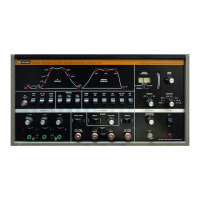
Model 41 '.i has been designed to eliminate
tl'.e problems, normolly encountered in sweep
c11gnment. This totally solid-state unit is cooa
ble of providing i-f sweep, r-f sweep on telt~v,
sion Channels 4 and 10, video sweep, 10.':' J\1Hz
i-f sweep for f-m receivers and crystal-controlleo
post injection markers for accurate frequency
identification on ull sweep ranges. In
additio:;
crystal-controlled output frequencies are ovoii-
ab!e for spot olignment of '.:ap circuits and
bandpass circuits.
Three self-contained
crdjustable bias supplies of
reversible polarity are more than odequate
for
all alignment tasks. The signal cable is properly
terminated to minimize alignment errors
crnd
"hot"
leads coused by standing waves. All ac-
cessories are provided: r-f demodulator
probe,
a direct cable with built-in isolating resistor, an
r-f cable with built-in terminations which can be
selected by a switch, 1-f load blocks,
ond bias
leads. Only
un oscilloscope and a VTVM are
required to complete the alignment set-up.
Additional
features include unity gain through
the signal-processing circuits of the
415 so that
peak-to-peak amplitudes can be monitored con-
tinuously during
crlignments; a 15,750 Hz filter
which enables the user to perform sweep align-
ment without disabling the horizontal output cir-
cuits; built-in low-frequency compensation to
eliminate pattern tilt errors resulting from use of
an oscilloscope with poor low-frequency re-
sponse; marker tilt capability: the markers can
be switched from vertical to horizontal positions.
Alignment procedures are streamlined by the
versatility and functional design of this
instrument.
This manual will familiarize you with the appli-
cations and features of
the 415, as well as the
internal circuit functions of the instrument itself.
In addition the signal processing circuits of color
and black and white television receivers will be
reviewed and the importance of proper align-
ment emphasized. In this way you can proceed
rapidly and confidently through alignment pro-
cedures with a complete understanding of how
and why the
415 signals are generated and how
the television receiver responds to them.
3


 To Next Page