CUBE 30 TOUCH | USER MANUAL
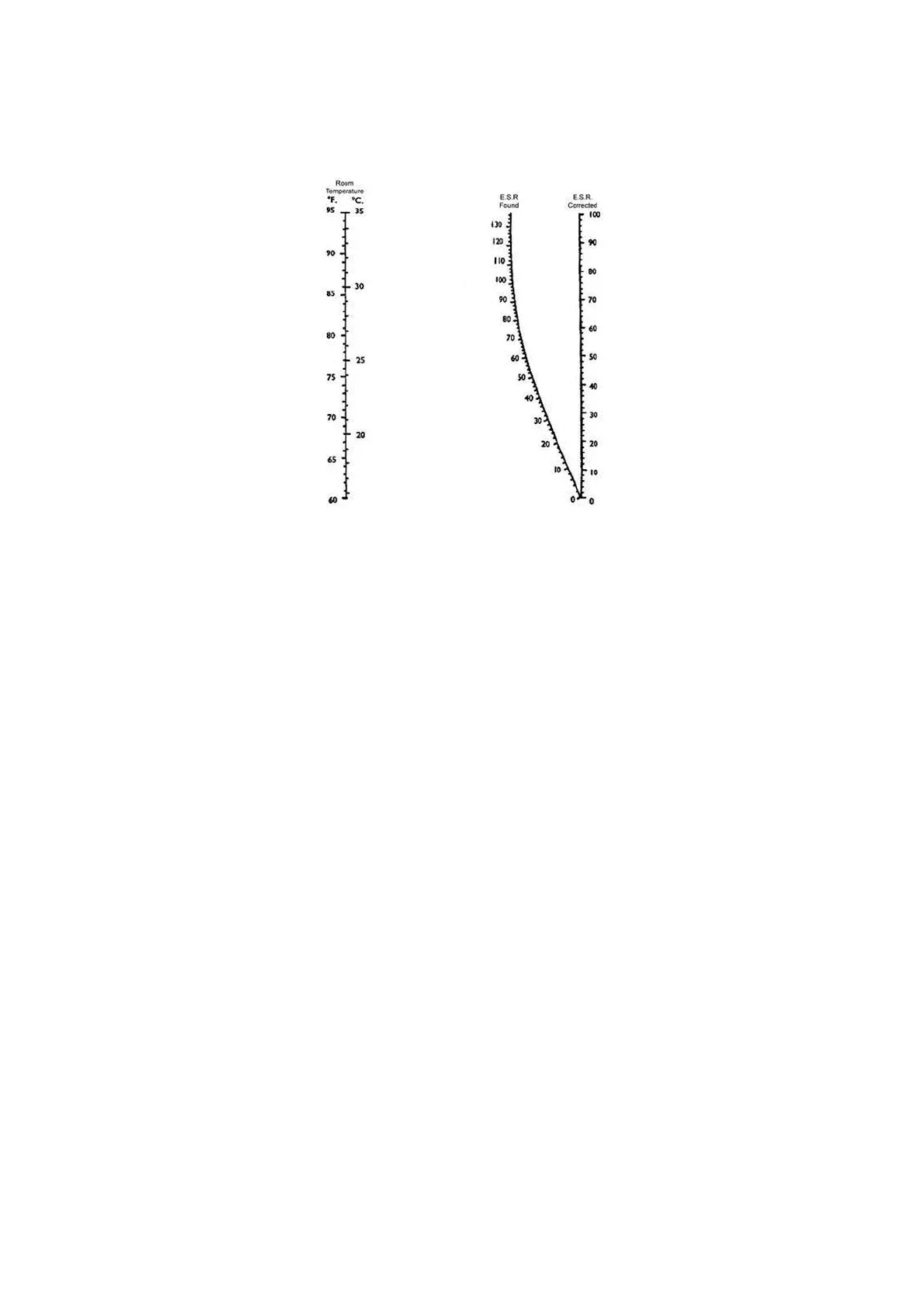
However, it is possible to de-select temperature correction according to laboratory
needs.
Figure 2 - Manley Nomogram
1.3 Clinical significance of ESR
The erythrocyte sedimentation rate test measures the distance travelled by red blood
cells over a certain period. In normal conditions, red blood cells tend to move apart
reciprocally due to the presence of negative electric charge from the numerous residues
of sialic acid present at a membrane glycoprotein level. When the protein composition
of plasma changes with the production of “acute phase proteins” at a hepatic level,
following an inflammatory process or tissue damage, the bond of these proteins
(fibrinogen, immunoglobulins) with the surface of the red blood cells alters the negative
charge of the membrane potential (Z) and the red blood cells can bind, forming a
rouleaux pattern. These rouleauxed cells aggregate to form microspheres of a uniform
radius, which start to sediment when their density exceeds that of plasma. The ESR value
goes up in all cases where there is an increase in acute phase proteins, in particular
fibrinogen (which is considered to account for 70% of the sedimentation phenomenon),
and immunoglobulins (which increase in the case of oncological/hematological diseases
and acute infections). ESR is therefore a non-specific measurement of an inflammatory
state; the rate is high in various pathological conditions such as inflammatory diseases
(infections, rheumatic diseases), a relative/absolute increase in globulins (nephrotic
syndrome, myeloma), tissue necrosis (myocardial infarction, tumours). ESR is useful for
predicting a diagnosis of some diseases, such as polymyalgia rheumatica, temporal
arteritis, rheumatoid arthritis, and Hodgkin’s disease, and is useful as an effective marker


 To Next Page