SAFETY 221
NOTE:
• The TPMS is not intended to replace normal tire care and
main
tenance, or to provide warning of a tire failure or
condition.
• Driving on a significantly underinflated tire causes the tire
to o
verheat and can lead to tire failure. Underinflation also
reduces fuel efficiency and tire tread life, and may affect
the vehicle’s handling and stopping ability.
• The TPMS is not a substitute for proper tire maintenance,
and
it is the driver’s responsibility to maintain correct tire
pressure using an accurate tire pressure gauge, even if
underinflation has not reached the level to trigger illumi
-
nation of the TPMS Warning Light.
• S
easonal temperature changes will affect tire pressure, and
the
TPMS will monitor the actual tire pressure in the tire.
System Operation
The Tire Pressure Monitor System (TPMS) uses wireless
techn
ology with wheel rim mounted electronic sensors to
monitor tire pressure levels. Sensors, mounted to each wheel
as part of the valve stem, transmit tire pressure readings to
the receiver module.
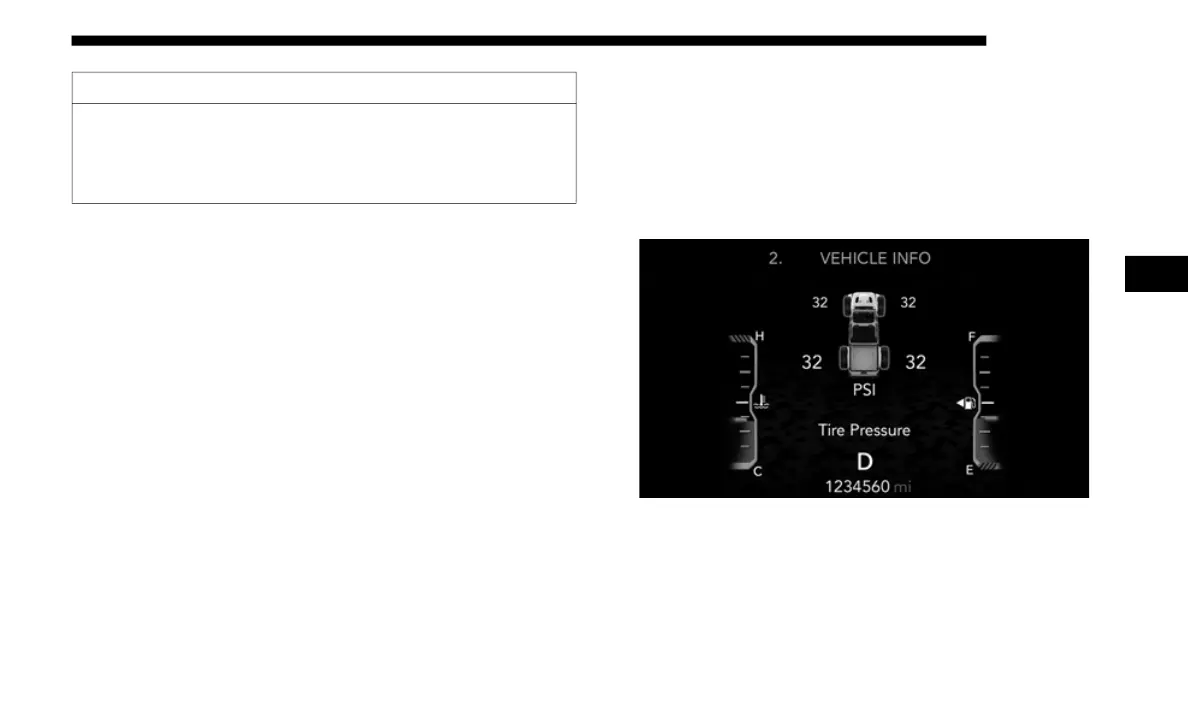
Tire Pressure Monitoring Display
NOTE:
It is particularly important for you to check the tire pressure
i
n al
l of the tires on your vehicle monthly and to maintain the
proper pressure.
• After inspecting or adjusting the tire pressure always
rein
stall the valve stem cap. This will prevent moisture
and dirt from entering the valve stem, which could
damage the TPMS sensor.
CAUTION! (Continued)
4














 To Next Page