Technical Information
99
CVA 265x & CVA 266x
5 Understanding Coffee System Temperature Fuses
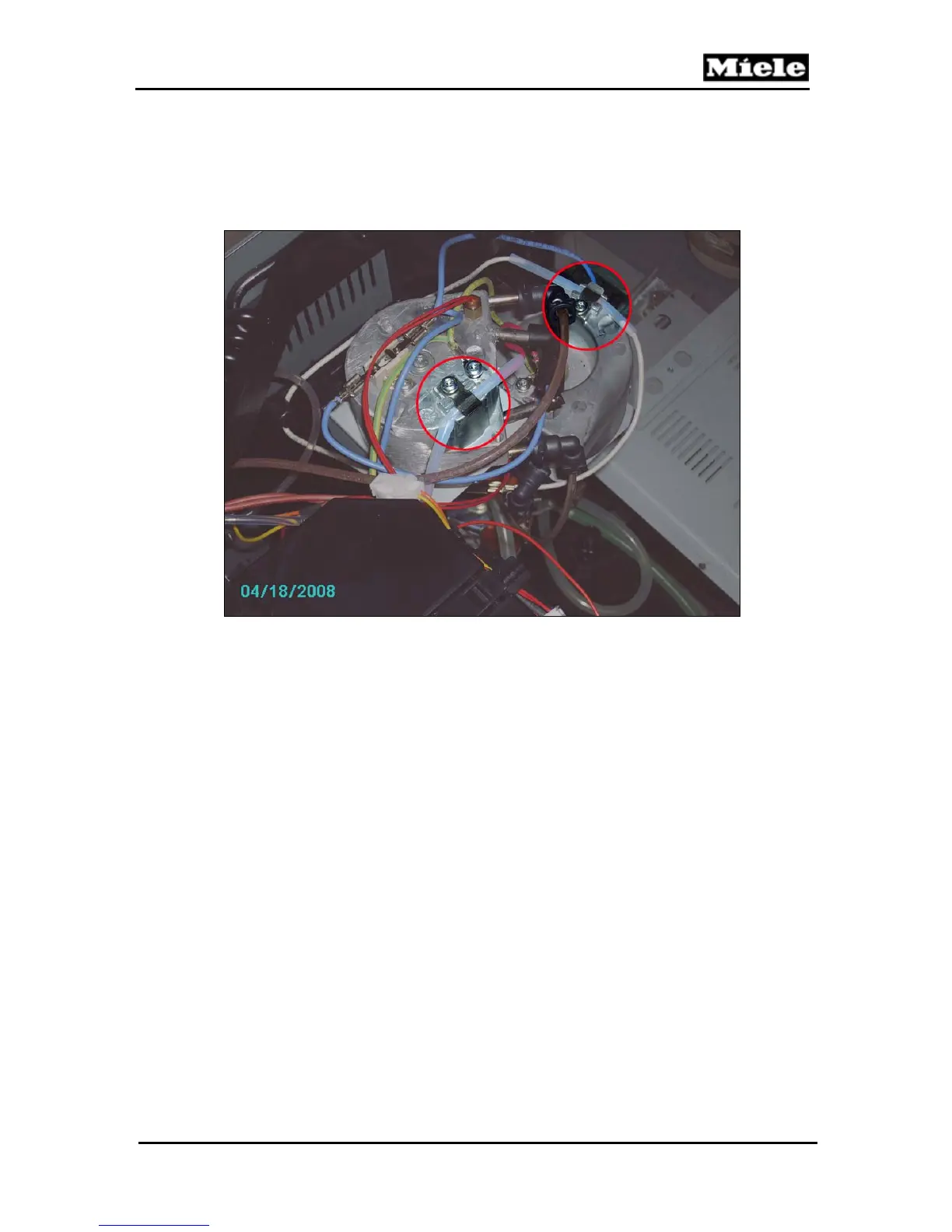
All CVA and CM coffee systems have temperature fuses on both the coffee
and steam heaters. (The CM5s have two fuses on one heater.) These fuses
are SODs (single-operation devices) designed to protect the system from a
“runaway heater” scenario.
The heaters are controlled by NTC feedback to the electronic and energized
via a TRIAC. TRIACS are power transistors designed to switch high-current
AC devices on and off. As a second layer of temperature control, the heaters
have self-resetting bimetal thermostats which interrupt the AC power to the
heater at a predetermined temperature. (Steam = 160°C; coffee = 116°C.) As
a final layer of protection, the temperature fuses are calibrated to open at
216°C. Once this fuse opens, the heater will no longer operate.
The CM5s operate in a similar fashion, but the bimetal thermostats are not
present and the cut-out temperatures are slightly different (192°C). In either
case, an open thermal fuse is a sign of other problems and should not be
replaced without further diagnosis.
“Runaway Heater” Scenario:
In some cases, a TRIAC can fail. This device can fail open or shorted. If it
fails open, AC power can no longer be sent to the heater. If it fails shorted, it
will continuously deliver full or possibly half-wave AC to the heater,
regardless of the NTC feedback. At this point, the heater will cycle based on
its bimetal self-resetting thermostat. Since this is a mechanical device being
stressed in this scenario, it also can possibly fail. Once this happens, the
heater can ‘run away’ and possibly damage other components or the entire
appliance. This is where the temperature fuse will activate and shut the
heater down permanently. This is not the only scenario that can cause
runaway heat. Other causes could be a faulty NTC or an internally shorted



 To Next Page