Basic Chemistry and Basic Corrosion Theory 2:18
CP 1 – Cathodic Protection Tester Course Manual
© NACE International, 2000
02/01/05
Driving Force for Corrosion
By now we know that corrosion involves a process in which current flows
from one metal surface, an anode, into the electrolyte and from the
electrolyte onto a second metal surface, a cathode. The question now is
“What causes the current to flow in the first place?”
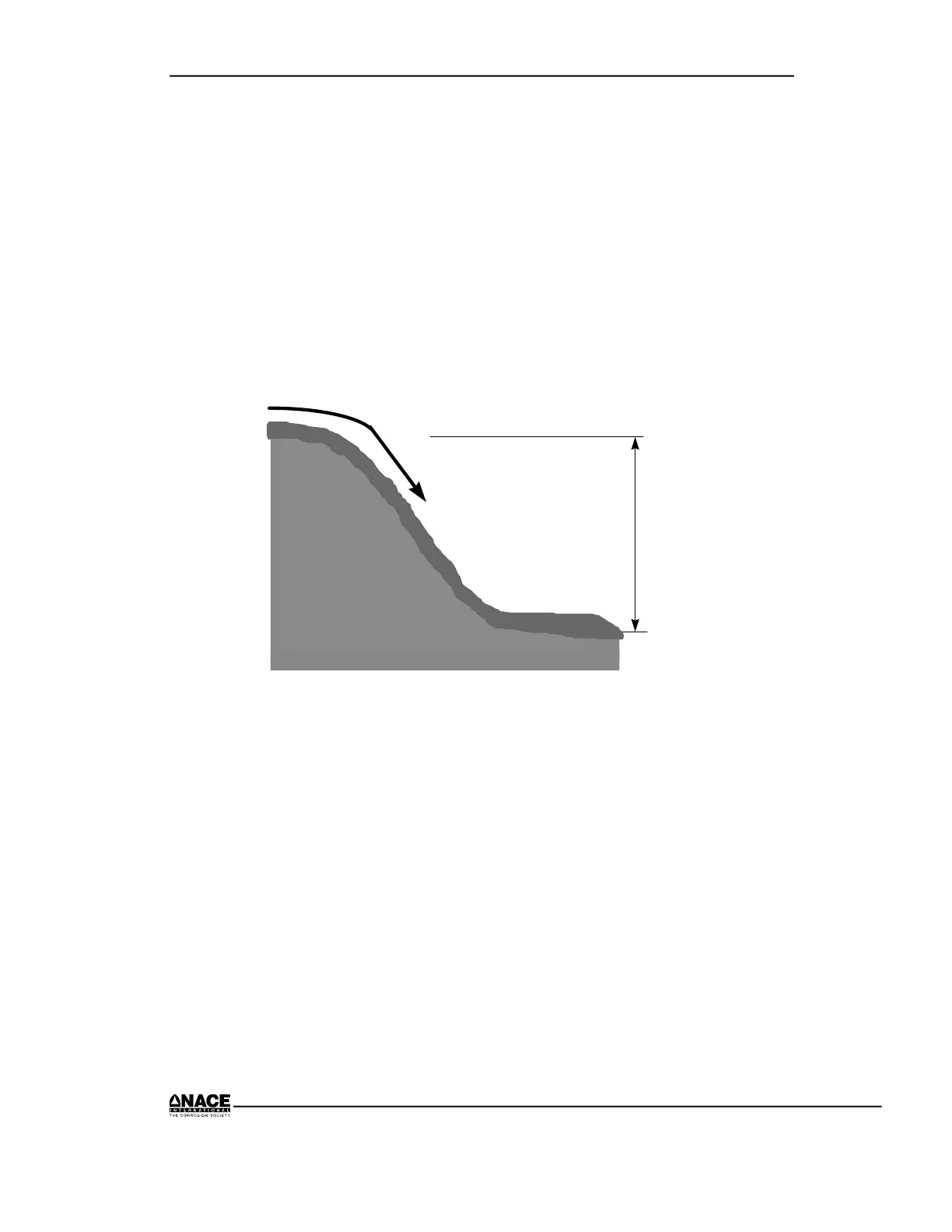
Current flow is similar to water flow. Water will flow if there is a
difference in elevation between the starting and ending flow points. See
Figure 2.16.
Elevation Difference
D
i
r
e
c
t
i
on
o
f
W
a
t
er
F
l
o
w
Figure 2.16 Elevation Difference Causes Water to Flow
Likewise, current will flow from one point to another if there is a voltage
difference between the two points. This voltage difference may be
generated by naturally occurring reactions or by stray current reactions as
discussed in the section “Causes of Corrosion”. There must be a voltage
difference between the anode and cathode of a corrosion cell for current to
flow.



 To Next Page