MS51
Nov. 28, 2019 Page 409 of 491 Rev 1.00
MS51 32K SERIES TECHNICAL REFERENCE MANUAL
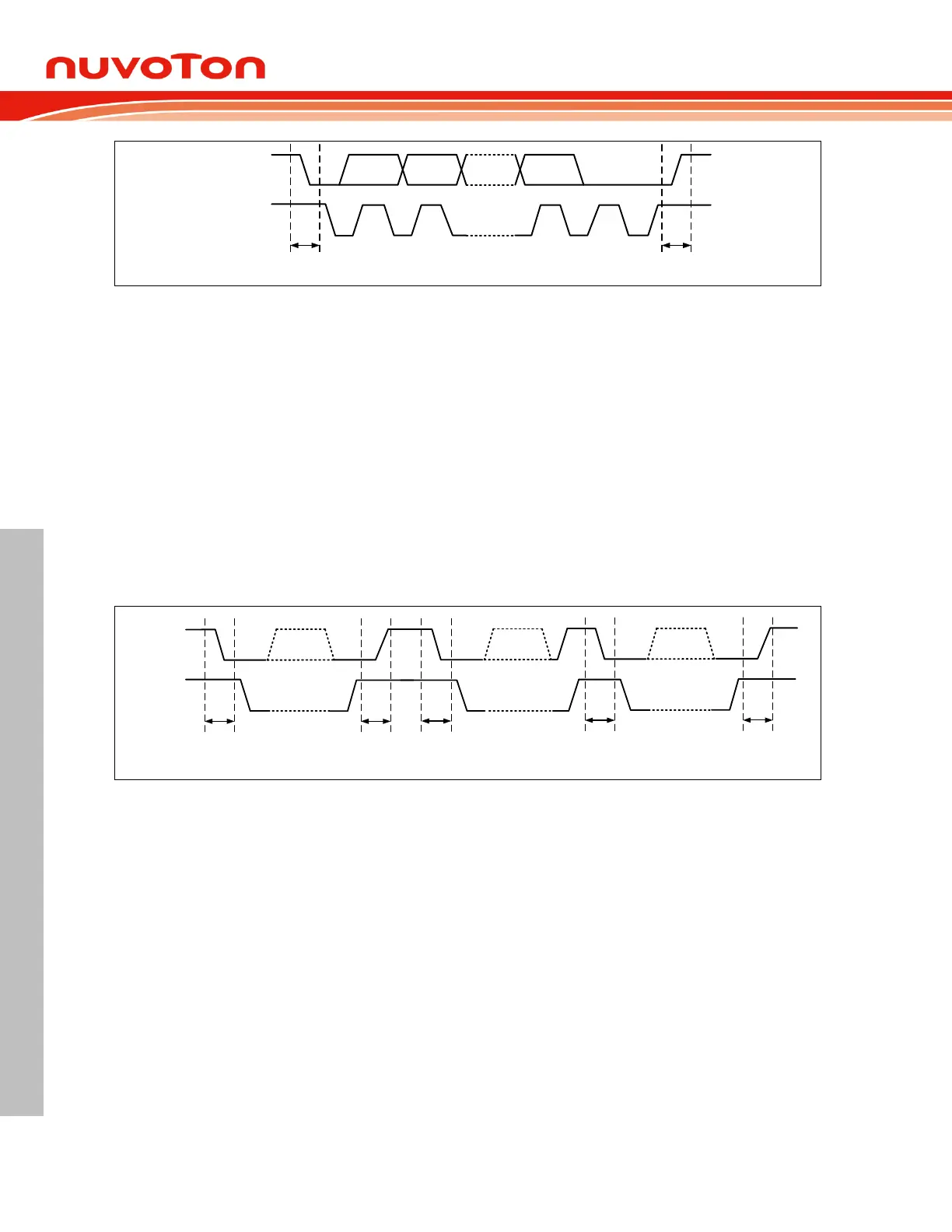
SDA
SCL
MSB
LSB
ACK
1
2 8 9
START
condition
STOP
condition
Figure 6.11-2 I
2
C Bus Protocol
START and STOP Condition 6.11.2.1
The protocol of the I
2
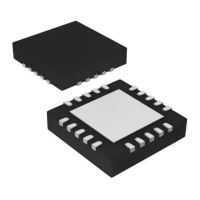
C bus defines two states to begin and end a transfer, START (S) and STOP (P)
conditions. A START condition is defined as a high-to-low transition on the I2C0_SDA line while
I2C0_SCL line is high. The STOP condition is defined as a low-to-high transition on the I2C0_SDA line
while I2C0_SCL line is high. A START or a STOP condition is always generated by the master and I
2
C
bus is considered busy after a START condition and free after a STOP condition. After issuing the
STOP condition successful, the original master device will release the control authority and turn back
as a not addressed slave. Consequently, the original addressed slave will become a not addressed
slave. The I
2
C bus is free and listens to next START condition of next transfer.
A data transfer is always terminated by a STOP condition generated by the master. However, if a
master still wishes to communicate on the bus, it can generate a repeated START (Sr) condition and
address the pervious or another slave without first generating a STOP condition. Various combinations
of read/write formats are then possible within such a transfer.
SDA
SCL
START STOP
START
Repeated
START
STOP
Figure 6.11-3 START, Repeated START, and STOP Conditions
7-Bit Address with Data Format 6.11.2.2
Following the START condition is generated, one byte of special data should be transmitted by the
master. It includes a 7-bit long slave address (SLA) following by an 8
th
bit, which is a data direction bit
(R/W), to address the target slave device and determine the direction of data flow. If R/W bit is 0, it
indicates that the master will write information to a selected slave. Also, if R/W bit is 1, it indicates that
the master will read information from the addressed slave. An address packet consisting of a slave
address and a read I or a write (W) bit is called SLA+R or SLA+W, respectively. A transmission
basically consists of a START condition, a SLA+W/R, one or more data packets and a STOP
condition. After the specified slave is addressed by SLA+W/R, the second and following 8-bit data
bytes issue by the master or the slave devices according to the R/W bit configuration.
Figure 6.11-4 shows a master transmits data to slave by 7-bit. A master addresses a slave with a 7-bit
address and 1-bit write index to denote that the master wants to transmit data to the slave. The master
keeps transmitting data after the slave returns acknowledge to the master.



 To Next Page