2-7
Installation
Environmental
Considerations
To ensure maximum transmitter life, avoid excessive heat and
vibration. Typical problem areas include high-vibration lines with
integrally mounted transmitters, warm-climate installations in direct
sunlight, and outdoor installations in cold climates.
Because the Model 8732C System requires external power, access to a
suitable power source must be ensured.
Overheating will damage the flowtube. Do not encapsulate the flowtube
with heating elements.
INSTALLATION
PROCEDURES
These installation tasks provide detailed mechanical and electrical
installation procedures.
Handling
All parts should be handled carefully to prevent damage. Whenever
possible, transport the system to the installation site in the original
shipping containers. The flowtube is shipped with end covers to protect
it from mechanical damage and normal unrestrained distortion. End
covers should not be removed until just before installation. Keep
shipping plugs in conduit connections until conduits are connected
and sealed.
All flowtube liners are vulnerable to handling damage. Never place
anything through the flowtube for the purpose of lifting or gaining
leverage. Liner damage can render the flowtube useless.
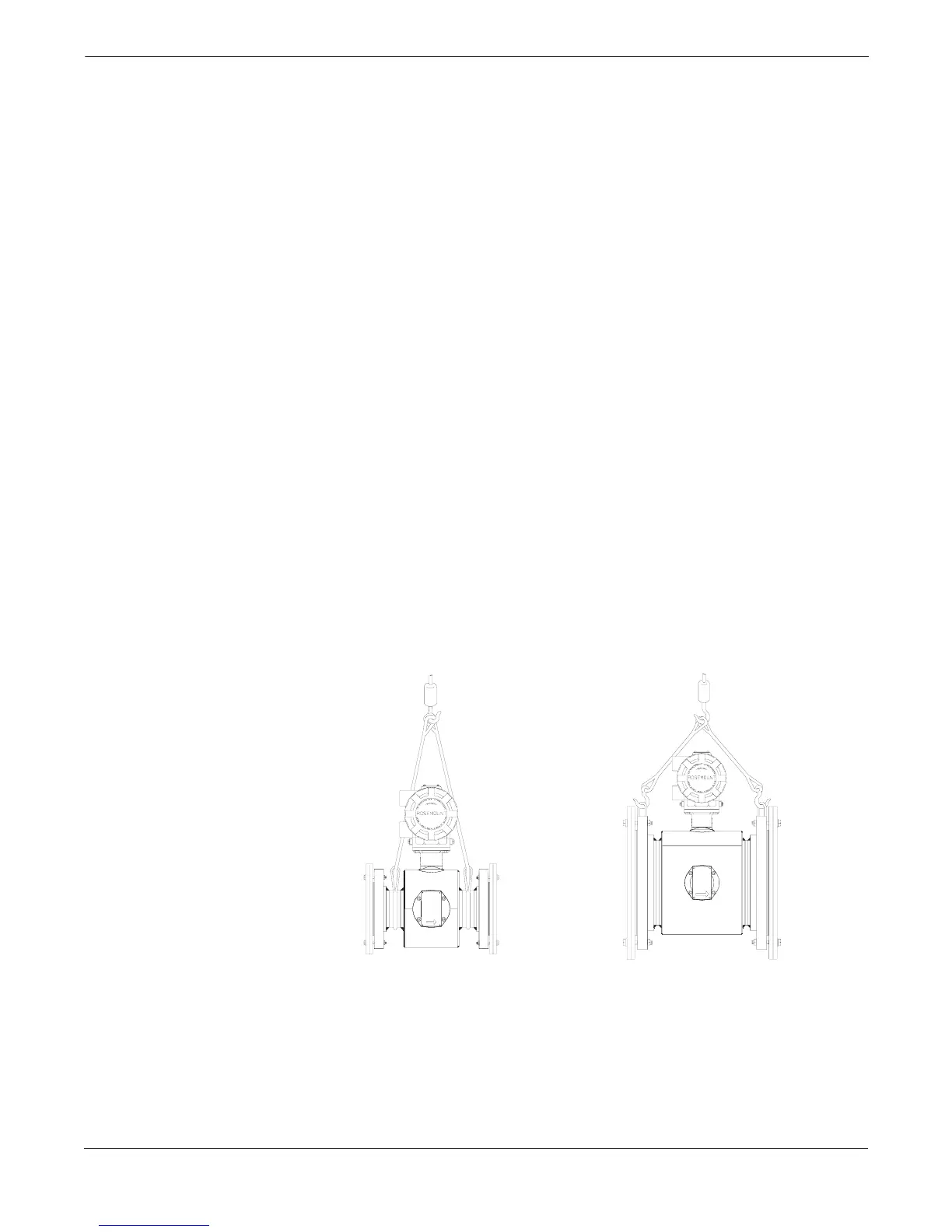
Flanged flowtubes have different lifting and transportation guidance.
Refer to Figure 2-4 for correct handling techniques. Wafer style
flowtubes have no special lifting directions, however every precaution
should be taken to avoid liner damage.
½- to 4-Inch Flowtubes
6-Inch and
Larger Flowtubes
8732-0281B02A, C02A
FIGURE 2-4. Model 8705
Flowtube Support for Handling.




 To Next Page