A7.3
Auto-calibration response curve
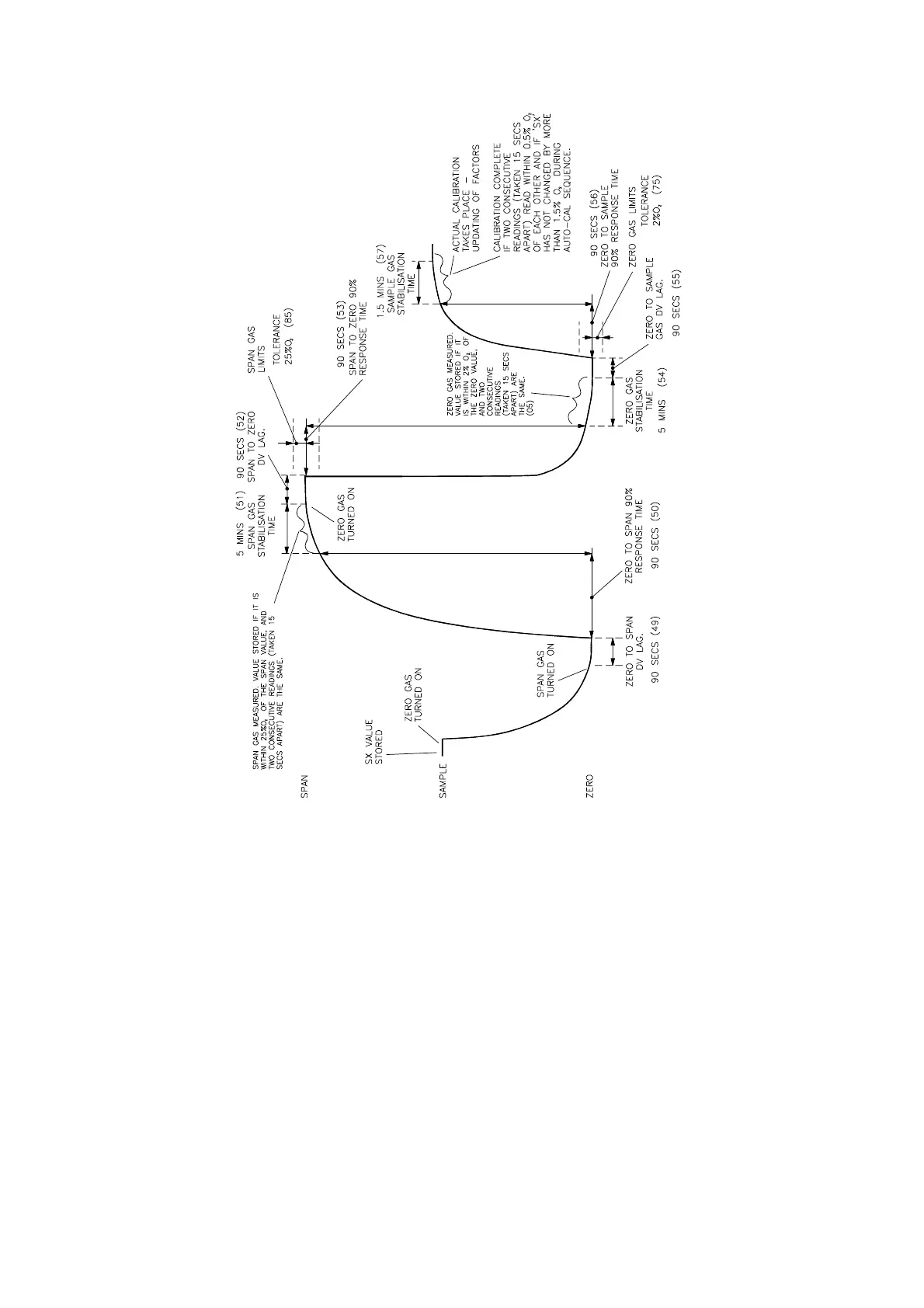
The oxygen signal during the auto-calibration sequence is shown in Figure 3.3. At the start of auto-
calibration the analyser measures and stores the oxygen content of the sample gas. The zero gas
is turned on and then there is a short distance velocity (DV) lag before the oxygen reading
changes towards zero gas. This change is searched for by the analyser and the length of this DV
lag is measured. If there is no change in oxygen signal during a certain preset time, which can be
selected by the user, the auto-calibration sequence will be aborted since the analyser will assume
that zero gas is not flowing. The analyser will then return to sample gas and sample reading
without re-calibrating. If the zero gas is flowing the analyser will search for the 90% point again
within a preset time interval, and if the oxygen signal does not reach that point within that time then
the analyser will again abort the sequence. If the 90% point is detected the analyser will search
for a plateau by measuring the oxygen reading every 15 seconds and will compare consecutive
readings. When two readings are identical the analyser assumes the plateau has been reached
and stores that oxygen reading as the zero calibration point.
Note: The analyser only stores these readings at this stage, it does not re-calibrate to zero.




 To Next Page