Sirona Dental Systems GmbH 2 Safety instructions
C3
+
2.8 Trouble-free operation
59 06 404 D 3390
D 3390.201.01.18.02
13
In order to ensure the operational safety and reliability of
your treatment center and to avoid damage due to natu-
ral wear, you as the system owner must have your sys-
tem checked regularly by an authorized service engineer
from your dental depot. Furthermore, safety checks
must be performed. Please contact your dental depot to
obtain a maintenance offer. For further information, see
"Maintenance" on page 117.
2.8 Trouble-free operation
Trouble-free operation
Use of this unit is permissible only if it works properly
without malfunctions. If trouble-free operation cannot be
ensured, the unit must be taken out of service, checked
by authorized technicians for malfunctions and, if neces-
sary, repaired.
2.9 Vacuum system
The suction removal of aluminum and other metal oxides
from blasting devices via the amalgam separator and the
automatic separator installed in the treatment center is
prohibited! This would cause extreme wear and clogging
of the suction and water paths.
A separate vacuum system must be used in connection
with metal oxide blasting devices. Treatment centers
equipped with a central wet suction system are generally
suitable for suction removal of the above material. How-
ever, make sure to observe the instructions provided by
the manufacturer of your vacuum system.
No restrictions apply when using salt blasting devices in
connection with Sirona treatment centers. However, in
such cases, make sure that the system is subsequently
flushed with an adequate amount of water.
2.10 Patient chair
Patient chair
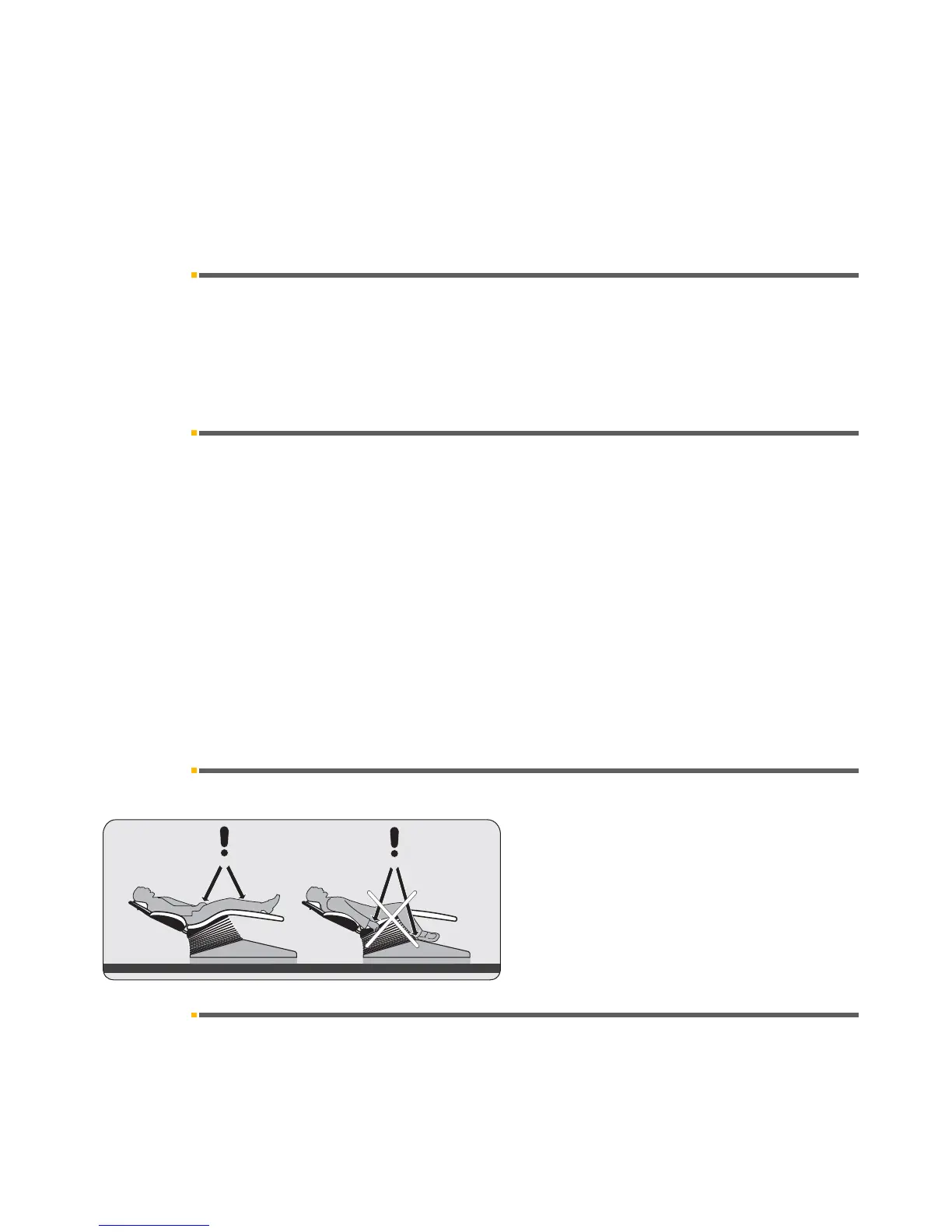
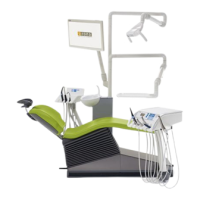
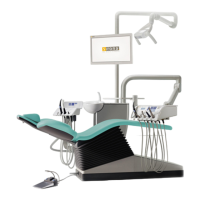
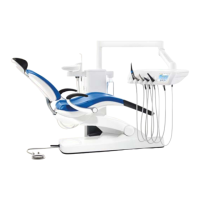
Please observe the patient chair's maximum load
capacity of 135 kg.
The weight distribution complies with ISO 6875. The
mechanical stability test is performed with a multiple
safety factor according to IEC 60601-1.
The maximum permissible weight of accessories
mounted on the patient chair is 5 kg.
The patient’s arms and legs must be resting on the
upholstery of the chair.
2.11 Ventilation slots
Ventilatio n slots
Under no circumstances may the ventilation slots on the
unit be covered, since otherwise the air circulation will be
obstructed. This can cause the unit to overheat.




 To Next Page