MC50 Integrator Guidexii
Configurations
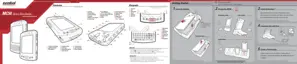
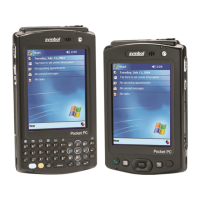
Depending on device configuration, the MC50 includes the following features:
• OS: Microsoft Windows Mobile 2003 Second Edition for Pocket PC
• Memory Configuration: 64 MB ROM/64 MB RAM
• Display: 3.5” QVGA transflective color touchscreen
• Keypads: Navigation (PDA-style) or QWERTY
• Data Capture: 1-dimensional bar code scanning via linear CMOS, 1-dimensional and 2-dimensional bar code imaging, or
image capture via camera
• Radio: 802.11b wireless LAN (WLAN).
Chapter Descriptions
Topics covered in this guide are as follows:
• Chapter 1, Getting Started provides information on mobile computer configurations and accessories, charging the battery,
and resetting.
• Chapter 2, Accessories describes the accessories available for the mobile computer and how to set up power connections
and battery charging capabilities, where applicable.
• Chapter 3, ActiveSync provides instructions on installing ActiveSync and setting up a partnership between the mobile
computer and a host computer.
• Chapter 4, Software Installation on Development PC provides instructions for installing the Device Configuration Package
(DCP) for MC50 and the SMDK for eVC4 on the host computer.
• Chapter 5, Software Installation on Mobile Computer provides information for downloading software and files to the mobile
computer.
• Chapter 6, Creating and Loading Hex Images describes how to install and use the Terminal Configuration Manager (TCM)
and Initial Program Loader (IPL) to customize flash file system partitions for the mobile computer.
• Chapter 7, Symbol Configuration Manager (SCM) describes how to use the Symbol Configuration Manager (SCM.exe) utility
to create registry files that set configuration parameters on a mobile computer.
• Chapter 8, WLAN Configuration describes how to configure the wireless connection.
• Chapter 9, AirBEAM Smart explains how to transfer specially-designed software packages between a host server and
Symbol mobile computers.
• Chapter 10, Rapid Deployment Client describes how to use the Rapid Deployment (RD) Client to facilitate software
downloads to a mobile computer from a Mobility Services Platform (MSP) Console’s FTP server.
• Chapter 11, Maintenance & Troubleshooting, includes instructions on cleaning and storing the mobile computer, and
provides troubleshooting solutions for potential problems during mobile computer operation.
• Appendix A, Specifications includes a table listing the technical specifications for the mobile computer.
• Appendix B, Keypad Maps contains keypad maps for keypad configurations.
Notational Conventions
The following conventions are used in this document:
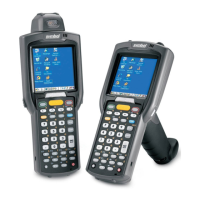
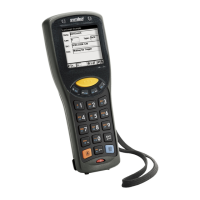
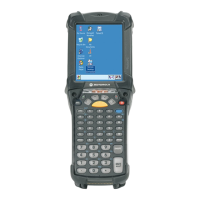
• “Mobile computer” refers to any Symbol terminal.
• Italics are used to highlight the following:
• chapters and sections in this and related documents
• dialog box, window and screen names


 To Next Page