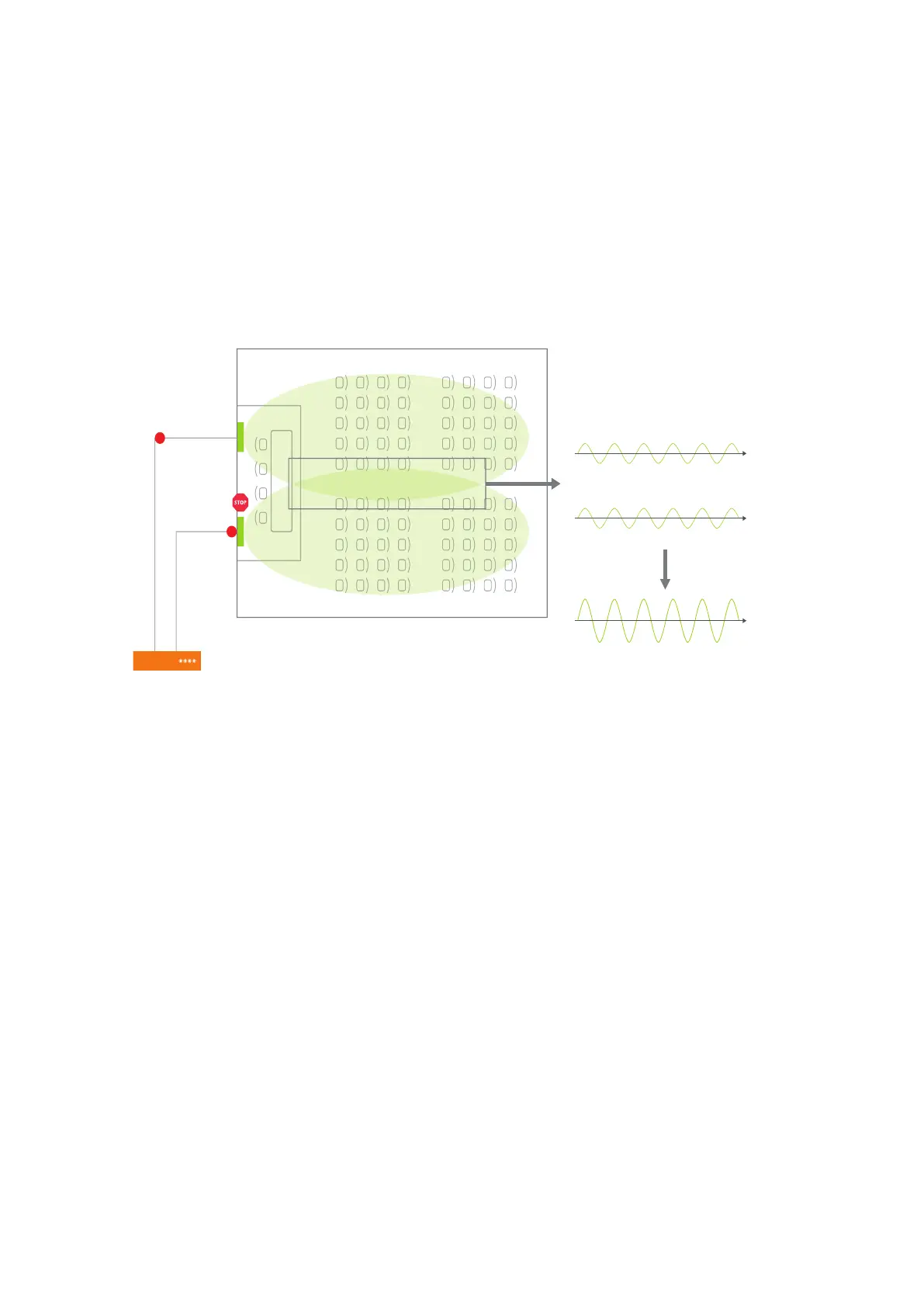
Figure 6-2 The relation between the delay of a signal in the cable and the signal picked up by the receiver. When
the infrared signals of the radiators are asynchronous, they cancel each other out. As a result the receiver will
have no audio.
To prevent this effect you need to compensate for this delay. This means that the radiators need to send
their signal at the same time of that of the slowest radiator, delaying their signal until the slowest radiator
receives the data. The slowest radiator is the one which has the longest cable between the transmitter and
the radiator.
+
Radiator 2
Radiator 1
Enhanced
Signal
1
2
Figure 6-3 After delay line compensation the radiator halts the transmission of its infrared signal until the
slowest radiator also receives the signal.
The Lingua IR system has an automatic delay line compensation mechanism where the software measures
the delay based on pulses it sends over the cable. Based on the results it will specify the delay as a multiple
of 25ns (for 71.98.0223) or 12,5 ns (71.98.0220). The web server will also give a visual representation of all
radiators and their distance to the transmitter.
CONFIG URE RADIATO R SETTING S 77


 To Next Page