IM-LYOQUEST-EN-2101 49 / 58
13.2. Examples of recipes
The following 2 exemplary recipes are intended to facilitate the use of the equipment and
provide the user with an initial starting point to start lyophilization.
Attention: These recipes are merely intended as a tutorial and therefore they cannot be
applied to any other product. The recipes were developed for use with the intended products
only (i.e. mushrooms and skimmed milk) and regarding pressure and temperature
conditions. Times may also vary depending on the container used, product height, etc. It is
important that the products are well frozen before placing them in the equipment. Evidently
every other product will have its own optimal recipe which will depend on its intrinsic nature.
By consequence, these recipes can only be used in order to get a general idea of how to take
a start with the lyophilization process. Further experimentation based on these recipes can
nevertheless lead to the optimal recipe for each specific product.
ANNEX A.1: RECIPE FOR MUSHROOMS LYOPHILIZATION
Step Nº Process
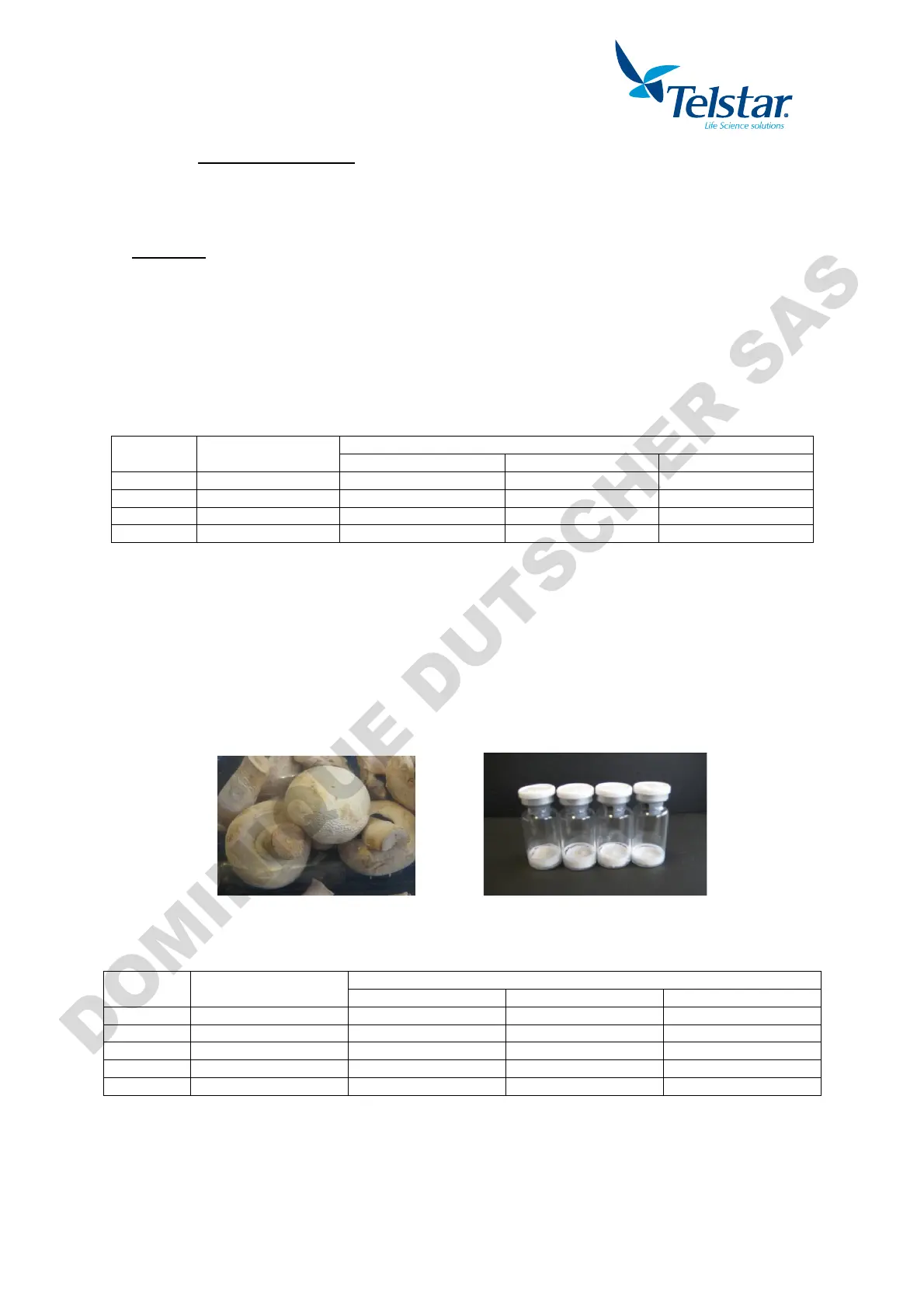
Fig. A1: lyophilized mushrooms. As can be seen the lyophilized mushrooms maintain the
original volume and appearance. Noticeably this product has practically lost all its humidity,
which results in a strongly reduced density compared to the original product. Drying products
by lyophilization involves two major advantages: on the one hand it is possible to conserve
the product during a much longer period of time, while on the other hand it entails a
considerable reduction in transportation costs (due to its reduced weight). In order to
maximize the conservation of the mushrooms it is recommended that once lyophilized, the
mushrooms are inserted in a bag that previously has been vented with nitrogen. Once the
mushrooms have been inserted, the bag needs to be closed immediately to avoid
contamination by atmospheric humidity.
Fig. A1 Fig. A2
ANNEX A.2: RECIPE FOR THE SKIMMED MILK LYOPHILIZATION
Step Nº Process
Fig. A2: lyophilized skimmed milk. The lyophilized skimmed milk has the appearance of a
well-formed, solid, consistent tablet with minor shrinkage. In order to obtain optimal
conservation, it is recommended to lyophilize the milk in vials, which are to be closed under
vacuum atmosphere once the lyophilization process has come to an end. In this way
contamination of the product by atmospheric humidity is avoided.


 To Next Page