6.1 CHOOSE A BLADE
Using the correct blade for the material is important to reduce
cost and to operate the bandsaw efficiently. Because there's a
wide variety of bandsaw blade types, you must first know the
specifications of the material you want to cut.
Choosing a blade depends on a number of different factors.
Use this section as a reference; for more information, see your
blade manufacturer's reference materials.
Note: AF50+ Autofeed Bandsaw blades are 93 in. ×
3/4 in. × 0.35 in.
To choose a blade, determine the following:
1.
Teeth Per Inch (TPI) Based on the size and shape of
the material, select the TPI. A high TPIcuts slower and
smoother, while a low TPIcuts faster and rougher. While
cutting, you must always have three teeth engaged with
the part.
Material Thickness Range TPI Range
1/8 in. (6 mm) to 1/4 in. 10 to 14
1/4 in. to 1/2 in. (12 mm) 8 to 12
1/2 in. (12 mm) to 1 in. 6 to 10
1 in. to 2 in. 5 to 8
2 in. to 4 in. 3 to 4
4 in. to 7 in. 2 to 3
7 in. to 12 in. 1-2/5 to 2-1/2
2.
Tooth Form Select the tooth form (the shape of the
cutting edge). The tooth form affects how the blade cuts
through the material.
3.
Tooth Set Based on the required chip clearance, select
the tooth set (the angle at which the tooth is offset from
the blade). The particular tooth set is what carries the
chip away from the cut, and is important for surface
finish.
6.2 CHANGE A BLADE
The bandsaw arrives with a blade installed. To change the
blade, complete the following steps in the order listed:
6.2.1 Install a New Blade 30
6.2.2 Verify the Blade Installation 33
6.2.3 Break in the Blade 33
Note: For simplicity, you must verify the blade
installation before you set the saw head down.
6.2.1 Install a New Blade
WARNING! Crush Hazard:Moving parts can entangle,
pinch, or cut you, causing death or serious injury.
While operating the machine in vertical position, you
must keep your hands away from the blade.
1. Put on work gloves, eye protection, and any other
appropriate personal protective equipment. We
recommend a long-sleeved shirt and long pants.
2. Power off the bandsaw and disconnect it from the main
air supply.
a. Push the Emergency Stop button on the operator
panel to lock it into the disabled position.
b. Turn the Main Disconnect switch to OFF.
Mains power is disconnected from the machine.
c. Disconnect the air line from your site from the input
port on the FRLFilter-Regulator-Lubricator.
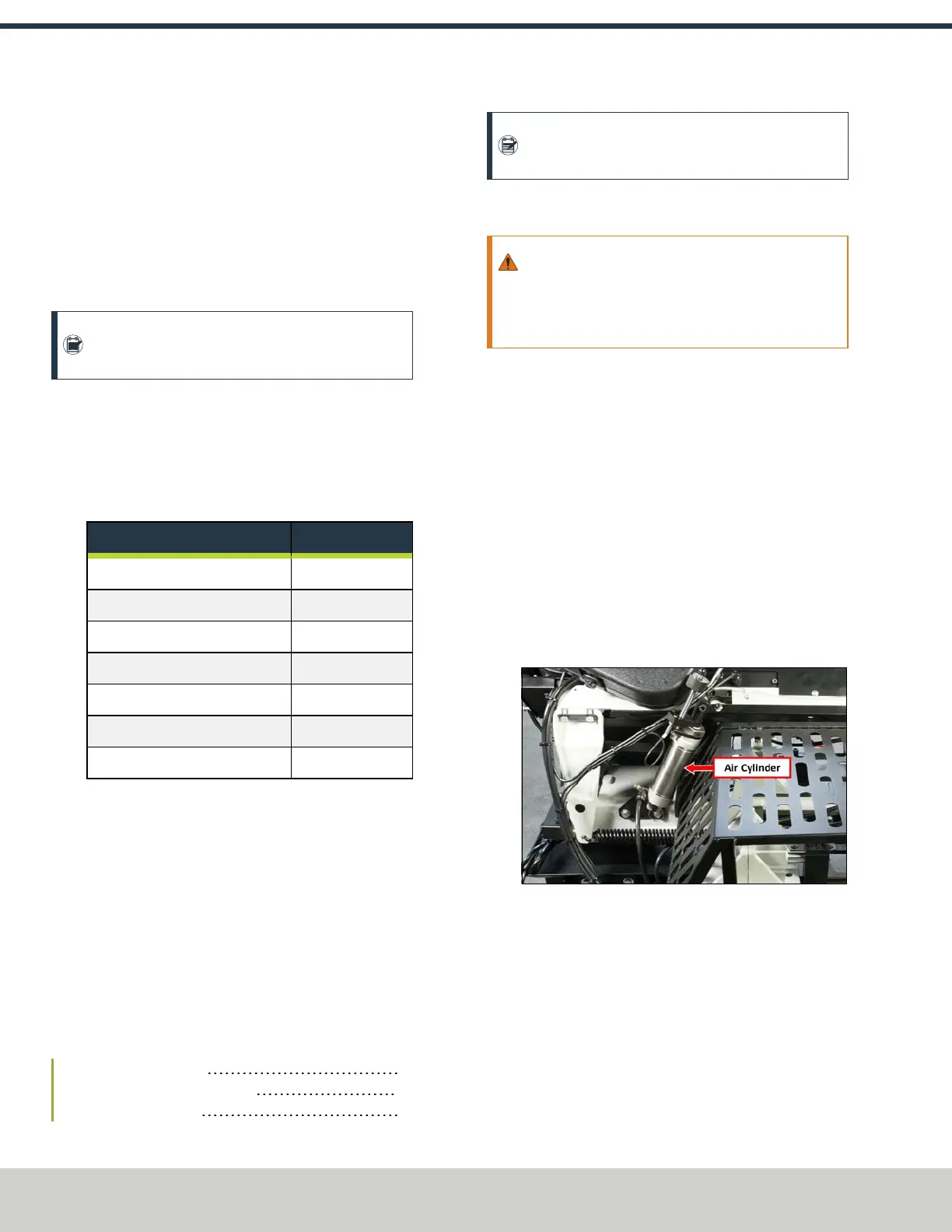
3. On the back of the machine, identify the air cylinder, as
shown in the following image.
Figure 6-1: Air cylinder on the back of the machine.
©Tormach® 2024
Specifications subject to change without notice.
Page 30 UM10825: AF50+ Autofeed Bandsaw Operator's Manual (Version 0324A)
For the most recent version, see tormach.com/support
6: BASIC OPERATIONS


 To Next Page