Device overview S88 / OPMI Lumera T
Version 8.0
Page 60 G-30-1682-en
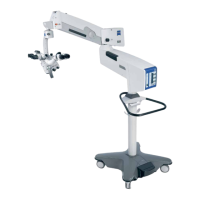
2 Support arm for the surgical microscope
The carrier arm incorporates a tilt device (3). This allows the viewing
direction of the surgical microscope to be adapted to the requirements of
the surgical field. Using the fine tilting knob, the surgical microscope can
be positioned in a range from + 90° to – 90° (+ is towards the surgeon and
– in the opposite direction). The 90° position is ideal for surgery on
patients in a seated position or lying on their side.
3 Tilting device
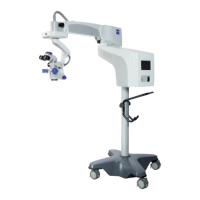
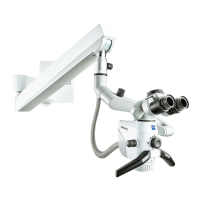
4 Surgical microscope
The apochromatic optics of the surgical microscope provide superb optical
quality. The microscope image displays optimum contrast and excellent
detail recognition along with a large depth of field. The bright microscope
image is particularly beneficial in vitreoretinal surgery. A 1:6 ratio zoom
system allows the magnification of the overall system to be set as required
by the surgical procedure. Two apochromatic objective lenses with focal
lengths of 175 mm and 200mm are available for adjustment to different
working distances.
5 Invertertube for the main surgeon
6 Invertertube for assistants
Tubes (5) and (6) offer an inverter function for ophthalmic applications.
The inverter is used to bring an inverted image created by a wide-angle
observation system into the correct position.
With the inverter deactivated, tubes (5) and (6) have the same optical
function as normal tiltable tubes.
7 180° tiltable binocular tube (option)
Due to its large tilt range, the tiltable binocular tube allows optimum
adaptation to extreme surgical conditions.
8 45° inclined binocular tube (option)
The 45° inclined binocular tube is used as a viewing device for the
surgeon. The viewing angle of 45° allows work with minimum fatigue.
The standard equipment includes eyepieces with a magnification factor of
10x (option: 12.5x ).
NOTE Risk of damaging the light guide
• Do not tilt the microscope beyond +/- 90°, as this could damage the
microscope cable and/or the light guide.




 To Next Page