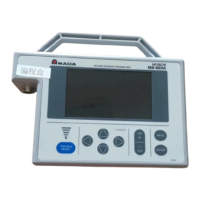
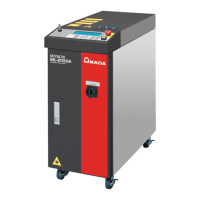
HF-2500A HIGH FREQUENCY WELD CONTROL
990-371 F-1
APPENDIX F
The Basics of
Resistance Welding
Resistance Welding Parameters
Resistance welding heat is produced by passing electrical current through the parts for a fixed time period.
The welding heat generated is a function of the magnitude of the weld current, the electrical resistance of
the parts, the contact resistance between the parts, and the weld force applied to the parts. Sufficient weld
force is required to contain the molten material produced during the weld. However, as the force is
increased, the contact resistance decreases. Lower contact resistance requires additional weld current,
voltage, or power to produce the heat required to form a weld.
The higher the weld force, the greater the weld current, voltage, power, or time required to produce a
given weld. The formula for amount of heat generated is I
2
RT -- the square of the weld current [ I ] times
the workpiece resistance [ R ] times the weld time [ T ].
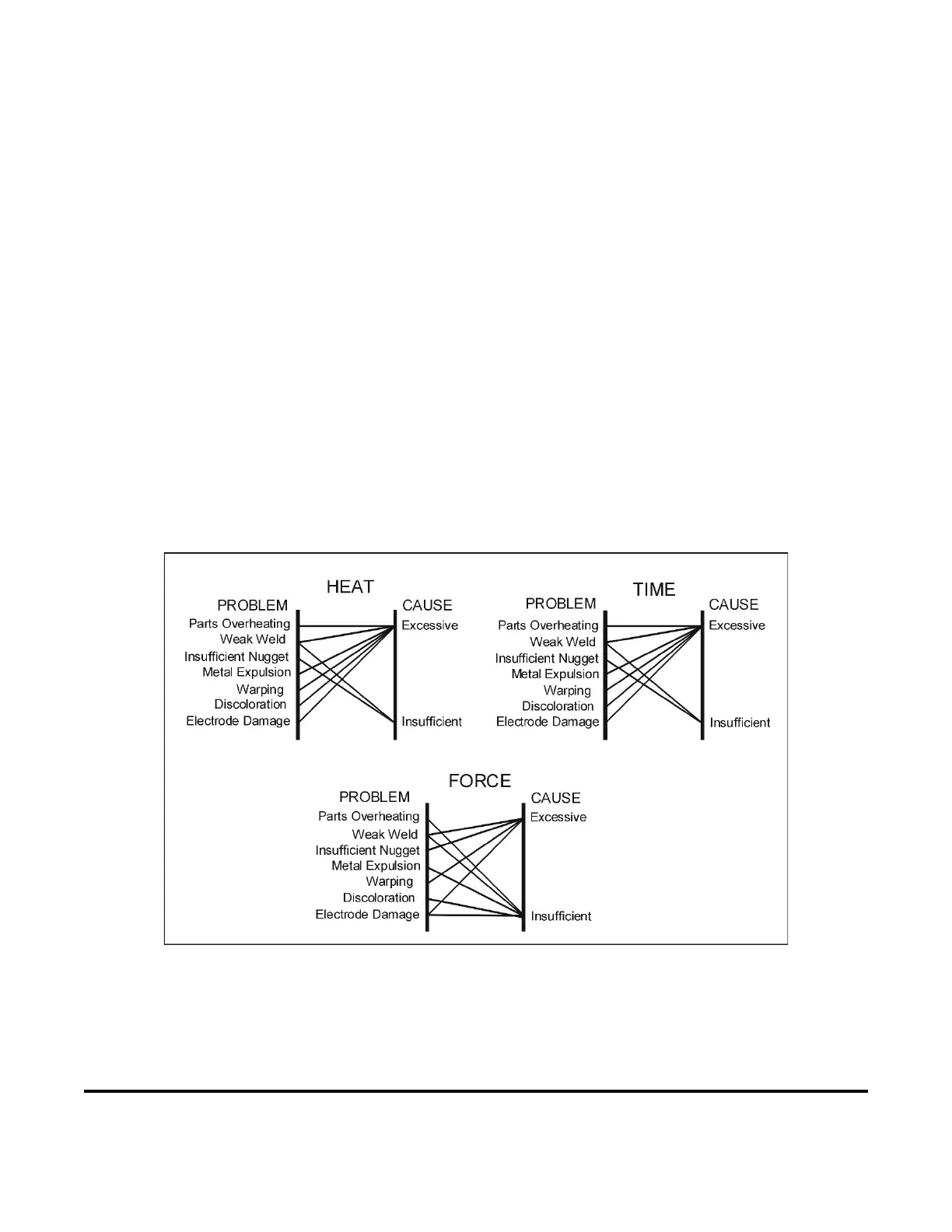
Welding Parameter Interaction
Interaction of Welding Parameters


 To Next Page