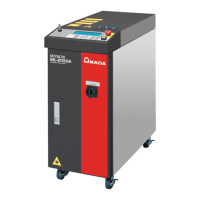
HF-2500A HIGH FREQUENCY WELD CONTROL
990-371 6-1
CHAPTER 6
Maintenance
Section I. Introduction
General Kinds of Problems
It has been our experience that most resistance welding power supply ‘problems’ are caused by lack of
material control, process control and electrode tip surface maintenance. The problems that you might
encounter fall into two groups:
• Soft — The problem is transient, and you can correct it by resetting the system or
parameter limits. For example, you should ensure that:
− Correct force is set at the weld head
− Correct weld energy and time is set at the Power Supply
− The equipment is set up properly
− All electrical connections are tight
− Electrode alignment allows flush contact with the weld pieces
− Electrodes are properly dressed
• Hard — The problem is embedded in the system and some form of repair will be needed. For
example, repair might include replacing a broken weld head flexure.
Alarm Messages
Built-in automatic self-test and self-calibration routines will bring up alarm messages on the display
screens. These messages will usually let you know what action is required of you to correct the reason
for the alarm. For a complete listing of the alarm messages, what they mean, and corrective actions, see
Section II, Troubleshooting.


 To Next Page