-- 7 7 --cdte1de2
Setting direct and alternating current
Direct cu rrent:
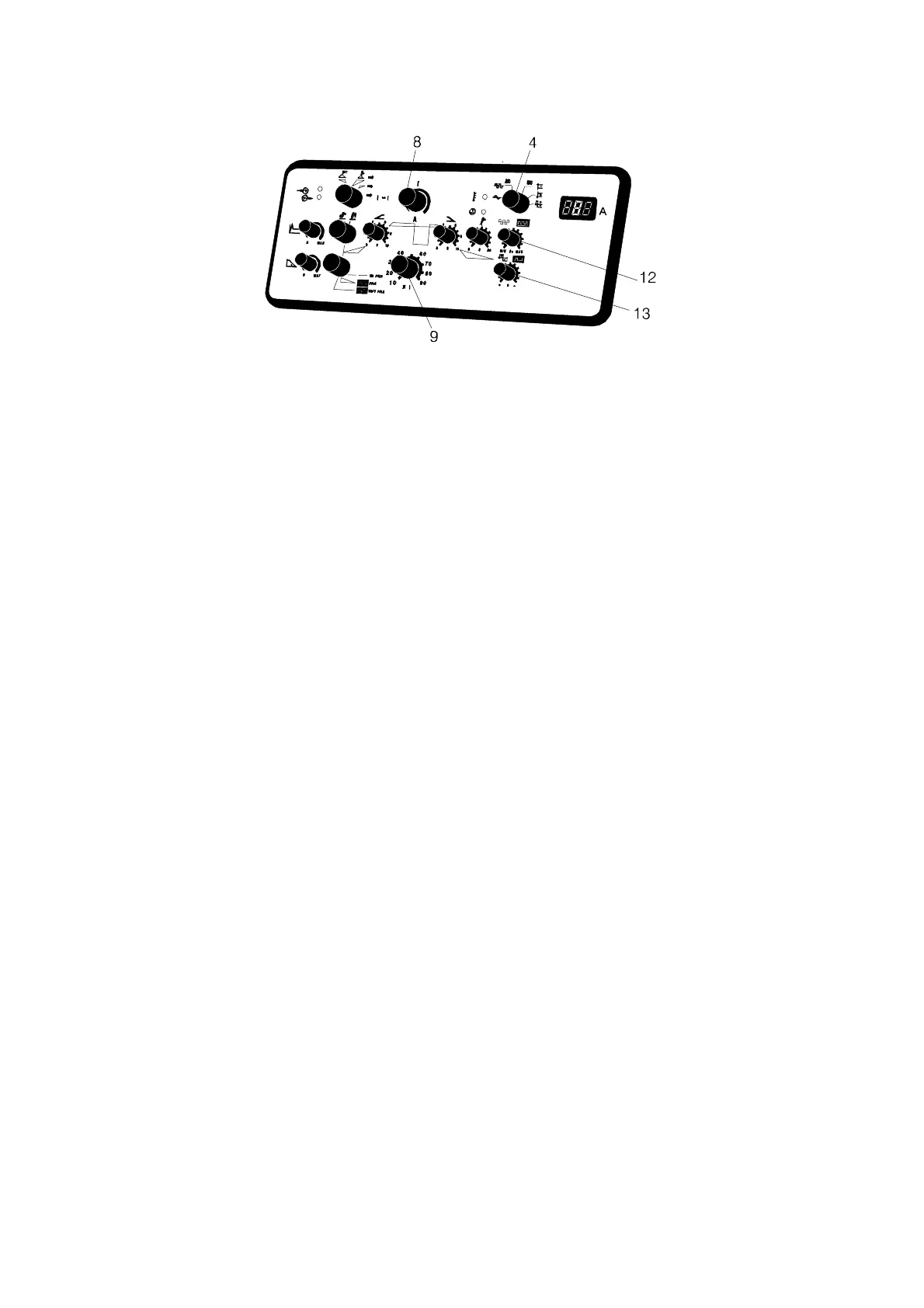
S Set switch (4) to the position for direct current with negative polarity.
If pulsing has been selected:
S Set the pulse cur rent value using potentiometer (8).
S Set the background curr ent in per cent of the pulse current value using
potentiometer (9).
S Set the pulse f requency using potentiometer (12).
S Set the time relation between pulse and background current using
potentiometer (13).
Alternating current:
Two different types of alternating current can be set over switch (4):
S A sine--wave type, characterised by low noise and a soft arc. Effective when low
frequencies are used!
S A square--wave type, characterised by a hard and stable arc, resulting in a somewhat
higher noise level.
The arc is always struck by way of direct current which is then automatically switched
over to alternating current.
Increased alternating current frequency gives a concentrated and stable arc, suitable above all
when a low amperage is used and when welding in extremely thin plate. The displacement
(balance) of the half-- wave in positive direction leads to increased cleaning, and in negative
direction to increased penetration.
(Turn potentiometer (13) more to the right for increased penetration!)
Forced disconnection
If the torch trigger or the foot--operated remote control unit has been activated and no arc has
been generated, the open circuit voltage is automatically disconnected after 2 seconds. The
same applies in the event of an arc interruption.
This function protects from:
S Uncontrolled arc strike
S Material damage
S Shielding gas drop out
S Accidents





 To Next Page