16 HS15
plus
HELPFUL HINTS
When you change materials, open the bail arms and roll the
material back onto the roll. Tape the ends securely to prevent the
roll from unraveling.
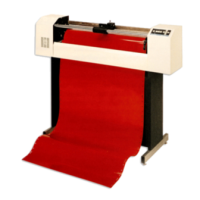
The HS15
plus
plots so fast that heavy rolls of material such as
reflective vinyl cannot turn as rapidly as the plotter tries to pull
them. This can result in a material jam and cause the plotter to
stall. When using heavy rolls of material such as reflective vinyl
or sandblast stencil, advance enough vinyl for an entire job
before you start to plot to eliminate the possibility of scrapping a
large job in the event of a material jam.
Before unrolling the vinyl for a job, determine how much
material you need. Check the length of the longest line in the
job, or the width of an automatically laid out sign or digitized
design. Remember that if you are plotting in the Axis Swap
mode, you need to consider the height of the job rather than its
width.
The most practical way to unroll material for a job is to use the
slew keys on the plotter. It is best to unroll more than enough
material, rather than "just enough," in case your estimate is not
accurate. You may also pull material from the roll by hand. This
may be the simplest method if you are plotting relatively small
jobs.
When you have advanced enough material for the job, feed it
back through the plotter, or otherwise position it appropriately
according to the start position selected at the
GRAPHIX
ADVANTAGE
and the resulting tool starting location. If you
have a large quantity of material piling up on the table, be sure
to arrange the material in loose accordion folds so it can feed
easily. Make sure the material is positioned to feed straight into
the plotter rather than at an angle.



 To Next Page