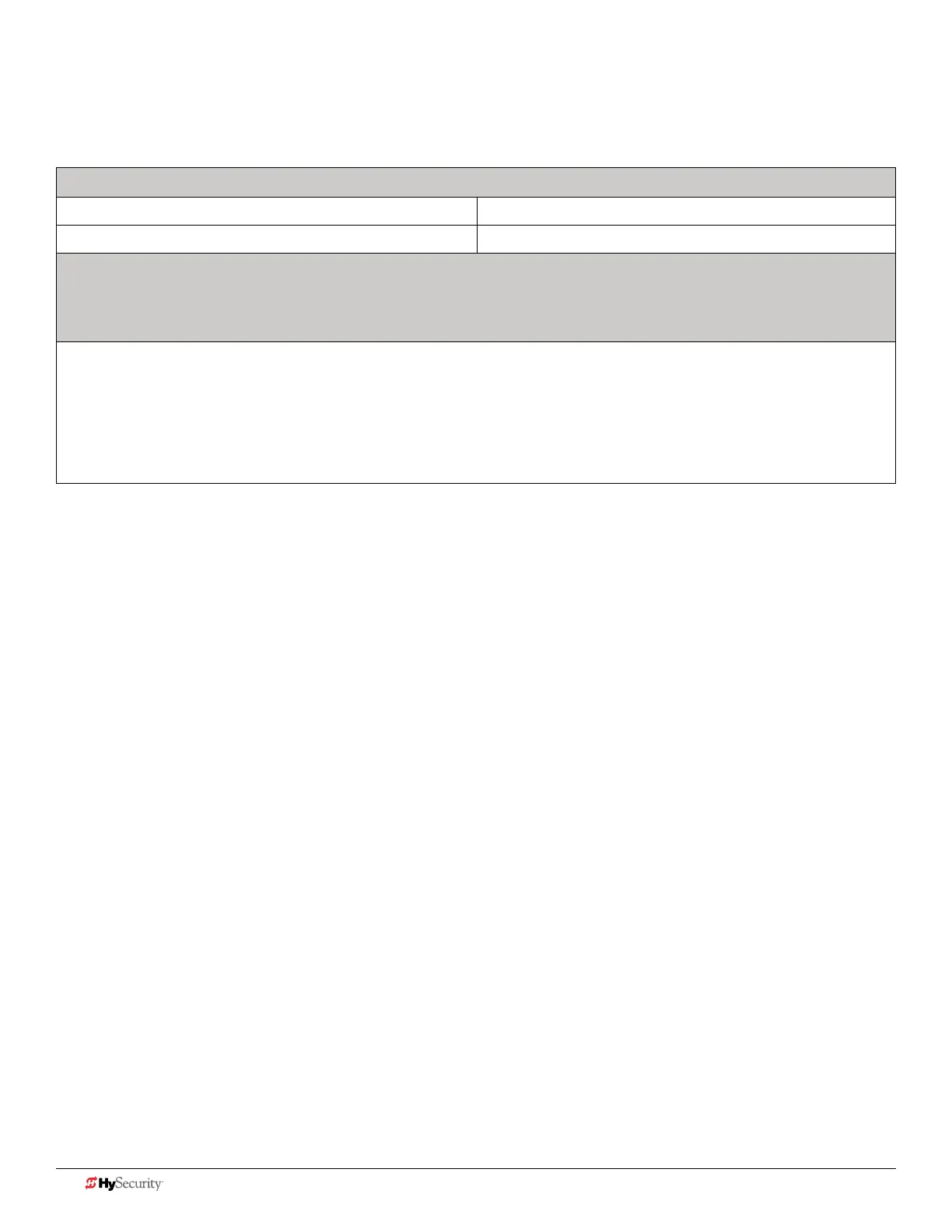
General Entrapment Protection Provisions per UL 325, Table 31.1
Effective January 12, 2016, Table 31.1 General Entrapment Protection Provisions for gate operator categories.
The following chart is a copy of UL 325 Standard of Safety, Table 31.1
Gate Operator Category
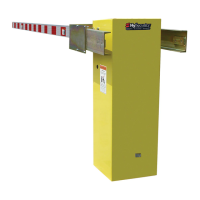
Horizontal Slide, Vertical Lift and Vertical Pivot Swing and Vertical barrier (arm)
Entrapment protection types: A, B1, B2, D Entrapment protection types: A, B1, B2, C or D
NOTE: The same type of device shall not be utilized for both entrapment protection means. Use of a single device to cover both
the opening and closing directions is in accordance with the requirement; however, a single device is not required to cover both
directions. A combination of one Type B1 for one direction and one Type B2 for the other direction is the equivalent of one
device for the purpose of complying with the requirements of either entrapment protection means.
Type A – Inherent entrapment protection system.
Type B1 – Non-contact sensor (photoelectric sensor or the equivalent).
Type B2 – Contact sensor (edge device or the equivalent).
Type C – Inherent force limiting, inherent adjustable clutch or inherent pressure relief device.
Type D – Actuating device requiring continuous pressure to maintain opening or closing motion of the gate.
The changes that occurred to HySecurity software and discussed on the previous pages are based on compliance with the
UL 325 -2016 Standard of Safety.
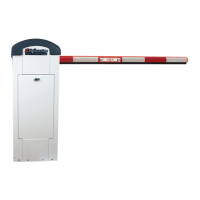
An exception for vehicular barrier arms exists. As stated in UL 325 Standard of Safety:
An operator for a vehicular barrier (arm) that is not intended to move toward a rigid object closer than 16 inches
(406 mm), and does not have a pinch point between moving parts by virtue of the operator’s design or as a result of
installation in accordance with instructions supplied with the operator as specied in UL 325 Standard of Safety is not
required to be provided with means to protect against entrapment.
A provision also exists for Usage Class 4 and is described below.
Usage Class 4 Designated Gate Operator Provisions
Usage Class 4 sites must have a guard house or CCTV gate monitoring to verify credentials of vehicles entering or exiting
the facility and to ensure safe gate operation in the rare occurrence where pedestrians may be present. HySecurity
handles the UL 325 - 2016 gate operator provisions for Usage Class 4 in the following manner:
• SENSOR inputs default to 0 and must be set to a non-zero number before automatic gate operation is allowed.
Normally Closed (NC) sensors become the default for monitoring if external entrapment protection sensors are
connected. However, the gate operator can be congured through the Installer Menu to accept either Normally
Closed (NC) or Normally Open (NO) outputs from sensors.
• When SENSOR 1, 2, and 3 are set to 1 (NOT USED) or when the software detects a programmed monitored
sensor fault, a Warn-Before-Operate buzzer automatically sounds 3 seconds before movement and throughout
gate travel.
• If a sensor input is held tripped, the gate operator can move the gate in the same manner as other usage classes
with a simple constant hold input (Push button Open, Push button Close, Open Partial or Keypad Open/Close
activation). Refer to Troubleshooting on page 13.
• Note that Alerts, Faults, and Errors used for troubleshooting are handled in the same manner as other HySecurity
gate operator usage classes.
18 D0726 Rev. J UL 325 - 2016 HySecurity Monitored Sensors © 2016 www.hysecurity.com




 To Next Page