Chapter 3 — Develop and Use RFID Applications
38 IF2 Network Reader User Manual
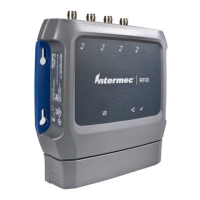
About the IF2 Configurations
The IF2 comes in a standard configuration with no internal memory,
or an expanded memory option.
• For the IF2, the applications you develop resides on a remote
server which communicates with the reader, and all information is
processed through the server.
• For the IF2 with Expanded Memory Option, the applications you
develop can be hosted and run locally on the reader.
RFID Applications and the IF2
Your application communicates with the IF2 through one of two
RFID services:
• the Basic Reader Interface (BRI) server, which controls the reader
by issuing BRI commands. For more information on the BRI
server, see “Configure the BRI Server” on page 45.
For more information on using BRI, see the Basic Reader Interface
Programmer’s Reference Manual.
• the Low-Level Reader Protocol (LLRP), based on the EPCglobal
standard. For more information on LLRP settings, see “Configure
LLRP Settings” on page 48.
For more information on LLRP, see the LLRP Programmer’s
Reference Guide.
For more information about creating an installation package or
installing an application on the IF2 with Expanded Memory option,
see “Install Applications on the IF2 with Expanded Memory
Option” on page 51.
Note: This chapter applies to both the standard and expanded
memory options of the IF2.


 To Next Page