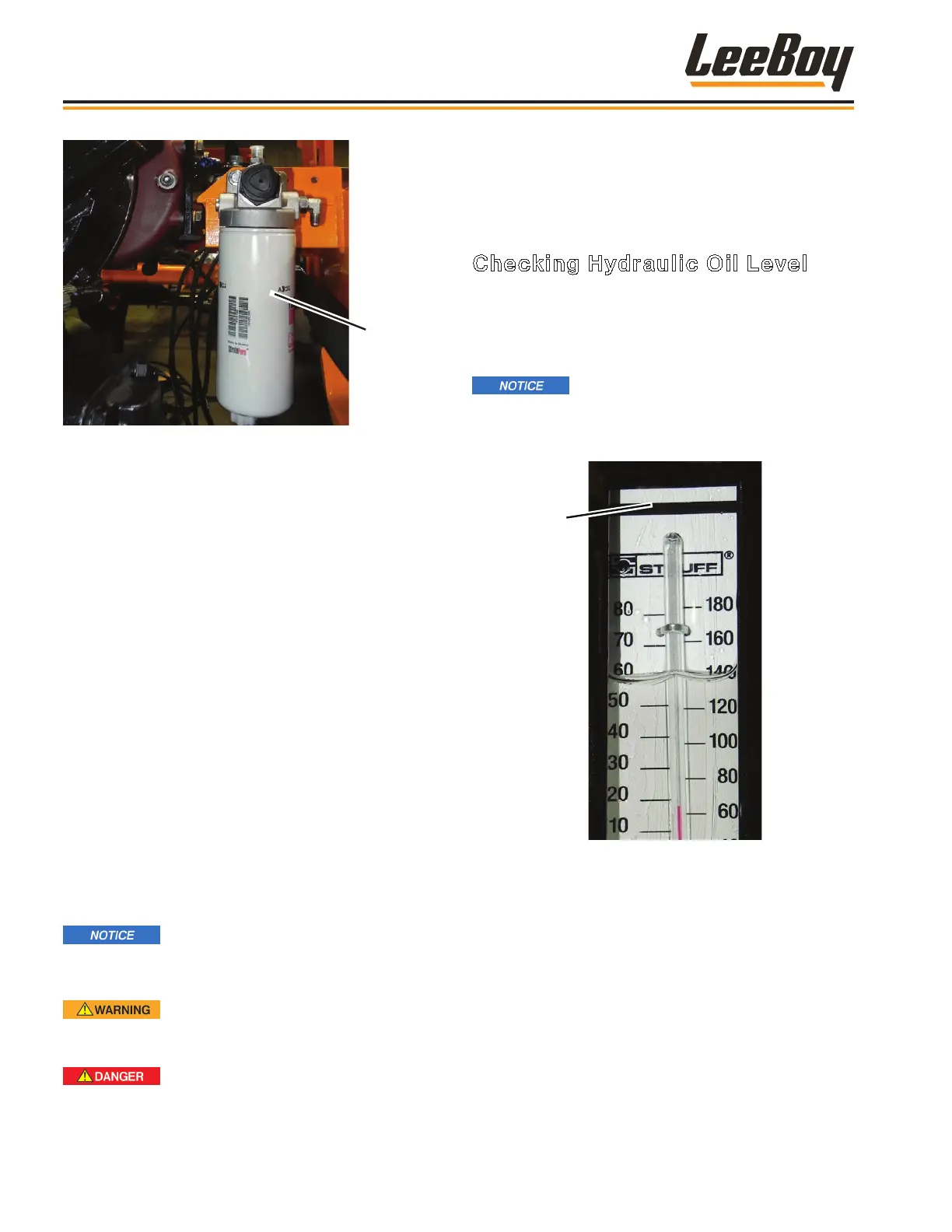
Fuel
Separator
Figure 4-11. Fuel Water Separator Filter
Replace the fuel and water separator lters using the
following general procedures:
1. Stop the engine.
2. Put a container under fuel lters before removing
the lter elements.
NOTE: Consider the environment when discarding
used lters and do so according to safe and
lawful practices.
3. Wipe the area around the fuel lter elements and
element mounting heads using a clean, lint-free
cloth.
4. Use a lter removal wrench to loosen and remove
fuel lter elements by turning in a counterclockwise
direction. Drain and discard the removed elements.
5. Wipe the inside area of the lter heads with a clean,
lint-free cloth. Fill the new fuel lter elements
completely with clean fuel.
6. Put clean fuel onto the element rubber gaskets.
7. Install the new fuel lter elements onto the lter
heads. Carefully tighten the elements (by hand
only).
DO NOT overtighten the fuel lter
elements onto the lter heads.
8. Start the engine and check for ANY fuel leaks.
STOP the engine immediately if any
fuel leakage is noted. DO NOT start the engine until
the leakage problem is corrected.
NEVER loosen a fuel injector line as
contents are under high pressure. DO NOT try to
bleed air by loosening injector lines.
HYDRAULIC SYSTEM
The hydraulic motors and the hydraulic cylinders use
the same hydraulic oil reservoir and hydraulic oil supply.
Checking Hydraulic Oil Level
1. Make sure all cylinders are retracted, so that oil
ows to tank, ensuring an accurate reading.
2. Wait 10 minutes after engine has been shut down
before checking hydraulic oil.
Oil level is determined by sight gauge.
(Figure 5-12) Hydraulic oil should be added if the
oil level falls below the ll line. Never ll above the
black ll line.
Figure 4-12. Hydraulic Gauge
3. If level is low, remove hydraulic oil ller cap to add
hydraulic oil to the tank.
4. Fill tank to the black ll line on sight gauge.
5. Screw the hydraulic oil ller cap back onto the
hydraulic tank.
Maintenance
3000C Force Feed Loader5-14


 To Next Page