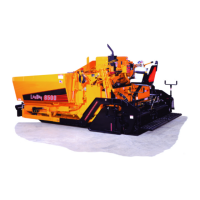
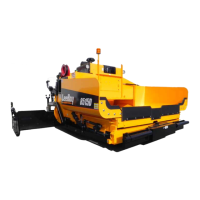
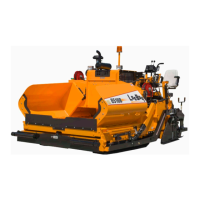
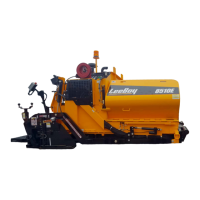
5-22 LeeBoy 8520C Conveyor Paver
Maintenance
• The best practice is to pour directly from the
DEF container into DEF tank.
• Use a container size that allows DEF
consumption in 2 months.
Other best practices for the use of DEF uid:
• Fill DEF tank with every fuel ll to maintain fresh
high quality DEF within the system.
• Avoid prolonged storage of DEF within the
parked machine.
• Drain DEF uid during prolonged storage.
• Drain DEF uid during winter months when DEF
may freeze for prolonged periods.
At 80°F, DEF has a storage life of one
(1) year.
DPF ServiceDPF Service
The DPF is designed to burn trapped particulate matter
automatically or via operator-induced regeneration. The
longer the DPF runs, the more ash (burnt residue) is col-
lected on the lter. Too much residue adversely affects
DPF performance, therefore, see your authorized dealer
for professional cleaning (or replacement) if needed.
Do not be alarmed if you notice white exhaust from the
exhaust pipe at start-up or when speeding up. White
exhaust or water may come out during cold weather or
after long-hour idling due to condensation.
If DPF regeneration occurs frequently, i.e., ve hours
or shorter, on a routine basis, change the oil. If this
condition continues after an oil change, contact your
authorized dealer for service. (Refer to your Engine
Operator’s Manual for service information.)
Too much idling can cause DEF
to crystallize in the injectors if the machine isn’t
hot enough. Don’t idle machine any longer than
necessary as too much idling can cause soot to build
up in the Diesel Particulate Filters (DPF), requiring
more frequent regeneration.
To reduce the amount of soot and
maximize DPF efciency, use API-CJ4 (or ACEA-E9
European equivalent) engine oil. Running the
engine at 1600 RPMs will also provide more efcient
operation and allow automatic regeneration more
efciently while paving.
Cooling System
Inspect the radiator and oil cooler daily. Use a low-pres-
sure water hose to clean as needed once the engine
has cooled down.
Plugged or dirty radiators and oil
coolers will cause engine or hydraulic overheating.
Inspect the coolant system daily. Wash out the radiator
with a low-pressure water hose ONLY when the engine
is cool.
Check radiator hoses and clamps every six months for
leaks or damage, ensuring hose clamps are securely
tightened. If radiator hoses are swollen, hardened or
cracked, replace them immediately.
Plugged or dirty radiators and oil
coolers will cause engine or hydraulic overheating.
Damaged radiators hoses or coolant leaks also
cause overheating.
Replace radiator hoses and clamps
every two years, or sooner if needed.
If the coolant temperature warning icon illuminates, or
steam emits from the radiator or overow pipe, turn off
the load but idle the engine at least ve minutes to
cool down gradually and check the following items:
• Inspect for any coolant leaks, obstacles or debris
around the air inlet or outlet, dirt or dust between
radiator ns and tube, or clogged water pipe.
• Check the fan belt as described in previous section.
• Check that radiator cap is properly tightened. A gap
between the cap and seal accelerates coolant loss.
• Check for any internal blockage in the radiator hose. If
scale forms on the hose, clean with scala inhibitor (or
equivalent).
• Check engine cooling fan for damaged or bent blades.
Replace if damaged. (Figure 5-23)


 To Next Page