LS SERIES SERVICE MANUAL
ISSUE 4.0 OVERVIEW 5
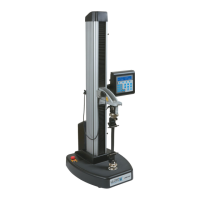
1.4 Hand Held Remote
The Hand Held Remote contains a 2 line by 12-character backlit alphanumeric LCD display, a
small membrane keypad and a buzzer. The LCD contrast is adjusted by the potentiometer on
the console PCB.
The console allows positioning of the crosshead using the slow/fast - up/down jog keys and the
return key. The current load and extension values can be zeroed (using the Ø key) and a test
can be started (using the ► key) or stopped/aborted (using the ■ key). Note that a NEXYGEN
Plus 3 test can also be started by using the start button if this feature is selected in the software.
The hand held remote displays the current load and extension values using 1 of 3 different unit
combinations: -
[a] = N and mm [b] = kgf and mm [c] = lbf and in
To change the displayed units (from [a] to [b], [b] to [c] or [c] to [a]), switch the machine
on then press the ZERO key (Ø) 2 times when "Lloyd Instruments" is shown on the display.
Note that a test cannot be defined without using NEXYGEN Plus, i.e. the machine cannot be
used "Stand-Alone".
Also note that the machine type, loadcell calibration and extensometer calibration cannot be
changed without using the NEXYGEN Plus 3 software console.
1.5 Battery Memory (RAM)
The test setup information is retained in the battery backed RAM so that the predefined set-ups
are ready for use when the machine is switched on. Any previously stored test data is also
stored in the RAM so that statistics may be calculated over a time period when the machine is
used "Stand-Alone".
If the information in the RAM becomes corrupted, for example by excessive voltage surges or
spikes on the mains supply etc. the machine may operate incorrectly and the RAM should be
erased to remove any previous information. The RAM can only be erased by a software routine
called a RAM DUMP, which not only erases the information in the RAM but also automatically
creates three standard test set-ups called LIMIT TEST, CYCLE TEST and BREAK TEST.
The RAM is cleared using the following procedures: -



 To Next Page