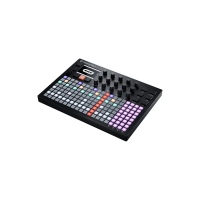
Play is a groovebox aimed at making and
performing songs and arrangements quickly.
The ‘Pick & Place’ principles of Play encourage
a quick and easy selection of sample and
parameters and then placing into steps in a
pattern in sequencer mode. The workow in
creating patterns supports this aim with quick
and simple processes and tools which
automate music production and sound design
while still retaining user control and creativity.
Each project contains a maximum of 128
patterns each with 8 tracks and a maximum of
64 steps per track. The process for the creation
of patterns and subsequently the performing of
songs is what makes Play different from other
grooveboxes. Steps are the building blocks
when creating patterns. Steps are populated
with samples or MIDI notes across the pattern
to create arrangements of beats and melodies.
MIDI will be covered in a later section. Patterns
can play in multiple ways in addition to the
default forwards direction. Steps are played in
series across the dened direction while tracks
play together in parallel. Think of a Pattern as a
bite size element of a full song. Patterns can be
combined and arranged together for chaining
into a full length track and variations of patterns
is possible to add even more interest. This
section will focus on patterns used in audio
tracks. The same basic process also applies to
the creation of MIDI patterns. This section will
provide overall guidance on creating patterns as
well as their general structural elements.
Patterns are the foundation of working with Play
and are created in sequencer mode. All the
basic building blocks and the process needed to
get started in creating, editing and using a basic
pattern are covered in this section.
Sequencing Patterns
6
83
Polyend Play Manual Rev 1


 To Next Page