Date Code 20020903 SEL-587Z Instruction Manual
List of Figures
Section 1: Introduction and Specifications
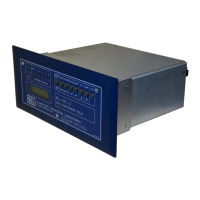
Figure 1.1 SEL-587Z Front Panel. .......................................................................................................... 1.2
Figure 1.2 SEL-587Z Hardware Block Diagram..................................................................................... 1.3
Figure 1.3 Protection Functions............................................................................................................... 1.4
Figure 1.4 Bus Protection (simplified). ................................................................................................... 1.5
Figure 1.5 Transformer Protection (simplified)....................................................................................... 1.5
Section 2: Installation
Figure 2.1 Relay Dimensions, Panel Cutout, and Drill Plan. .................................................................. 2.3
Figure 2.2 Relay Rear Panel. ................................................................................................................... 2.4
Figure 2.3 Example AC Connection for High-Impedance Bus Protection.............................................. 2.6
Figure 2.4 Example AC Connection With 50/51 Overcurrent Element. ................................................. 2.6
Figure 2.5 Example DC Connection........................................................................................................ 2.7
Figure 2.6 Input and Output Jumper Locations. ...................................................................................... 2.9
Figure 2.7 Output Contact OUT4 Control Jumper Location................................................................. 2.10
Section 3: Relay Elements
Figure 3.1 Differential Relay Currents. ................................................................................................... 3.2
Figure 3.2 A-Phase High-Impedance Element. ....................................................................................... 3.2
Figure 3.3 B-Phase High-Impedance Element. ....................................................................................... 3.3
Figure 3.4 C-Phase High-Impedance Element. ....................................................................................... 3.3
Figure 3.5 Equivalent Circuit for Through Fault. .................................................................................... 3.4
Figure 3.6 CT Characteristic.................................................................................................................... 3.5
Figure 3.7 MOV Characteristic................................................................................................................ 3.7
Figure 3.8 Energy Dissipation Limits of the MOVs (maximum four-cycle duration). ........................... 3.7
Figure 3.9 Single-Zone, Five Circuit Breaker Application (simplified).................................................. 3.8
Figure 3.10 Overcurrent Elements in Differential Circuit (one phase shown). ......................................... 3.9
Figure 3.11 Instantaneous Overcurrent Maximum Elements. ................................................................. 3.11
Figure 3.12 Phase Overcurrent Elements. ............................................................................................... 3.11
Figure 3.13 Negative-Sequence and Residual Overcurrent Elements. .................................................... 3.12
Figure 3.14 Inverse-Time Overcurrent (Max) Element.
(Identical for Negative- [51Q] and Zero-Sequence [51G] Elements) .............................. 3.12
Figure 3.15 Inverse-Time Overcurrent (A-Phase) Element (B- and C-Phase are similar). ..................... 3.12
Figure 3.16 Transformer With Grounded-Wye-Connected Winding. ..................................................... 3.14
Figure 3.17 U.S. Moderately Inverse Curve: U1.....................................................................................3.19
Figure 3.18 U.S. Inverse Curve: U2. ....................................................................................................... 3.20
Figure 3.19 U.S. Very Inverse Curve: U3................................................................................................ 3.21
Figure 3.20 U.S. Extremely Inverse Curve: U4....................................................................................... 3.22
Figure 3.21 U.S. Short-Time Inverse Curve: U5. ....................................................................................3.23
Figure 3.22 I.E.C. Class A Curve (Standard Inverse): C1....................................................................... 3.24
Figure 3.23 I.E.C. Class B Curve (Very Inverse): C2.............................................................................. 3.25
Figure 3.24 I.E.C. Class C Curve (Extremely Inverse): C3..................................................................... 3.26
Figure 3.25 I.E.C. Long-Time Inverse Curve: C4. .................................................................................. 3.27
Figure 3.26 I.E.C. Short-Time Inverse Curve: C5. ..................................................................................3.28
Figure 3.27 Response of Thermal Demand Ammeter to a Step Input (setting DMTC = 15 minutes).... 3.30
Figure 3.28 Voltage V
S
Applied to Series RC Circuit............................................................................. 3.30
Section 4: Control Logic
Figure 4.1 Example Operation of Optoisolated Inputs IN1 and IN2....................................................... 4.2
Figure 4.2 Breaker-and-a-Half Bus. ........................................................................................................ 4.3
Figure 4.3 Local Control Switches Drive Local Bits LB1 Through LB8................................................ 4.5
Figure 4.4 Remote Control Switches Drive Remote Bits RB1 Through RB8. ....................................... 4.9
Figure 4.5 SEL
OGIC Control Equation Variables/Timers. ..................................................................... 4.14
Figure 4.6 Breaker Failure Function Created With SEL
OGIC Control Equation Variables/Timers....... 4.15


 To Next Page