BIESSE S.p.A. Woodworking Machinery
(l138h009.fm-141101)
&KDSWHU
5HSODFHPHQWVDQG$GMXVWPHQWV
(OHFWURQLF7HQVLRQ0HDVXULQJ'HYLFH
BIESSE recommends the use of an electronic measuring device made by the company “*DWHV”.
The following is a description of the use and the correct theoretical values for belt tensioning with
this instrument.
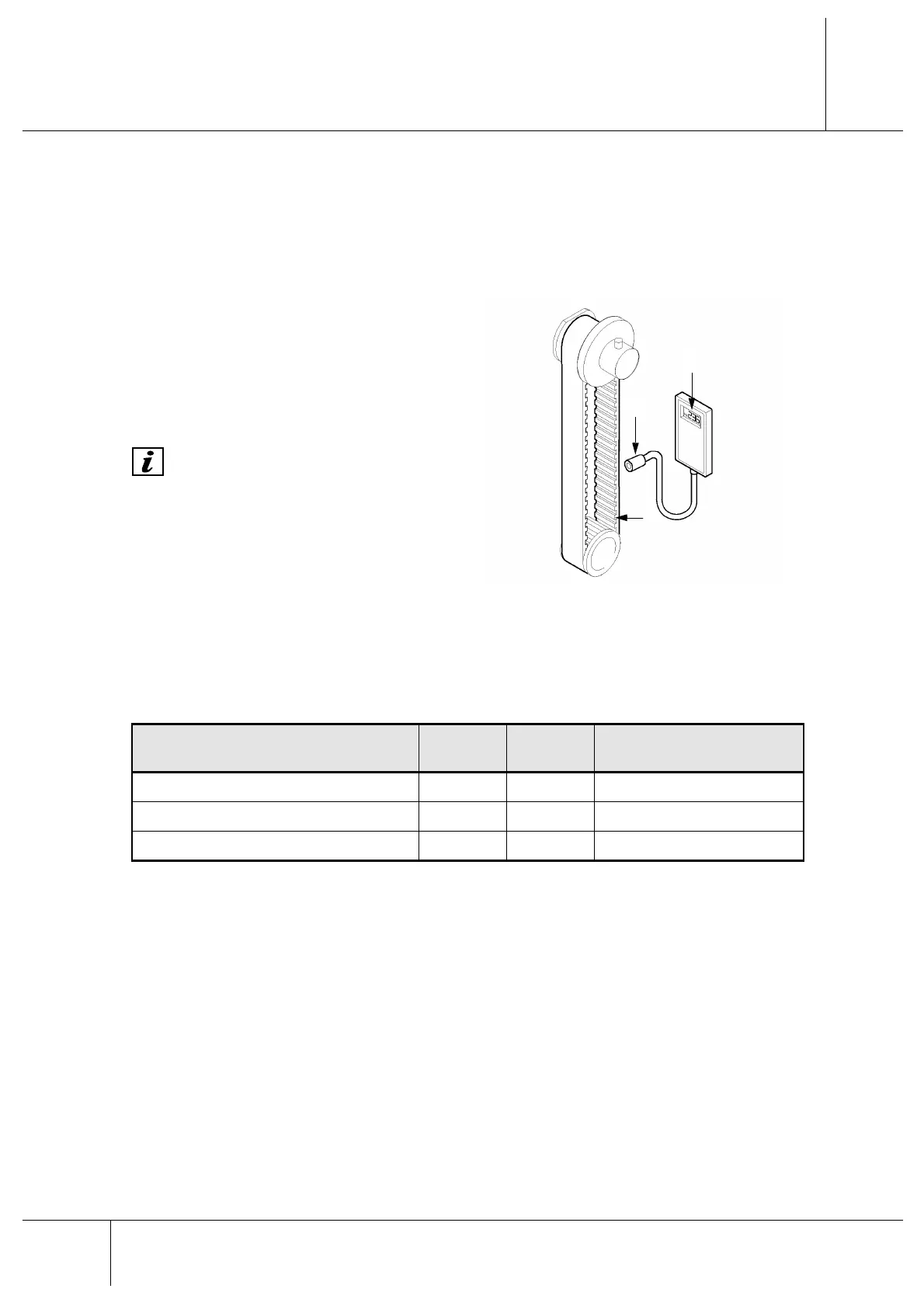
1. Insert the connecting cable into the
instrument socket.
2. Switch on the instrument.
3. Position the head $ next to the belt %, as
shown in the figure opposite.
,1)250$7,21
'RQRWEULQJWKHKHDGLQWRFRQWDFWZLWKWKHEHOW
4. Use a finger to pluck the belt % (as if it
were a guitar string).
5. Read the frequency on the display & and
compare it with the theoretical values shown in the following table. If the read frequency is
higher than the theoretical frequency, it means that the belt is too tight; on the contrary, if the
read frequency is lower than the theoretical frequency, it means that the belt is not sufficiently
tight.
7DEOHRI7HQVLRQLQJ9DOXHV
%ODGH7\SH 6PP )1 7KHRUHWLFDO)UHTXHQF\
+]
Scoring Blade 9.6 26.6 67.4
Cutting Blade (Ø 300 mm - 50 Hz) 9.2 13.2 29.5
Cutting Blade (Ø 300 mm - 60 Hz) 9.3 11.7 27.4
&
$
%


 To Next Page