&KDSWHU
5HSODFHPHQWVDQG$GMXVWPHQWV
BIESSE S.p.A. Woodworking Machinery
(l138h009.fm-141101)
0HDVXULQJWKH%ODGH%HOWV7HQVLRQ
$VSULQJORDGHGF\OLQGULFDOG\QDPRPeteror an electronic device to measure tension is required
for making precise checks of the tensioning of the blade belts $7KLVSDUDJUDSKGHVFULEHVthe
indispensable requirements of these instruments as well as how to use them.
'\QDPRPHWHU
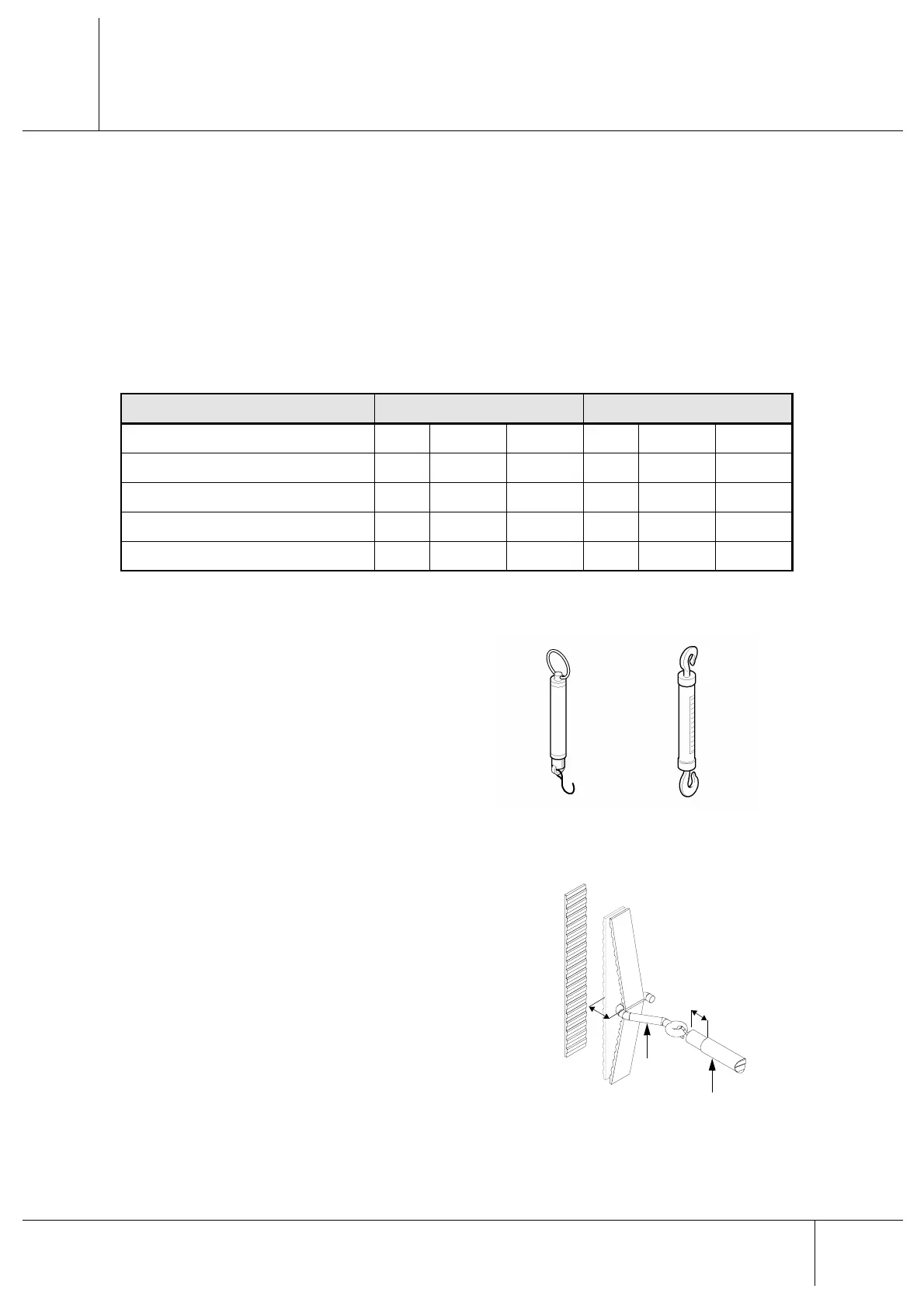
It is possible to use two types of dynamometer ($ and %), with the characteristics listed in the table
here below. For each type of dynamometer, two are indicated, each with different characteristics.
$ - Dynamometer with hook and ring in
nickel-plated steel.
% - Dynamometer with two hooks in forged
steel.
To check the tensioning of the belts, proceed as follows:
1. Hook the dynamometer $ or % onto the
central area of the belt and apply a load )
shown in the table on page 8 - 7. This
procedure requires the use of a tool '
similar to the one shown in the figure
opposite.
2. Use a gauge to measure the belt
displacement. Tensioning is correct if the
displacement is 6 as shown always in the
table on page 8 - 7.
5HTXLUHPHQWV $ %
For loads of kg 0-5 0-10 N 0-3000 0-5000
Scale g 50 200 N 100 200
Length (unloaded) mm 245 255 mm 525 525
Length (loaded) mm 355 316 mm 585 585
Net Weight kg 0.150 0.150 kg 5.000 5.000
$ %
S
F
$ %
'


 To Next Page