Flying with RTK GNSS
RTK (Real Time Kinematics) - technology which allows increasing GNSS module accuracy to just a few centimeters. SmartAP Autopilots support
RTK GNSS based on UBlox NEO M8P modules. This description demonstrates the procedure of setting up the flight with RTK GNSS.
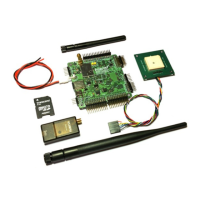
It's assumed that you already have the following equipment:
RTK GNSS module installed on a drone (also called Rover)
RTK GNSS module as a base station with USB connector
Active patch antenna located on a ground plane (the middle of a car roof is a good choice)
Computer with installed SmartAP GCS
Telemetry modules configured and working on both drone and ground station (telemetry is used to transfer corrections from Base Station
module to Rover)
Locating the antenna
RTK GNSS is very sensitive and needs to be set up carefully.
The base station antenna position should be fixed all time. Please, make sure that it's not moving and has a clear view of the sky far enough from
the buildings and not shadowed by the obstacles. Tripod or a car roof are good locations for base station antenna.
Once you have located the antenna, connect SMA cable to the ground module and plug the module into USB port of the computer.


 To Next Page