3-2
The center of the reagent disc contains a
sealed sample diluent container
aluminum foil strip of the dilu
covers the sample anti-
spilling pad must be removed
to ensure the normal operation of the
chemistry analyzer.
During analysis, the clinical chemistry a
performs a centrifugation step, where
blood cells are separated in the reagent disc i
sample is a whole-blood sample. This
effect on plasma or serum samples. Next, accurately
quantified sample and diluent
mixing chamber for dilution. The fully
sample is then distributed to all reaction cuvettes
the disc by centrifugal force, where
the chemical
reactions with assay reagents occur. Clinical
chemistry markers are quantified by photometric
measurement of the absorbance changes arising from
these chemical reactions.
The reagent disc features internal quality control
functions in
order to ensure adequate sample and
diluent are properly distributed
cuvette in the disc. In addition,
interferences that might
affect the test results are
automatically monitored
. If the degree of interference
exceeds the specification limit
under analysis,
the system will display a warning
message.
Sample Conditions:
Use serum or lithium-
heparinized whole-blood or
plasma samples.
3.2 Sample Preparation
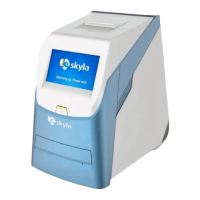
The compatible sample types for the skyla
TM
Chemistry Analyzer include: serum, lithium-
whole blood or plasma.


 To Next Page