40
83507013 Rev G
3.9 Connecting the Load
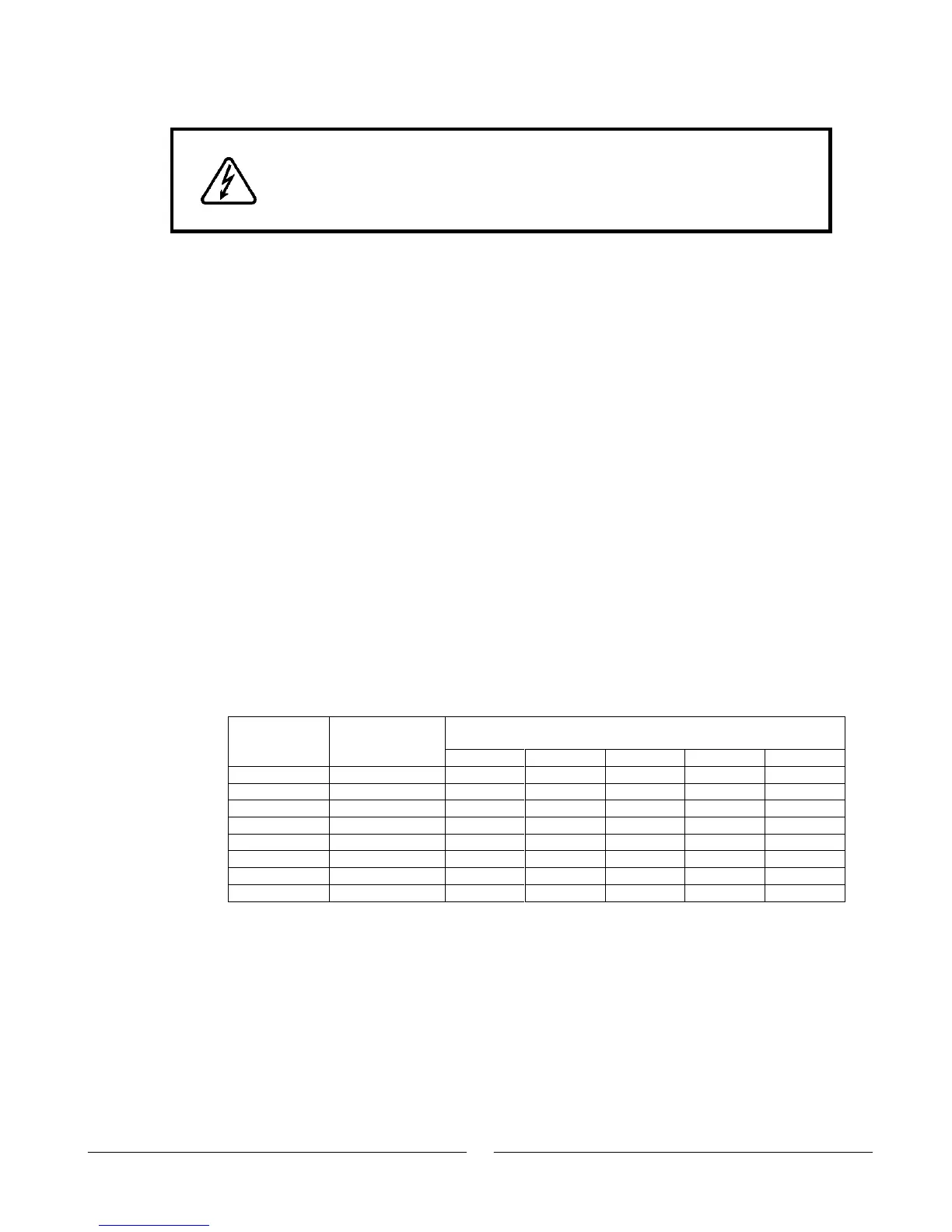
WARNING
Turn Off the AC input power before making or changing any rear
panel connection. Ensure that all connections are securely tightened
before applying power. There is a potential shock hazard when using
a power supply with a rated output greater than 40V.
3.9.1 Load Wiring
The following considerations should be made to select wiring for connecting the load to
the power supply:
Current carrying capacity of the wire (refer to Section 3.9.2.)
Insulation rating of the wire should be at least equivalent to the maximum output
voltage of the power supply.
Maximum wire length and voltage drop (refer to Section 3.9.2.)
Noise and impedance effects of the load wiring (refer to Section 3.9.4.).
3.9.2 Current Carrying Capacity
Two factors must be considered when selecting the wire size:
a. Wires should be at least heavy enough not to overheat while carrying the power
supply load current at the rated load, or the current that would flow in the event the
load wires were shorted, whichever is greater.
b) Wire size should be selected to enable voltage drop per lead to be less than 1.0V at
the rated current. Although units will compensate for up to 5V in each load wire, it is
recommended to minimize the voltage drop (1V typical maximum) to prevent
excessive output power consumption from the power supply and poor dynamic
response to load changes. Please refer to Tables 3-2 and 3-3 for minimum wire
length (to limit voltage drop) in American and European dimensions respectively.
Maximum length in Feet to limit
voltage drop to 1V or less
Table 3-2: Maximum Wire Length for 1V Drop on Lead (in feet)



 To Next Page