2. Inspection and adjustment
92
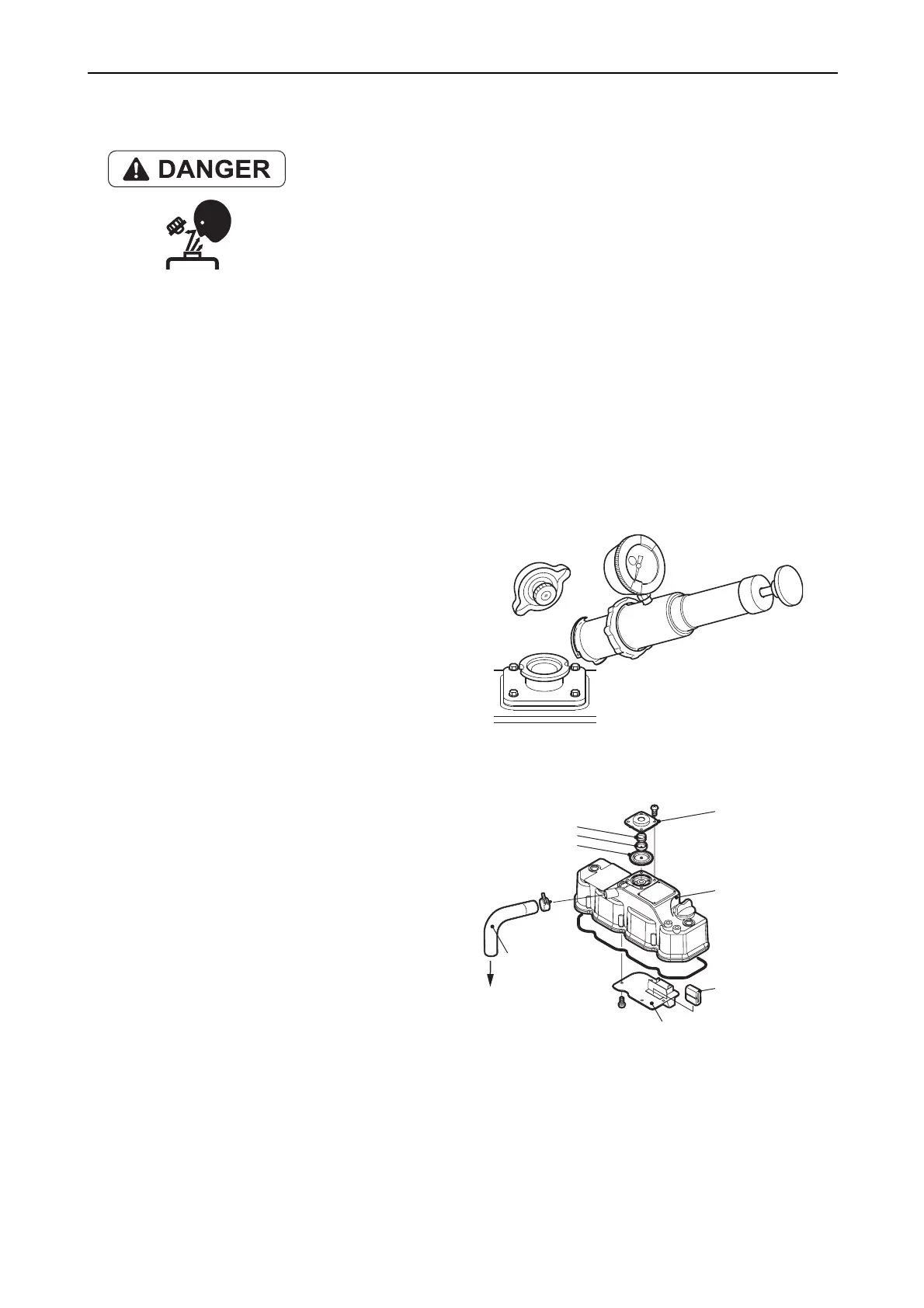
4) Pressure cap inspection
Do not open the pressure cap while the engine
is running or right after stopping because high
temperature steam will be blown out. Remove
the cap only after the water cools down.
a) Remove scale and rust and check the seat
and seat valve, etc. for scratches or wear.
Check the spring for corrosion or settling.
Replace if necessary.
Note:
Clean the pressure cap with fresh water as it
will not close completely if it is dirty.
b) Fit the adopter on the tester to the pressure
cap. Pump until the pressure gauge is
within the specified pressure range 0.074-
0.103 MPa (0.75-1.05 kgf/cm
2
) and note the
gauge reading. The cap is normal if the
pressure holds for six seconds. If the
pressure does not rise, or drop immediately,
inspect the cap and repair or replace as
necessary.
(5) Diaphragm assembly inspection
Inspect the diaphragm assembly on the rocker
arm cover only for 3JH4E and 4JH4E.
1) Loosen screws, remove the diaphragm
assembly, and check for oil and contaminants
between the diaphragm and the cover. If oil
and contaminants enter into the diaphragm
assembly, the diaphragm will not operate as
designed.
2) Inspect the diaphragm rubber and spring for
damage. If necessary, replace with new ones.
[NOTICE]
1) When a diaphragm is damaged, pressure
control inside the crankcase becomes
insufficient, and troubles such as
combustion defect and so on occur.
2) At lubricating oil replacement or lubricating
oil supply, the amount of lubricating oil isn't
to be beyond the standard upper limit. If the
lubricating oil quantity is beyond the upper
limit or an engine is operated beyond the
allowable maximum angle of an engine, the
amount of oil mist may be inducted in the
combustion chamber and the oil hammer
sometimes may occur.
007141-00X
Center plate
Spring
Diaphragm
Diaphragm cover
Rocker arm cove
Breather
baffle
Baffle plate
Intake silencer
Breather pipe
010635-00E



 To Next Page