2. Inspection and adjustment
91
(b) Heat exchanger (fresh water cooler) inspection
Inspect the fresh water cooler by the following
procedure. The intercooler only for 4JH4-HTE
can be inspected by the same way.
1) Cooler core inspection
a) Inspect the inside of the tubes for rust or
scale buildup from seawater, and clean with
a wire brush if necessary.
Note:
Disassemble and wash when the coolant
temperature reaches 85°C.
b) Check the joints at both ends of the tubes
for looseness or damage, and repair if
loose. Replace if damaged or corroded.
c) Check tubes and replace if leaking.
d) Clean any scale or rust off the outside of the
tubes.
2) Heat exchanger body water leakage test
a) Check heat exchanger body and side cover
for dirt and corrosion. Replace, if excessively
corroded, or cracked.
b) Inspect seawater and fresh water inlets and
outlets, retighten any joints as necessary
and clean the insides of the pipes.
c) Check the exhaust gas intake flange and
line, and replace if corroded or cracked.
3) Heat exchanger body water leakage test
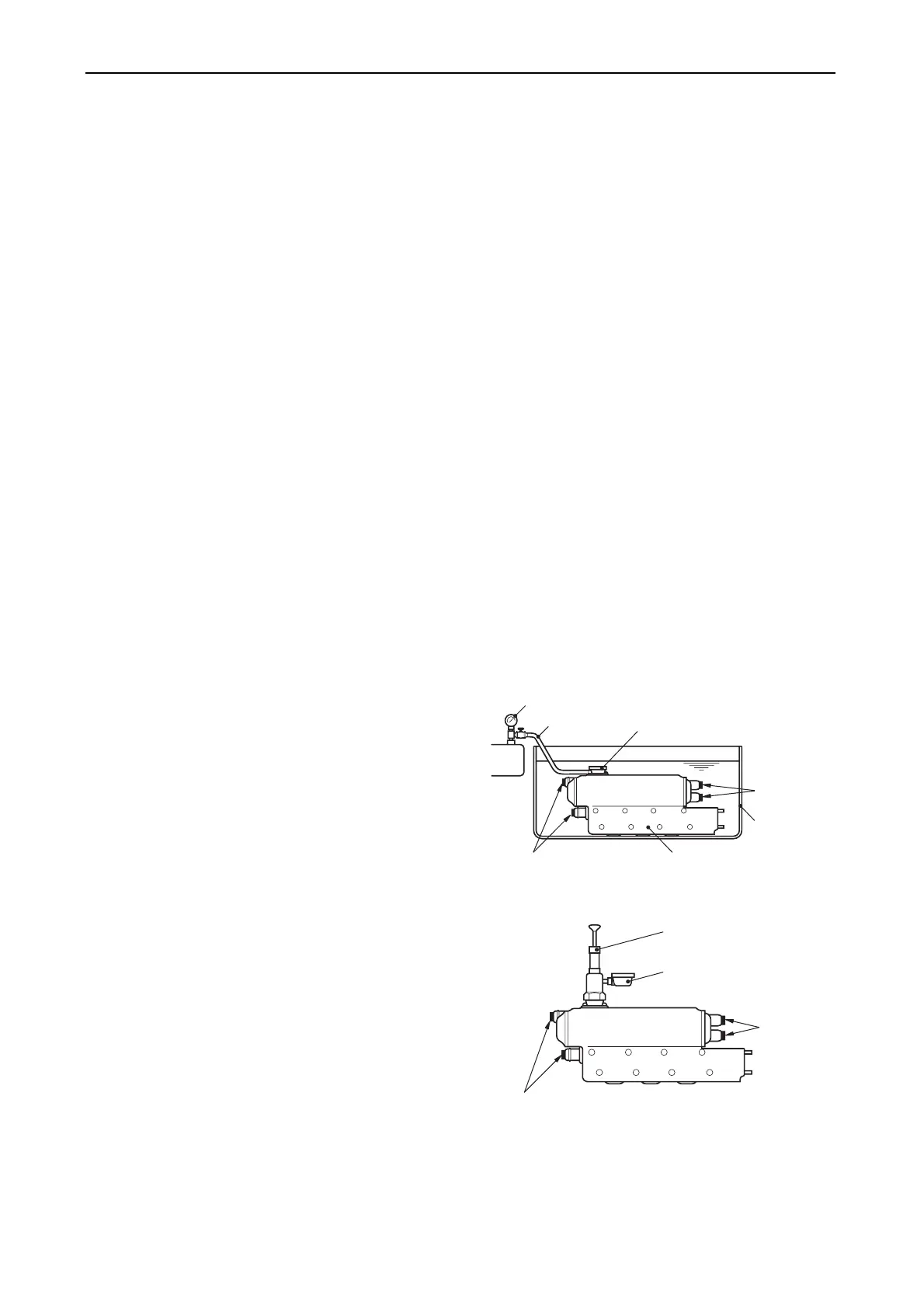
a) Compressed air/water tank test
Fit rubber covers on the fresh water and
seawater inlets and outlets. Place the heat
exchanger in a water tank, feed in
compressed air from the overflow pipe and
check for any (water) leakage, (air bubbles).
b) Use of the tester
Fit the fresh and seawater inlets and outlets
with rubber covers and fill the fresh water
tank with fresh water. Fit a pressure cap
tester in place of the pressure cap, operate
the pump for one minute and set the
pressure at 0.15 MPa (1.5 kgf/cm
2
, 21.33
lb/in.
2
). If there are any leaks the pressure
will not rise. If there are no leaks the
pressure will not fall.
Pressure gauge
Rubber
cap
Test tank
Rubber cap
Air hose
Filler cap
Heat exchanger
010633-00E
Pressure tester
Pressure gauge
Rubber
cap
Rubber cap
010634-00E



 To Next Page