tips:
a.
The above diagram only represents the position shown in the figure. When the drone position is
not between the interruption point route and the next route, the projection point is still on the
interruption point route and the next route.
b.
Please pay attention to identify the position of the drone, and judge whether there is an obstacle
between the position of the drone and the projection point to avoid danger!
e.
When the position of the drone and the distance between 0, 1, 2, 3, and 4 points is less than 5
meters, the drone returns to the point and continues to operate at the current flying height.
f.
When the position of the drone and the distance between 0, 1, 2, 3, and 4 points is over than 5
meters, the drone will rise to the set of return altitude and return to the point. After reaching the
point, it will lower to the operating height and continue the operation.
g.
After changing of batteries or dosing, the drone will fly to the default altitude. If you want to
change the altitude, you can pull the throttle stick down during the ascent and the drone will
remain at the current altitude to the breakpoint.
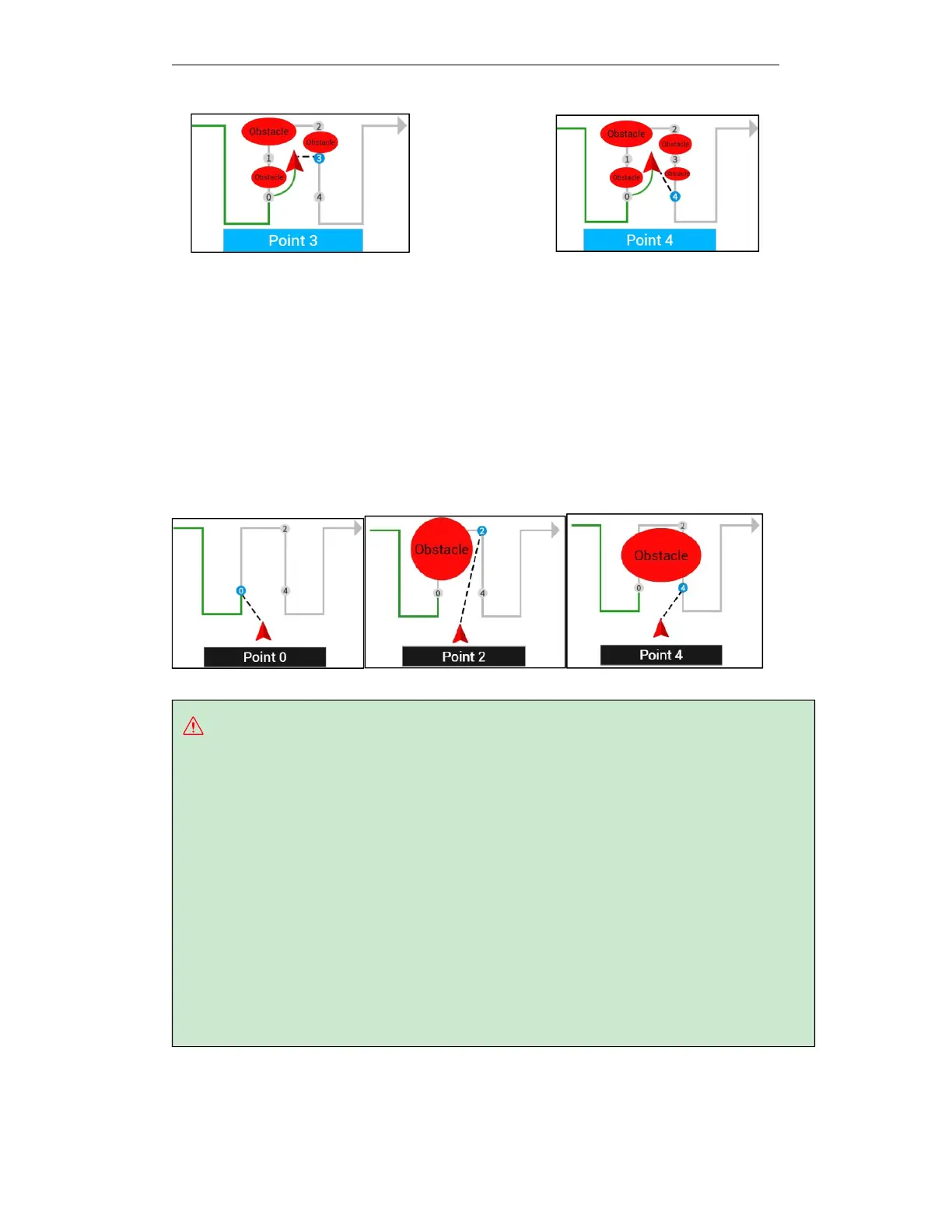
When the drone is out of the AB route, you can resume the operation by selecting the following
way points:
A.
The "0" interruption point, that is, the point at which the AB operation is suspended.
Applicable when there are no obstacles on the route.
B.
End point "2", that is, the end point of the next route of the current route where the break
point is located. Applicable when there are obstacles on the remaining route of the current route
where break point 0 is located.
C.
Point "4", which is the projection point of the interruption point on the next route. It is
applicable to the situation where there are obstacles on the route between breakpoint 0 and
break point projection point 4.


 To Next Page