Water
hardness
(°dKH)
Bypass
adjust-
ment
Filter capacity (liters)
V M L XL
4 3 6,250 9,500 13,000 17,000
5 3 5,000 7,600 10,400 13,600
6 3 4,165 6,330 8,665 11,330
7 3 3,570 5,425 7,425 9,710
8 2 3,125 4,750 6,500 8,500
9 2 2,775 4,220 5,775 7,555
10 2 2,500 3,800 5,200 6,800
12 1 1,865 2,835 3,885 5,080
14 1 1,600 2,430 3,330 4,355
16 0 1,185 1,800 2,465 3,220
20 0 945 1,440 1,970 2,575
24 0 790 1,200 1,640 2,145
≥ 25 0 ≤ 755 ≤ 1,150 ≤ 1,575 ≤ 2,060
4.14.3 By-pass conguration
Depending on the hardness of the water, adjust the
by-pass of the water lter as shown in the table below.
Example:
Water hardness 9°dKH
By-pass 2 adjustment
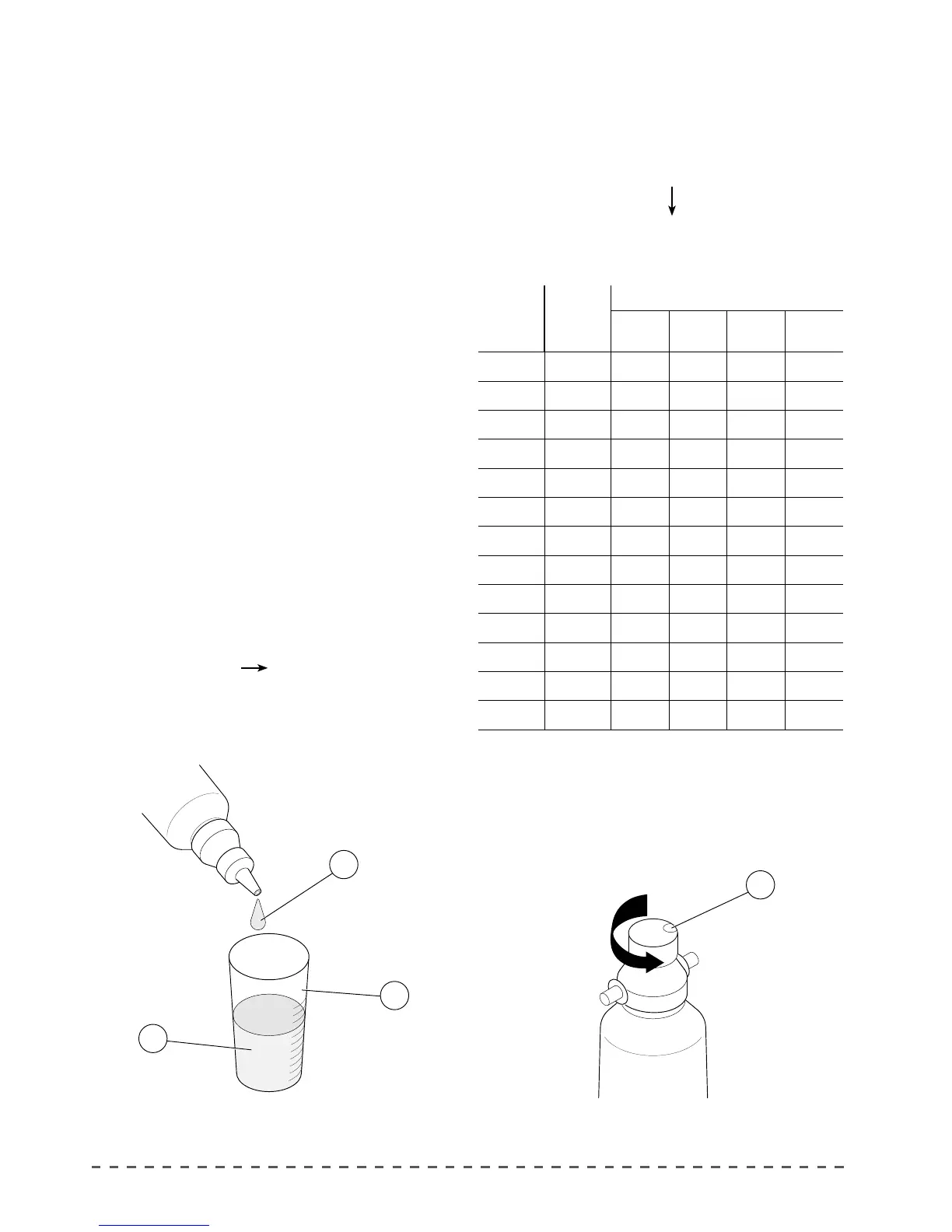
To adjust the by-pass, push the button (5) and turn.
5
4.14 Water purication lter
4.14.1 Description
Mains water contains insoluble salts, which cause the
build-up of lime scale deposits in the boiler and in other
parts of the machine.
Drinking water can also contain heavy metals and
substances, such as chlorine, harmful to health.
The water lter makes it possible to eliminate or
substantially reduce the presence of these components
and improve the coee quality.
The cartridge contained in the water lter must be
replaced at the frequency specied by the manufacturer.
4.14.2 Water hardness detection
Before using the filter you must check the
characteristics of the water. To identify the carbonate
hardness of the water use the kit specied as follows:
1. Put 10ml of water to be tested in the test tube (1);
2. add a drop of reagent (2) and mix;
3. proceed in the same way by counting the number
of drops until the solution (3) changes color from
blue to red.
1 DROP = 1°dKH
Example: 9 drops
carbonate hardness 9°dKH
1
3
2



 To Next Page