Need help?
Do you have a question about the Avolites Tiger Touch and is the answer not in the manual?
Guide to patching fixtures and dimmers using the console interface.
Instructions on selecting and controlling fixtures using select buttons and wheels.
Covers programming basic cues, chases, and understanding timing.
Explains how to set up and record attributes into palettes for recall.
Basic setup for DMX output and network connections.
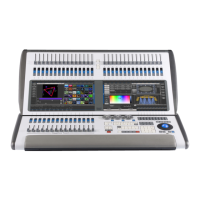
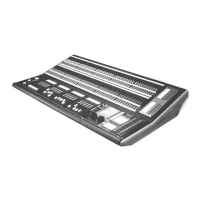
Overview of the console's main control areas and layout.
Details on connecting power, DMX, and other peripherals.
Navigation and interaction with the console's touch interface.
Configuring the console for multiple users and collaborative work.
Information on installing and using the Titan software simulator.
Procedures for saving, loading, and importing show files.
How to reset the console to a clean state for a new show.
Generating reports for fixtures, cues, chases, and palettes.
Steps for patching new fixtures and dimmers into the console.
Methods for modifying existing fixture patches and addresses.
Managing patched fixtures by copying, moving, or deleting them.
Options like swapping pan/tilt, inverting attributes, and setting limits.
How to select fixtures and use wheels for attribute control.
Using the Locate function to set fixtures to a known starting point.
Removing attributes from the programmer and deselecting fixtures.
Controlling fixtures with multiple cells or subfixtures.
Using attribute bank buttons and wheels to modify fixture attributes.
Utilizing the touch screen and Attribute Editor for attribute control.
Entering numeric values for attributes directly via softkeys.
Using the @ button to access attribute value adjustment menus.
Using channel numbers to select fixtures for control.
Methods for selecting fixtures based on patterns like odd/even.
Using the Select If function to select fixtures based on palettes or playbacks.
Understanding attribute grouping for efficient selection.
Creating and managing groups of fixtures for quick selection.
Configuring fixture order and layout within groups for effects.
Navigating through selected fixtures sequentially for programming.
Using Prev/Next to highlight fixtures and see selection on stage.
Temporarily setting selected fixtures to full output for visibility.
Using Remainder Dim to turn off unselected fixtures.
Copying attributes from one fixture to another.
Swapping Pan and Tilt positions for moving head fixtures.
Applying fan effects to spread attribute values across fixtures.
Setting fade and delay timings for fixtures and attributes.
Using the Channel Grid window to view and edit fixture data.
Accessing ML Menu, Lamping, and other advanced controls.
Understanding attributes stored in palettes and how to store them.
Methods for recalling palette values and navigating palette pages.
Viewing, editing, and changing the content of existing palettes.
Managing palettes by copying, moving, or deleting them.
Setting and overriding timing information for palettes.
Guide to creating basic shapes and effects using the Shape Generator.
Modifying existing shapes and effects in cues or playbacks.
Fading shape size and speed, and other advanced settings.
Practical examples of creating effects using the Pixel Mapper.
Arranging fixtures in layouts for complex pixel mapping effects.
Managing how effects layer and prioritize between playbacks.
Using layer properties and displacement for global effect adjustments.
Controlling animated elements with spawn and pre-spool settings.
Basic steps for programming and recording a single cue.
Understanding HTP/LTP rules and playing back cues.
Methods for editing cues, including merging and updating.
Managing cues by copying, moving, linking, or deleting them.
Setting fade times, overlap, and attribute timings for cues.
Configuring release masks, shape/speed on fader, and playback priority.
Steps for programming and recording a chase sequence.
How to play back, pause, and control chase steps.
Linking chases to wheels and other controls for playback.
Adjusting chase speed and crossfade settings.
Opening chases for editing and using the Unfold function.
Managing chases by copying, moving, linking, or deleting them.
Setting global and individual cue timings within a chase.
Looping, direction, cue linking, and renumbering options for chases.
Steps for programming a sequence of cues into a cue list.
Running a cue list, pausing, skipping, and jumping between cues.
Using Playback View and Cue View windows for editing.
Managing cue lists by copying, moving, linking, or deleting them.
Setting independent time and fade options for each cue in a list.
Essential controls for running a show, including backup and labeling.
Controlling overall intensity and specific playback areas.
Assigning playbacks to masters to control speed of shapes or effects.
Assigning faders to control the master intensity of fixture groups.
Using Flash and Swop buttons for cue and chase control.
Configuring how playbacks interact when controlling the same fixtures.
Using dedicated playback faders for frequently used memories.
Programming cues without affecting the live stage look.
Creating instant variations during a show using palettes.
Configuring and recalling different workspace layouts.
Using the Move function to rearrange fixtures, palettes, and playbacks.
Linking playback pages to songs or events for show sequencing.
Setting up external triggering for console features.
Instructions for connecting the console to a network for remote control.
Using the Keypad, Fixture, and other screens on the remote app.
How to record groups and palettes using the remote application.
Managing and positioning workspace windows on the console.
Saving and recalling custom workspace configurations.
Creating and editing key profiles to customize button functions.
Accessing system-wide settings like network and user preferences.
Configuring how DMX is outputted to nodes and network devices.
Understanding and applying different curves to playback fades.
Finding and downloading personality files from the Avolites website.
Procedure for updating the console's fixture personality library.
Creating or modifying custom personality files.
How to request new fixture personalities from Avolites.
Process for reporting issues with fixture personality files.
Using generic fixtures when a specific personality is unavailable.
Setting up the console's IP address for network communication.
Configuring DMX output lines and routing to network nodes.
Configuring an Art-Net system for lighting control.
Setting up communication between the console and simulators.
Understanding and configuring DMX modules and nodes.
Integrating lighting devices with media servers using CITP.
Basics of IP addressing and network setup for lighting control.
Comparison of controls between Tiger Touch and other Avolites consoles.
Highlights of Titan software programming features like overlap and exchange.
Instructions for upgrading the console software to version 8.0.
Details on new functionalities like multi-user and handle worlds.
Introduction to the new 'Global' palette type.
Creating palettes that reference other palettes.
Setting attribute offsets for fixtures and managing them.
Converting existing cues into cuelists or chases.
Using masks for cue recording and range record syntax.
List of improvements, changes, and fixed bugs in version 8.0.
Syntax for selecting and controlling fixtures and groups.
Selecting fixtures based on intensity or other criteria.
Syntax for recording cues, including merging and copying.
Syntax for copying, moving, and inserting cues.
Syntax for deleting cues from a cue list.
Syntax for including cue data into the programmer.
Syntax for setting fade and delay times for cues and attributes.
Syntax for controlling cue list playback.
DMX channels occupied by individual fixtures.
Copying attribute characteristics between fixtures.
A single channel or function of an intelligent fixture.
Grouping of similar attributes for console operations.
Automatically firing a playback by a cue in a cue list.
Copies of show data stored externally for safety.
Beats Per Minute, a unit for measuring tempo.
Operating the console live, often for music, making effects on the fly.
A sequence of pre-recorded steps that run automatically.
Individual cues within a chase sequence.
Fixture that changes colour, often via gel rolls or filters.
System using filters to create a wide spectrum of colours.
A chase controlled by a chase controller via the CONNECT button.
A single stage look programmed onto a playback, also known as memory or scene.
A sequence of cues that can be triggered automatically or via a Go button.
Playback format programmed into a cue, with modes 0-3.
Synonym for Fixture.
Device used to control the intensity of an individual light.
Standard protocol for communication between control desks and fixtures.
A continuous transition from one level to another.
Any lighting instrument patched using a Personality file.
Adds a playback to the current output; historically called ADD.
Swaps Pan and Tilt positions for moving head fixtures.
Old term for Palettes; also used for setting gobo projection sharpness.
Controls parts of an attribute, not directly an attribute channel.
Term used to indicate a Dimmer channel.
A pre-programmed collection of fixtures for single-button selection.
Mechanisms for determining channel output precedence.
An information window shown on the console screen.
Transferring contents of a Cue or Chase Step into the Programmer.
Synonym for Fixture.
A fixture with advanced control capabilities.
Attribute Groups used to conveniently group similar attributes.
 General
| Type | Lighting Console |
|---|---|
| Manufacturer | Avolites |
| Model | Tiger Touch |
| Motorized faders | 10 |
| Ethernet Ports | 1 |
| Touch Screen | Yes |
| Power Supply | 100-240V AC, 50-60Hz |

 To Next Page