Baumer GenICam Camera Features | 11
V1.2 | VCXG.2 / VCXG.2.XC / VCXG.2.I / VCXU.2 Operating Manual 183
11.13 Category: LUTControl
Functions in this chapter describe the Look-up table (LUT) related functions. Particular parame-
ters of the LUT functions are saved to the camera. This includes the coordinates of defective
pixels so that they can be corrected.
Pixel Correction - General Information
There is a certain probability of abnormal pixels – so-called defect pixels – occurring within sen-
sors from all manufacturers. The charge quantity of these pixels is not linearly dependent on the
exposure time.
The occurrence of these defect pixels is unavoidable and intrinsic to the manufacturing and ag-
ing process of the sensors.
The operation of the camera is not affected by these pixels. They only appear as brighter (hot
pixel) or darker (cold pixel) spots on the recorded image.
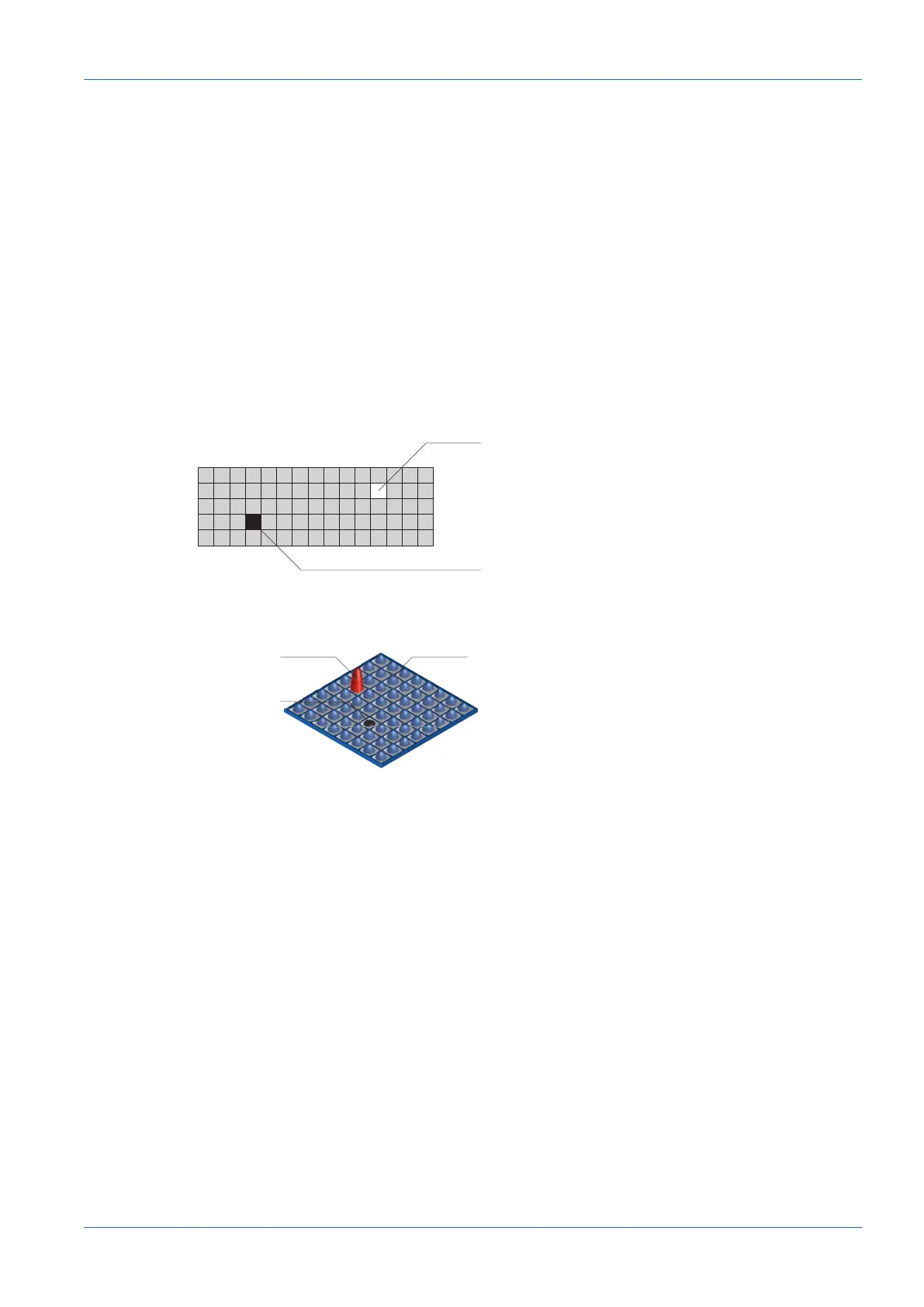
Charge quantity of "hot" and "cold" pixels compared with "normal" pixels:
Charge quantity
„Normal Pixel“
Charge
quantity
„Cold Pixel“
Charge quantity
„Warm Pixel“
Correction Algorithm (Pixel Correction)
On Baumer cameras the problem of defect pixels is solved as follows:
n
Possible defect pixels are identified during the production process of the camera.
n
The coordinates of these pixels are stored in the factory settings of the camera.
Once the sensor readout is completed, correction takes place:
n
Before any other processing, the values of the neighboring pixels on the left and the right
side of the defect pixels, will be read out. (within the same bayer phase for color)
n
Then the average value of these 2 pixels is determined to correct the first defect pixel
n
Finally, the value of the defect pixel is corrected by using the previously corrected pixel and
the pixel of the other side of the defect pixel.


 To Next Page