BENNING IT 130 Measurements
- 47 -
How to perform loop impedance measurements
Select the Z
S
(L-PE) [English: Z
LOOP
(L-PE)] function by means of the function selector
switch.
Set the sub-function to Zloop or Zsrcd (for systems with RCDs).
Set the testing parameters.
Connect the test cables to the test object (see figure 5.24).
Press the "TEST" key to start the measurement.
Save the measuring result by pressing the "MEM" key (optional).
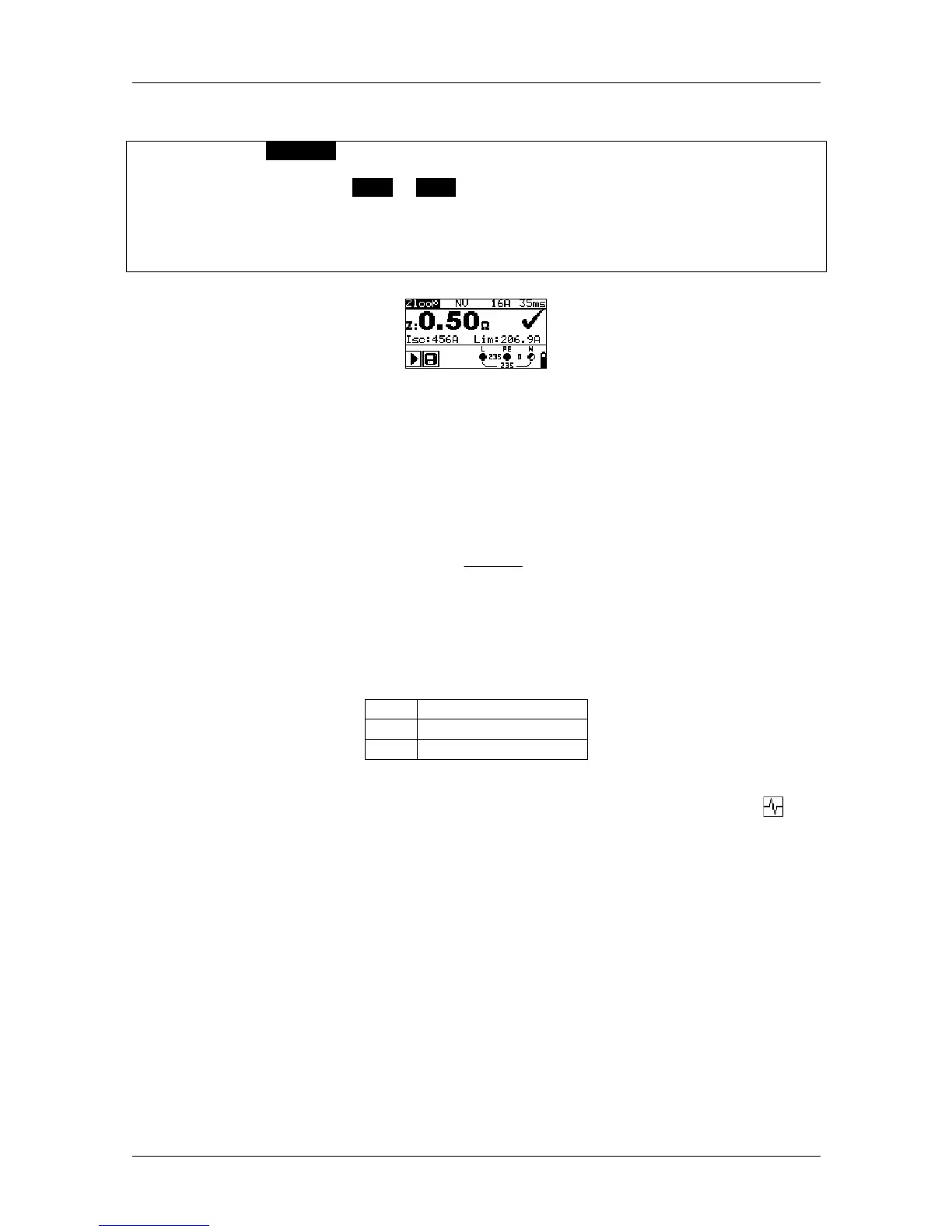
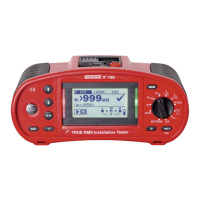
Figure 5.25: Example of a loop impedance measurement
Results displayed:
Z............... loop impedance
Isc ............ prospective short-circuit current
Lim........... lower limit of the prospective short-circuit current
The prospective short-circuit current I
SC
is calculated as follows:
Z
kUn
I
SC
SC
=
with:
Un......... nominal voltage L-PE (see table below),
ksc........ correction factor for short-circuit current Isc (see chapter 4.4.6 Isc factor (scaling
factor))
U
n
Voltage range (L-PE)
Notes:
High fluctuations of the nominal voltage might influence the measuring results ( icon
on the LC display). In this case, it is recommended to repeat the measurements and to
check whether the measuring results are stable.
The loop impedance measurement Zloop trips the residual current protection devices
(RCDs).
Select the Zsrcd measurement in order to prevent the tripping of a residual current
protection device (RCD).


 To Next Page